
The Short Version
- Narration: Steve Martin narrates his own memoir with the same exacting timing that built his stand-up career.
- Themes: Fame and isolation, creative discipline, walking away at the peak
- Mood: Candid, wistful, precisely funny
- Verdict: A genuinely strong case for author narration, Steve Martin's own comic timing making this essential listening for comedy history fans.
By 1981, Steve Martin was the single biggest draw in stand-up comedy history, selling out arenas most rock bands couldn't fill, so why did he quit that same year and never go back? This audiobook is Martin's own answer, narrated in his own voice, and it spends four unhurried hours explaining exactly what built that career and exactly what made him walk away from it at its absolute peak.
Martin traces the whole arc from age ten, selling guidebooks at the newly opened Disneyland, through a decade spent perfecting a magic-and-comedy act at Knott's Berry Farm's Bird Cage Theatre, up through the specific discipline and isolation that turned him into the era's most successful live comedian. It's a candid account, and a genuinely funny one, but it never loses sight of how lonely that particular kind of success actually was.
Rebuilding an Act Like a Manuscript
What separates this from a typical celebrity memoir is how much craft-focused detail Martin includes: specific bits, specific audience reactions, specific moments where he realized a joke wasn't landing and had to rebuild his entire approach to stagecraft as a result. He treats his own act the way a working writer treats a manuscript, something built and rebuilt over years rather than a talent that simply arrived fully formed.
The book's emotional core sits in Martin's relationship with his own family, a father who withheld approval for most of his career and a reconciliation that took decades to arrive. He handles that material with real restraint, never asking for pity, which makes the eventual softening land harder than a more sentimental version of the same story would have.
The White Suit Was a Deliberate Choice
Martin writes at real length about the specific comedic theory he was developing during these years, deliberately abandoning the traditional setup-and-punchline joke structure in favor of absurdist non sequiturs and audience misdirection, banjo interludes and fake magic tricks that were never meant to work. That theoretical grounding is part of what makes the memoir more than just a chronicle of gigs; Martin genuinely explains the intellectual reasoning behind choices that looked, to an audience at the time, like pure chaos.
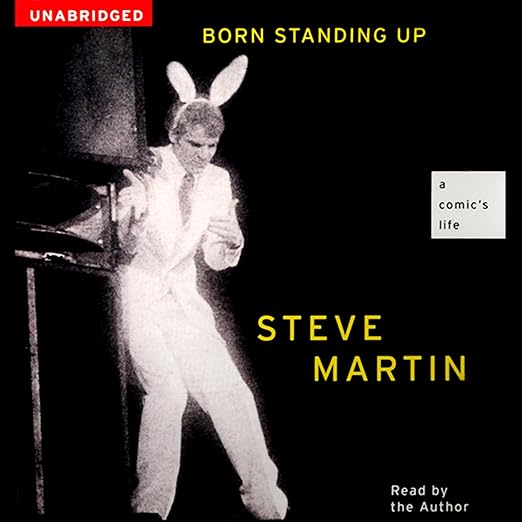
Martin also traces the specific evolution of his most recognizable stage image, the white three-piece suit and arrow-through-the-head prop that later became shorthand for his whole era of comedy, treating even that visual signature as a deliberate choice built through trial and error rather than an accident of costuming. That level of specificity about his own visual and physical comedy, not just his verbal material, gives the memoir a completeness that a purely joke-focused account of the same years would lack.
Martin's Exacting Timing Built Into the Reading
Steve Martin narrating his own memoir is close to a best-case scenario for author narration generally: he brings the same exacting comic timing that built his stand-up career directly into the reading, knowing exactly where a pause needs to sit and exactly when restraint serves a harder emotional passage better than performance would. He is also, credibly, a genuine prose writer, a regular New Yorker contributor and novelist in his own right, and that literary comfort is audible throughout.
Sixteen Years, Narrowed to 1965 Through 1981
At four hours and two minutes, this is a tight, efficient listen, easily finished in a day or two, and that brevity is a deliberate structural choice rather than a limitation. Martin narrows his focus specifically to the stand-up years, 1965 through 1981, rather than attempting a full-life memoir, which lets every chapter stay tightly relevant to the book's actual question of why he built and then abandoned that specific career.
The print edition includes many previously unseen photographs woven throughout the text, and that visual material obviously doesn't carry over to audio in any direct way. Martin's prose does enough of its own scene-setting that the loss is minor, but listeners who specifically want the visual documentation of his early Disneyland and Knott's Berry Farm years may want to pair this listen with a look at the print or ebook edition alongside it.
Ends Right Before The Jerk Begins
Listeners expecting coverage of Martin's film career, The Jerk, Father of the Bride, his decades as an actor and eventually a bluegrass musician, will not find any of that here; this audiobook ends essentially where that later career begins. That narrow scope is a genuine strength for the book Martin actually wrote, but it's worth knowing going in if you wanted the fuller-life story instead.
The book also spends real time on cultural context, Vietnam-era protest culture, the Smothers Brothers Comedy Hour's late-sixties irreverence, Saturday Night Live's transformative mid-seventies debut, that some listeners may find slows momentum if they came strictly for personal anecdotes. That context is doing real work explaining why Martin's specific brand of absurdist, anti-joke stand-up found an audience when it did, though, so it rewards patience rather than skipping ahead.
More Time on the Final Years Than the Early Ones
Because the book covers roughly sixteen years in just over four hours, the pacing moves quickly through some individually significant periods, his Smothers Brothers writing job, his earliest terrible open-mic gigs, in favor of spending more sustained time on the final, most successful years right before he quit. Listeners wanting equal weight given to every stage of the journey may notice that imbalance, though it reflects where Martin himself clearly found the most to say.
Some listeners may also notice how carefully Martin paces the book's most painful material, moments of real professional doubt, the specific instance where he realized his own fame had outpaced his ability to enjoy it, without ever tipping into self-pity. That restraint is consistent with his broader public persona, but it does mean listeners looking for raw, unfiltered emotional catharsis may find him more guarded than a more confessional memoirist would be.
For Absurdist Comedy History, Not Film Career Gossip
This suits comedy history fans specifically, anyone curious how modern stand-up's more absurdist, anti-joke tradition actually got built, and listeners who appreciate craft-focused memoir over pure celebrity gossip. It also works well as a shorter, more focused alternative for listeners intimidated by longer memoirs but still wanting real substance.
It also rewards listeners generally interested in the psychology of extreme, sudden fame, since Martin's account of losing anonymity almost overnight, and the specific toll that took on ordinary daily life, resonates well beyond comedy fans specifically.
Skip it if you specifically want coverage of Martin's film and television career, since almost none of that appears here by design. Skip it too if you're looking for a juicy, score-settling celebrity tell-all, since Martin's version of honesty stays closer to reflective and craft-focused than gossipy.
Does the Born Standing Up audiobook cover Steve Martin's later film career, like The Jerk or Father of the Bride?
No. The book focuses narrowly on his stand-up years, 1965 to 1981, and ends essentially where his film career begins.
Is Steve Martin's own narration in this audiobook as funny as his stand-up act?
It's funny in a different, more restrained register. His timing serves the memoir's reflective passages as much as its comedic ones, rather than replicating a live stand-up performance.
Why did Steve Martin quit stand-up comedy in 1981 at the height of his success?
The book itself frames this as its central question, tracing the isolation and creative exhaustion behind his decision rather than any single dramatic incident.
Is Born Standing Up more of a comedy memoir or a serious reflection on fame?
It's genuinely both. The book stays candid and often funny while treating fame's isolating cost, and Martin's family history, with real seriousness.







