Quick Take
- Narration: Fiacre Douglas voices both an Irish innkeeper and an American wanderer across the full runtime
- Themes: Second-chance stillness disrupted by a restless outsider, family loyalty, small-town Ireland
- Mood: Warm, wintry, and a little wistful
- Verdict: A satisfying middle volume for anyone already committed to the trilogy.
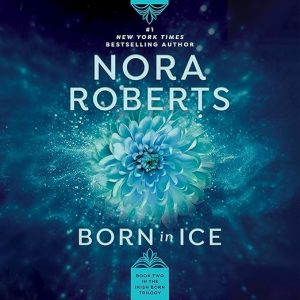
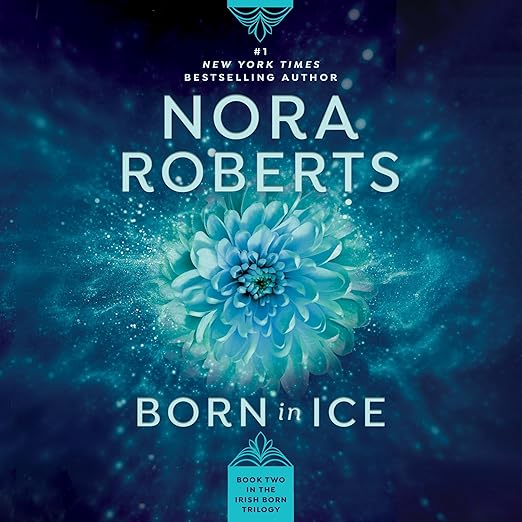
Would you expect an anthology tag on a single, continuous romance novel? That is exactly what sits on this Born in Ice audiobook listing, filed under Anthologies and Short Stories despite being one uninterrupted story and the second entry in Nora Roberts's Concannon Sisters Trilogy.
Brianna Concannon runs a bed-and-breakfast in western Ireland and has settled into a quiet, self-sufficient winter alone, until mystery writer Grayson Thane arrives from America planning to spend the cold season working through his own restlessness. The synopsis frames Brianna's contentment as something Thane's arrival disrupts rather than completes, and several reviewers describe her in terms that match that framing closely, Sheila M calls her 'The younger sister, the dutiful daughter', a role Brianna has to step outside of as the book progresses toward its ending.
Two reviews confirm just how much the trilogy structure matters to how this book gets read. AnnaMarie Scareon plans to 'order the third book of the trilogy shortly', treating Born in Ice as a bridge rather than a destination, while Sheila M calls it the favorite of the three specifically because of how Brianna and Grayson's shared pasts keep them from moving forward until circumstances force the issue between them.
Grayson Thane arrives as a specific kind of romance archetype, the restless outsider with a dark past who claims he only wants a quiet winter to write, and the synopsis is careful to frame his own restlessness as a mirror to Brianna's stillness rather than its opposite. Neither character actually wants what they think they want at the start, and the book's central question, whether 'a fire can be born in ice', as the synopsis puts it directly, plays out across both of their arcs rather than just hers alone. Amy Klem's review adds a genealogical wrinkle worth flagging for series readers specifically, referencing Maggie and Rogan as cousins by marriage within the wider Concannon circle, a connection the review calls genuinely uncomfortable rather than charming, which is worth knowing if family-tree entanglements of that kind bother you as a reader.
What Makes Born in Ice Worth Hearing
Fiacre Douglas narrates a story built around two very different voices sharing the same page, an Irish innkeeper and an American wanderer, and while none of the five reviews comment on the narration directly, that pairing is worth knowing about upfront. A single narrator has to convincingly hold both an Irish register and an American one across the full runtime without either voice flattening into the other over ten and a half hours.
Cheap and Lazy's longer review explains part of why this specific trilogy has held up as well as it has, crediting the 'lovely phrasing/cadence' of Roberts's Irish-set books as a genre strength distinct from the author's other work, adding that each individual romance completes fully even while family threads carry across all three volumes. The synopsis also notes this book won the RITA Award for Best Romance of 1995, a credential that still shows up in how confidently the central relationship resolves.
Brilliance Audio released this specific edition in June 2008, more than a decade after the book's original 1995 publication, which means the audiobook itself has now been available for well over fifteen years by the time these five reviews were left. That gap between original publication and this audio edition is worth keeping in mind when reading Amy Klem's generational concerns below, since the book itself predates this specific recording by over a decade already.
Things to Know Before Starting Born in Ice
Amy Klem's review raises a question worth sitting with rather than dismissing outright, flagging a cousins-by-marriage subplot as 'icky' and asking directly whether some of the more aggressive, physical dynamics between characters were 'just a thing that happened in the 90s', comparing the book unfavorably to a much more recent romance touchstone. It is a fair generational lens to bring to a book approaching its fourth decade in print, and worth reading before you commit rather than after.
Genre tagging deserves its own separate flag here too. Filed as Anthologies and Short Stories despite being one continuous novel, not a collection of stories or a bundled box set, this listing could easily mislead a shopper browsing by category alone. If you are shopping specifically for a short-story anthology, this is not that, whatever the tag on the page suggests otherwise.
Reviewers also disagree gently on how central the mystery-writer premise actually is to the finished book. The synopsis leans into Grayson's profession heavily in its setup, yet not a single reviewer mentions any actual mystery plot playing out on the page, suggesting his career functions mostly as backstory and characterization rather than a genre element the book actually pursues in any structural way once the romance itself takes over.
Who Nora Roberts Is Writing For
Existing trilogy readers looking to continue the Concannon family's story are the clearest audience here, alongside romance listeners who specifically enjoy an Irish setting handled with what more than one reviewer calls genuine phrasing and rhythm rather than generic dressing over a familiar plot.
Amy Klem's specific concern, aggressive and occasionally rough dynamics between the central couple, is worth taking seriously if that kind of content bothers you as a listener. Charlene D. Wharton's shorter review, wanting more of Grayson's own story down the line, suggests the side characters here have real staying power even for readers who finish this particular volume wanting more rather than less. Newer romance readers used to more current genre conventions should sample a chapter first given the generational gap Amy Klem specifically raises, rather than assume every convention from 1995 will land the same way today.