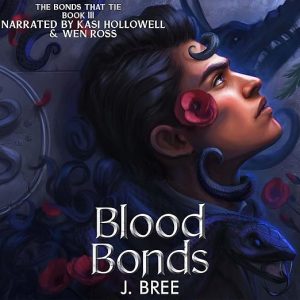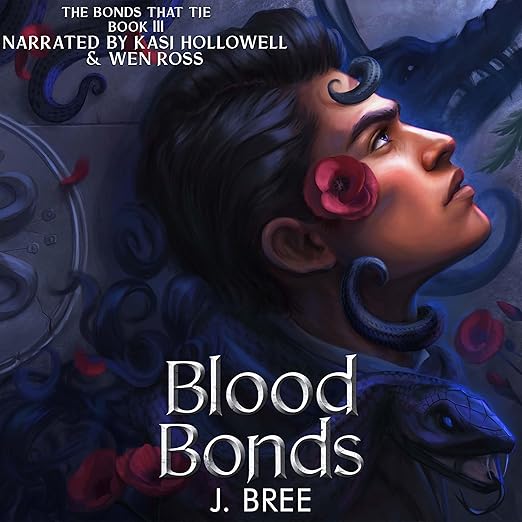
I came to Blood Bonds knowing I was entering at book three of a completed series, which meant I was asking the book to orient me in the middle of an ongoing narrative without earning the groundwork that earlier entries had established. It did not succeed at that task, Blood Bonds is not a standalone experience and makes no particular effort to function as one, but what it revealed about J Bree's project was interesting enough that I went back to the beginning.
The situation at the book's opening is dire in the specific way paranormal reverse-harem series build to: Oli is chained in a Resistance camp, described as the resident monster. The people who want to weaponize her abilities are all present, and the bonds who are trying to reach her are on the outside of the situation. The synopsis frames the central question economically, Are bond ties stronger than blood?, and then the book spends ten hours answering it with a series of loyalty tests that are more interesting than that phrasing suggests. The camp setting creates a pressure cooker dynamic that Bree uses well, forcing every relationship in Oli's orbit to be tested under maximum stress.
The supporting cast, Sage, Felix, and Sawyer specifically, is where the book builds warmth against its darker political substrate. Their friendship with Oli is specific enough to feel earned rather than decorative, and the scenes that anchor it to the story's emotional core represent some of Bree's most confident character writing in the series to date.
How Blood Bonds Holds Up
What Bree does in this installment that she does most effectively across the series is use the Resistance camp setting to force questions about complicity. Who among the people Oli trusts has made compromises she does not yet know about? The betrayal that arrives mid-book, someone so close and trusted that its reveal ruins everything, as one reviewer puts it, is not cheap. Bree has laid groundwork for it, and the emotional devastation when it lands depends on that groundwork. The bond mechanics themselves, specifically Oli finally bonding with North and Atlas in this entry, give the romantic arc genuine momentum that moves the series forward rather than treading water.
Why Blood Bonds Works as an Audiobook
Kasi Hollowell has been the series narrator throughout, which matters enormously for a story this dependent on emotional continuity. Oli's voice has evolved across three books, more guarded in the early entries, gradually cracking open as she allows her bonds closer, and Hollowell tracks that evolution with precision. The camp sequences, which could feel static in a lesser performance, are rendered tense through her delivery. The friendship dynamic with Sage, Felix, and Sawyer lands with the warmth it needs to offset the book's darker political content.
Weak Spots in Blood Bonds
The most consistent criticism across listener reviews concerns Nox. He is one of Oli's bonds, and in this installment his arc feels stuck, he remains the least sympathetic and most controlling of the group, and reviewers note that his story has begun to feel repetitive. Whether this is intentional on Bree's part, building toward a revelation in a later book, or a genuine pacing problem is impossible to assess from outside the completed series, but the frustration is real and worth knowing in advance. Some readers also find Oli's guilt and the controlling-alpha dynamic together make her a less vivid protagonist in book three than she was in books one and two, which is a fair characterization.
The Right Listener for Blood Bonds
Series readers who have followed Oli from book one will find this a rewarding continuation, particularly around the North and Atlas bonding sequences and the political betrayal that reshapes the final act. New listeners should not start here under any circumstances, the book is built entirely on accumulated investment. Readers who find controlling alpha dynamics in paranormal romance frustrating will find book three tests that patience more than earlier entries.
Key Details
- Voice: Kasi Hollowell handles Oli's first-person voice with the right blend of wary strength and suppressed vulnerability, carrying the emotional continuity of a series that demands sustained listener investment.
- Big ideas: Resistance and complicity, bond loyalty versus blood loyalty, the cost of becoming monstrous to survive
- Atmosphere: Dark, tense, and emotionally dense
- Worth it?: A worthy third entry in The Bonds that Tie series that deepens the world and its moral questions while honestly stretching some readers' patience with Nox's stagnant arc.
Frequently Asked Questions
Can Blood Bonds be read without finishing books one and two of The Bonds that Tie?
No. The book opens mid-situation and relies entirely on reader familiarity with Oli, her bonds, and the Resistance conflict. Starting here will produce confusion rather than orientation. The series is completed, which means you can binge straight through.
Why do so many reviewers mention Nox specifically when discussing this book?
Nox is consistently cited as the most frustrating of Oli's bonds, controlling, slow to develop, and by book three feeling stagnant compared to the emotional movement in the other bond relationships. Whether his arc pays off in later books is something series completers can speak to; in book three alone he is a genuine point of friction.
How does the bonding with North and Atlas work in this installment, is it satisfying or does it feel rushed?
Reviewers who single out the North and Atlas bonding describe it as one of the book's highlights, emotionally earned rather than mechanically delivered. The camp setting that separates Oli from her bonds creates the tension that makes the bonding sequences, when they arrive, feel like genuine relief rather than obligatory plot points.
Is the betrayal mid-book genuinely surprising or is it telegraphed?
Reader responses vary, but the majority describe it as unexpected. Bree apparently plants clues that seem like background detail rather than setup, which produces the gut-punch effect one reviewer describes. Whether you see it coming likely depends on how closely you have been reading the political subplots in earlier entries.