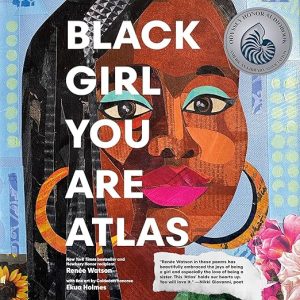
Quick Take
- Read by: One unaccompanied voice across haiku, odes and free verse, in a collection short enough to take in at a single sitting
- At its heart: Black girlhood, sisterhood and inheritance, race class and gender, a Portland childhood
- Vibe: Tender, urgent and quietly furious
- Short version: A short collection made materially stronger by having its author read it, and the format choice genuinely matters here.
Portland shows up early in these poems, in odes to the Black women who raised the poet, and the audiobook lets you hear exactly who is speaking. Renée Watson writes about growing up at the intersection of race, class and gender, in a semi-autobiographical collection that moves from haiku to free verse and back again, then reads the whole of it herself. Fifty-one minutes later it is finished, and the brevity is not an accident of packaging.
Where This One Lands
Haiku sits beside free verse, and the formal range does real work rather than showing off. A three-line poem and a long unspooling one make entirely different demands on a listener's attention, and setting them against each other keeps a short collection from settling into a single rhythm. On a page that variety is visible before you read a word of it. In audio it arrives as pacing, and pacing is the first thing this recording gets right.
Watson reads her own poems, and on this collection that is architecture rather than a pleasant extra. The book is semi-autobiographical: the childhood is hers, the Portland is hers, the Black women being honored are the ones who raised her. When a poet reads a recollection of her own childhood, the first person inside the poem and the voice saying it out loud are the same person, and no performer, however good, can manufacture that.
Ninety-four ratings sit behind a 4.8, with five written responses underneath, which for a teen poetry collection is a healthy pool. All five are fives. That unanimity rewards careful reading rather than trust, because the accounts that explain themselves are describing rather different books: one a mirror, one a window onto an experience the reader does not share, one a classroom resource to hand around. The agreement is about worth, not about what the collection does.
Why Listen to Black Girl You Are Atlas
Sisterhood runs underneath all of it, and the collection is explicit that this is a call rather than a memoir. The description's own framing is urgent: an argument for Black girls to step into their power, addressed to them directly. What stops that turning into slogan is the specificity of the tenderness around it. The odes are to particular women doing particular things, so the exhortation arrives grounded in people a listener can picture rather than in an abstraction.
Poems get named in the pool, which is unusual and genuinely useful. The February 2025 five-star lists four favorites by title, describes pausing the recording repeatedly to sit with individual pieces, and credits the author's reading with deepening the emotional weight of them. That same account then breaks off mid-sentence in what reads like the start of a disclosure about how the copy was obtained, cut short after three letters, leaving no way to tell whether the copy was bought or supplied.
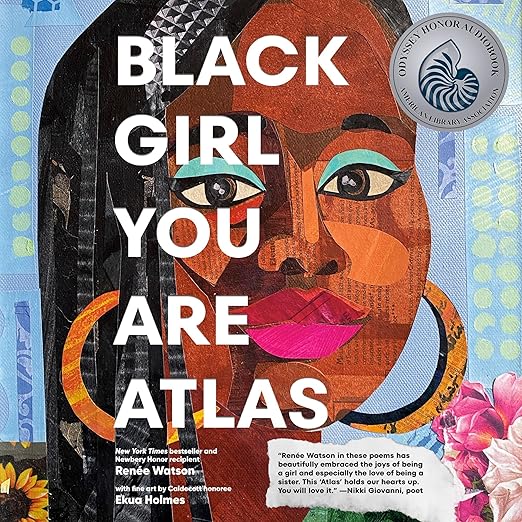
An Odyssey Honor is an award for an audiobook rather than for a book, and the description names one here beside a Coretta Scott King Honor. That is the most useful fact on the whole page, and it sits buried in the copy instead of appearing as a badge. A recognition given specifically for audio production, on a poetry collection the author reads herself, settles the format question more decisively than any quantity of star ratings ever could.
What to Watch For in Black Girl You Are Atlas
Fifty-one minutes buys you the poems and nothing else, which is the right length for the material and a short purchase by any measure. No introduction, no author's note read aloud, no discussion of the forms in play. Listeners wanting context for a poem's structure, or a gloss on the references inside it, will find neither, and the collection simply assumes you will take the poems as they arrive and do your own work afterward.
Pages is the word the April 2025 five-star reaches for, describing itself as both burdened and liberated by the words that have graced these pages. Print vocabulary inside a review of an audio product is common enough, but for poetry it points at something real. A poem on a page has a shape: line breaks, white space, indentation, an arrangement that is part of the composition rather than a container for it. Audio converts all of that into pause and stress, and the conversion is itself a reading.
Politics, Society and Current Events is the tag attached to a collection of haiku and free verse. The teen and young adult shelf fits it well enough, but that tag will send some buyers hunting for essays or reportage and will hide the book from anybody browsing poetry. For a collection organized entirely around poetic form, and awarded partly on the strength of how it sounds, being filed away from poetry is a real cost.
Who Should Listen to Black Girl You Are Atlas
Teachers and librarians should have this one, and the July 2025 five-star makes the practical case, calling it a beautiful book for young people and adults, singling out the varied poem lengths as the thing that makes it accessible, and reporting passing it to a great many people. Black teenage girls are the addressee, plainly and by name. Everybody else is welcome as a reader rather than as the person being spoken to, and the collection is clear about that difference.
Anybody expecting a full-length collection should adjust before buying, because this is short and concentrated and the record does not disguise it. Readers who want poems they can study will want print alongside the audio, since the visual form is genuinely part of the work being sold. And listeners hoping for the reportage or argument the category tag advertises will meet poems instead. Watson's own voice is the entire argument for choosing this format over the printed one.
A Few Questions About Black Girl You Are Atlas
Is this audiobook a good entry point for someone new to poetry?
Unusually so. The forms run from three-line haiku to longer free verse, the language stays direct, and nothing assumes prior reading. The August 2024 five-star describes some pieces as heartbreaking and others as uplifting, which is a fair map of the emotional range a newcomer will meet on the way through.
How autobiographical is the audiobook?
Semi-autobiographical, by the description's own word. The Portland childhood, the odes to the women who raised the poet and the recollections of growing up are drawn from life, while the collection is built as poems rather than as memoir. Expect selection and compression rather than a straight record of events.