Quick Take
- Performance: Guy Swann is one of the most recognized voices in Bitcoin audio content, and his reading of Knut Svanholm's ideas brings practiced fluency to what is conceptually dense material.
- What it covers: Bitcoin as escape from inherited mental frameworks, sovereignty and monetary freedom, indifference to consensus
- Feel: Compressed and philosophical, like a conversation that assumes you have already done the prerequisite reading
- Our call: A sharp and challenging follow-up that rewards listeners who come in with existing Bitcoin literacy, and will frustrate those who do not.
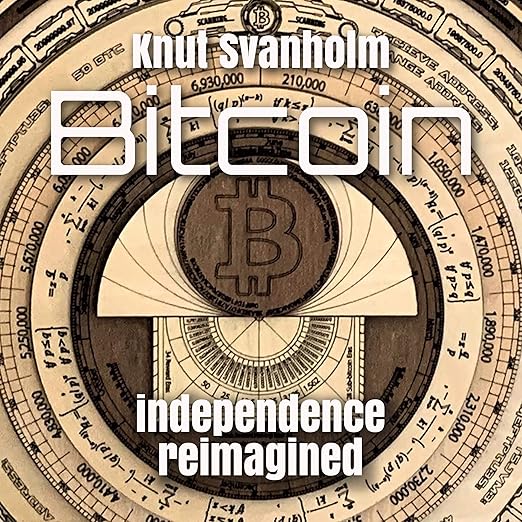
Knut Svanholm's Bitcoin audiobook, narrated by Guy Swann, arrives with an unusual set of expectations baked in. Svanholm explicitly frames this as a follow-up to Bitcoin: Sovereignty Through Mathematics, and the framing is honest. This is not an introduction. At two hours and twenty minutes, the total runtime should itself signal that something specific is happening here: this is not a comprehensive account of Bitcoin's history, mechanics, or investment case. It is a philosophical extension of an earlier argument, delivered in the compressed, deliberately provocative style that has made Svanholm a distinctive voice in the Bitcoin writer's space. The verdict, which belongs at the top because it saves everyone time: come in with existing literacy about Bitcoin or come prepared for the concepts to slip past without fully registering.
The core argument Svanholm makes, as described in the synopsis, is that most human behavior, including behavior around money and economic systems, operates within mental boxes we have inherited rather than designed. Bitcoin, in his framing, is not merely a technological innovation or an investment vehicle. It is a prompt to examine those boxes and ask whether they serve the people inside them or only the systems that maintain them. The honey badger metaphor, the cryptocurrency community's long-running description of Bitcoin's indifference to criticism, is not incidental here. It is central to Svanholm's point that Bitcoin's properties do not depend on anyone believing in them, and that this is precisely what makes it different from previous monetary experiments.
Reviewer Ed Cleaves describes the book as a short but powerful reminder of why Bitcoin is so profound, and recommends that listeners engage with other material on money, history, and Bitcoin before approaching Svanholm's ideas to get maximum benefit. That is sound advice. The book is written for readers who have already worked through the basic arguments about fiat currency, sound money, and monetary history. Without that background, the compressed philosophical style can feel like it is gesturing at ideas rather than establishing them.
Swann's Ease With Difficult Bitcoin Ideas
Guy Swann's narration is a genuine asset here. He has read an extensive catalog of Bitcoin-related content through his podcast work, and that familiarity with the conceptual terrain means he never sounds uncertain about the material. He reads with the ease of someone who has internalized the arguments and can therefore give them appropriate weight and rhythm. Reviewer Misir Mahmudov calls Svanholm a talented writer who communicates difficult ideas in an accessible way, and Swann's narration extends that accessibility into the audio format.
The philosophical range of the book is wider than its Bitcoin focus suggests. Svanholm is writing about the nature of freedom, the way inherited systems constrain possibility, and what it means to build something genuinely resistant to institutional capture. These are ideas with legs beyond their cryptocurrency context, and listeners who engage with monetary philosophy, political economy, or simply the question of how collective belief creates and sustains value will find material worth sitting with, even if they approach Bitcoin skeptically.
Reviewer The Sage characterizes the book as more about freedom than Bitcoin, which is perhaps the most honest summary available. The technical and economic arguments are scaffolding for a set of claims about human autonomy and the relationship between sound money and human freedom that Svanholm has been developing across his writing. This volume pushes that argument further down the philosophical path his earlier book opened.
More Pamphlet Than Comprehensive Treatment
The runtime of two hours and twenty minutes is the most important piece of information for a potential listener after the synopsis. This is not a full-length treatment. It is an essay in audio form, more like a long pamphlet than a book, and its ambitions are correspondingly scoped. It does not survey the history of Bitcoin, explain how the technology works, or make an investment case. It makes a philosophical argument about perception, constraint, and the nature of monetary innovation.
Listeners expecting Svanholm to address common critiques of Bitcoin, environmental concerns, volatility, regulatory risk, will be disappointed. The book is not written in dialogue with skeptics. It is written for readers who have already accepted the basic premises and want the philosophical territory extended. That is a legitimate authorial choice, but it means the audience is more specific than the title alone might suggest.
The question of Bitcoin's long-term trajectory is not what this audiobook addresses, and readers hoping for a price forecast or an analysis of regulatory risk will not find it here. What they will find is a philosophical account of why the author believes Bitcoin represents a genuinely new kind of monetary technology rather than a speculative instrument. Whether or not the listener agrees with that characterization, the argument is made with more rigor and internal consistency than most popular treatments of the subject manage. Svanholm writes like someone who has thought seriously about the history of money, not just the history of Bitcoin, and that broader scope is what gives the work staying power beyond its immediate publication context.
Ammous Readers Rather Than Investment Seekers
This audiobook is for listeners already engaged with Bitcoin as a serious intellectual and philosophical subject, not merely as an investment. Prior engagement with Svanholm's earlier work, or with writers like Saifedean Ammous, is useful background. The book rewards listeners who bring curiosity about the nature of money and freedom rather than those looking for practical guidance on cryptocurrency.
Listeners new to Bitcoin, or those approaching it primarily from an investment or technology angle, should start elsewhere. The foundational texts Svanholm's work builds on are more appropriate first encounters. Returning to this volume after that groundwork will make the argument land with the force its author intends. For the right listener, the two-plus hours here contain more to think about than many audiobooks four times the length.
Common Questions
Is this audiobook a good introduction to Bitcoin for someone new to the subject?
No. Svanholm frames this explicitly as a follow-up to his earlier work Bitcoin: Sovereignty Through Mathematics, and reviewer Ed Cleaves specifically recommends reading other material on money, history, and Bitcoin before approaching this book. New listeners should start with foundational texts before coming to Svanholm's philosophical extensions.
At only two hours and twenty minutes, is this audiobook worth the purchase price?
At its runtime, this is best understood as a philosophical essay rather than a comprehensive book. For listeners already invested in Bitcoin's intellectual ecosystem, the density of ideas relative to the runtime is high. For general listeners expecting a full treatment of the subject, the length will feel inadequate for the price.
Why is Guy Swann the narrator for this audiobook, and does his background matter?
Swann is well known in Bitcoin circles for his extensive audio reading of Bitcoin-related texts. His fluency with the conceptual terrain means the narration carries the ideas without hesitation or misemphasis. For a book this compressed and philosophically specific, his familiarity with the material is a meaningful asset.
Does this audiobook address skeptical perspectives on Bitcoin, including environmental and regulatory concerns?
No. The book is written for an audience that has already engaged seriously with Bitcoin and is not structured as a debate with critics. Svanholm's argument is philosophical and assumes basic agreement with the premises he established in his earlier work. Listeners looking for a balanced treatment of Bitcoin's risks alongside its potential should look elsewhere.