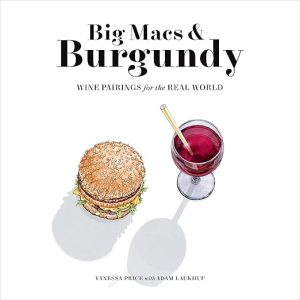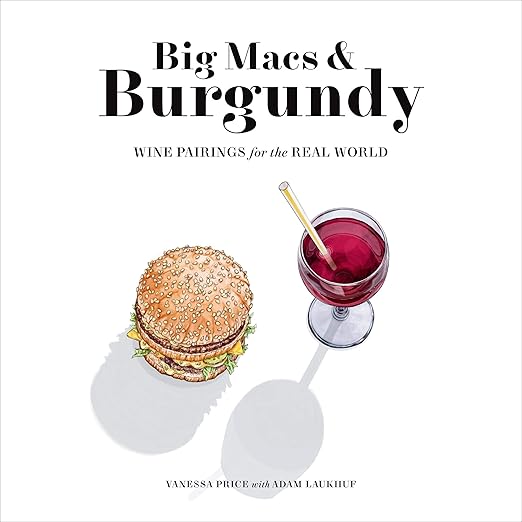
Vanessa Price has written the wine book that the wine world badly needed: one that starts from where most people actually drink. Big Macs & Burgundy, narrated by Price herself across 9 hours and 14 minutes, is the expanded audiobook version of her Grub Street column, and it argues with cheerful scientific rigor that the principles governing great wine pairing apply just as precisely to fast food and snack food as they do to restaurant cuisine. The 4.7 rating across nearly 1,000 reviews includes a wine writer who read it twice, a reviewer who bought copies for all her friends, and an 80-year-old father who now keeps it on his coffee table. Price earns every one of those five stars by refusing to condescend to her subject or her reader.
Sancerre and Cheetos Share the Same Chemistry
Price's central argument is chemical. The reason Sancerre and Cheetos work together, she explains, is not arbitrary or ironic but structural: acid, fat, salt, and minerals interact in ways that the same principles govern whether the food is a five-star entree or a bag of corn chips. By grounding her pairings in mechanism rather than convention, Price does two things simultaneously: she demystifies wine selection and she removes the social anxiety that makes most people defer to sommeliers rather than trusting their own palates. The column's success on Grub Street was built on this combination of scientific accessibility and genuine personality, and the audiobook expands that foundation into a full curriculum with enough storytelling to carry nine hours without ever feeling like coursework.
The personal narrative woven through the pairings, Price's account of growing up in Kentucky and navigating the wine world as an outsider to both geography and class, gives the audiobook a memoir quality that keeps the education grounded in specific human experience. She is funny about her failures and precise about her victories, and the combination produces exactly the effect that reviewer Rusty Gaffney, identifying himself as a wine writer and critic, described: a wine book you want to read twice. The self-narration is decisive here. Price's voice carries the timing of someone who has told these stories from a stage before, and the pauses around punchlines land with the precision of a practiced speaker who knows where the laugh is and lets the listener find it.
Price's Readers Buy Copies for Their Friends
The audiobook includes a companion PDF wine guide, which extends the educational value beyond the audio. The guide captures the pairing charts, variety explanations, and navigation tools that would be visual in the print edition. Listeners should download it before starting the audio to have the reference material available as Price discusses specific wines and regions. The audio itself does not require the guide to be useful, Price explains everything orally in accessible language, but the supplemental material adds a practical dimension for listeners who want to apply the pairings at home or navigate a wine shop with confidence rather than anxiety.
Reviewer BMP bought the book and then bought copies for all her friends, which is a specific kind of endorsement: this is a book people want to share, which means the experience of listening to it creates an immediate desire to repeat it with someone else over a bottle. The 4.7 rating reflects a readership that is not merely satisfied but activated. Price does not leave the listener with theoretical knowledge. She leaves them with enough specific understanding of acid balance, tannin structure, and minerality to make an actual purchase decision the next time they are standing in front of a wine rack, which is the practical test of whether a wine education book has actually done its job.
Chemistry Is Real, the Intimidation Is Manufactured
Price's prose style is conversational at speed, and the self-narration preserves that quality in audio form. Some sections move quickly through technical wine vocabulary, appellations, grape varieties, regional production differences, and listeners who are genuinely new to wine may want to pause and revisit these passages rather than letting them blur past. The audiobook is organized around specific food-wine pairings rather than traditional wine education categories, which means you will learn Burgundy's characteristics in the context of what it does with a burger rather than in a taxonomy of Burgundian appellations. This is by design and it works effectively, but the trade-off is that the organization does not map neatly onto conventional wine education if you need to cross-reference a specific grape variety later.
The book's Kentucky outsider narrative deserves specific mention as more than mere personal color. Price's experience of entering a world where social confidence and cultural capital are often more important than actual knowledge gave her a specific angle of attack on wine education: she is always asking whether the intimidation is justified by the subject matter or manufactured by the culture around the subject. Consistently, she finds the chemistry is real and the intimidation is manufactured, which is the most useful thing a wine educator can tell a beginner and the most honest thing any critic of wine culture can say to an experienced drinker.
Built for Listeners Intimidated by Wine Lists
This audiobook is the correct starting point for anyone who finds traditional wine education intimidating or insufficiently entertaining. Price's approach is specifically engineered for people who eat ordinary food and want to drink better without pretension. Experienced wine drinkers will find the science familiar but the specific pairing combinations genuinely surprising, the wine critic who praised it twice is evidence that the book offers something new even to people who already know the subject. Listeners who prefer their food writing in the earnest, unhumorous mode will find Price's breezy confidence occasionally frustrating. But for the majority of listeners who want to stop being confused or intimidated by wine lists, this audiobook is the most efficient and entertaining way to build the confidence that comes from actually understanding why things taste good together.
In Brief
- Performance: Vanessa Price narrates her own book with the timing of someone who has told these stories from a stage, the punchlines land, and the technical passages carry genuine expertise in its owner's voice.
- What it covers: Wine demystification through science, American outsider identity in a class-coded industry, the universality of acid-fat-salt-mineral pairing principles
- Feel: Confident and funny, like a very good party where someone who actually knows wine keeps refilling your glass
- Our call: Price makes a persuasive case that wine pairing is chemistry rather than social capital, and she does it while being genuinely entertaining across nine hours.
Does the Big Macs & Burgundy audiobook include the companion PDF wine guide?
Yes. A PDF wine guide is included with the audiobook purchase. Download it before starting the audio, it contains the visual reference material for the pairing charts and variety explanations that Price discusses throughout.
Does Vanessa Price narrate the Big Macs & Burgundy audiobook herself?
Yes, and the self-narration is one of the audiobook's clearest strengths. Price's timing is that of a practiced speaker, and the humor that drives the book lands more reliably in her own delivery than it would in a professional narrator's rendering of someone else's comic timing.