The Short Version
- Narrator: Virtual Voice reads it, which costs a reference title less than it would cost a novel, though it levels the difference between a claim and a caution.
- Subjects: Faith-based wellness, herbs and foods drawn from Scripture, ancient practice measured against modern claims.
- Tone: Gentle, instructional, quietly promotional.
- Bottom line: A 156-minute devotional tour of the pantry, worth the time if you supply your own skepticism about the science.
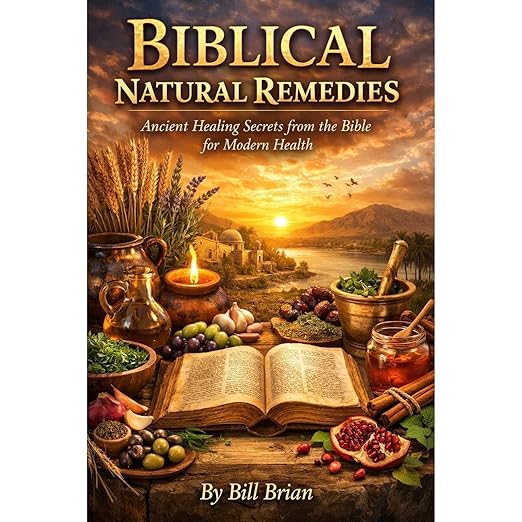
Bill Brian's pitch is that modern science has caught up with Scripture, and this audiobook spends two hours and thirty-six minutes making that case for olive oil, honey, garlic, hyssop, figs, pomegranates, cinnamon, frankincense and aloe vera. The description promises that the benefits of those foods are supported by modern scientific research. It never says supported by whom. No study, no researcher, no institution and no journal is identified anywhere on the page, which is what a listener should weigh before anything else, because the entire proposition rests on that one phrase.
Synthetic Narration Flattens Caution and Aside Alike
Read the description twice and you notice it speaks in two registers. One sentence states outright that modern research supports these remedies. Another, further down, says that natural approaches may support immunity, digestion, inflammation reduction and overall wellness. The second is properly hedged and almost certainly the honest one. Carry that hedge backward over everything above it and you have a fair working expectation for the whole listen: interesting traditional material, presented warmly, with the strength of the evidence left for you to establish.
None of which makes the book dishonest about its purpose. It states its audience plainly: readers interested in biblical health and healing, natural remedies and herbal medicine, faith-based wellness, and ancient traditions measured against modern science. That is a bridge book, not a pharmacology text, and it never pretends to be one. Judged as a devotional tour of a pantry, with Scripture supplying the organizing logic and the kitchen supplying the examples, it is doing something coherent.
One structural question hangs over the whole project, and the book is most interesting wherever it brushes against it. That a food appears in Scripture and that a food is good for you are two separate claims, and neither one implies the other. Olive oil, honey and pomegranates turn up in the text because they were what people grew and ate in that place at that time, which is a fact about agriculture before it is a fact about medicine. A book can hold both ideas at once, and this one appears to want to. Whether it says as much out loud, or simply lets the pairing do the arguing on its behalf, is the thing no product page can tell you and the thing that decides whether you finish persuaded or merely charmed.
Virtual Voice sits in the narrator slot. For reference-shaped material that costs less than it would in a novel, since nobody needs characterization from a chapter about hyssop. What it does cost is emphasis. A human reader marks which line is the caution and which is the aside, slowing at the first and gliding over the second. Synthetic narration hands you both at one setting, so a warning, if any warning is present, lands with the same weight as a transition sentence. On health material that difference stops being cosmetic.
Short Enough to Relisten, Light on Series Context
Brevity is the feature here rather than a shortcoming. Nine or ten substances in a hundred and fifty-six minutes means you can run the whole thing twice in a week without rearranging anything, and repetition is precisely what the closing chapter asks for when it promises a lifestyle guide and sustainable habits. Material meant to change a routine benefits from being short enough to revisit, and this is short enough to revisit.
The plant list itself is a genuine draw. Hyssop and frankincense are words plenty of people have heard in a verse for years without ever picturing an actual plant or an actual use, and the description leads with exactly that curiosity. Pairing each one with a culinary or household context gives the material somewhere concrete to land, and the pantry framing means most of what gets discussed is already within arm's reach of the listener.
Worth noting where this falls in its own shelf: the listing marks it as the fourth entry in the God's Way Series, and the description mentions none of the first three. Whether they cover different territory, build on one another, or simply share a design template, nobody browsing can tell. For a series organized around a single idea that blank matters less than it would in fiction, but a buyer hoping to follow a program has been handed no map of it.
Missing a Safety Disclaimer for Herb Interactions
Take the safety point seriously. Herbs, concentrated oils and therapeutic quantities of ordinary foods can interact with prescription treatment, and the distance between a culinary amount and a medicinal one is exactly the distance this genre tends to blur. The description carries no disclaimer of any kind, no advice to consult a physician, and no acknowledgment that anyone listening might already be taking something. If you are managing a diagnosed condition, that omission is the one to hold onto.
Then the navigation. Each chapter is said to include VIP summaries, standing for Very Important Points, that highlight the key lessons and make them easy to remember and apply. In print, a summary box is a navigation device: you skim it, mark it, and return to it. Spoken aloud, a summary becomes the same material a second time at the same speed, with no way to skim and no way to find it again later. The closing lifestyle guide inherits that problem in full.
Small things, finally, that add up on a page where care is the product. The title field shouts in capitals while the description sets it normally. The sentence introducing the author reads by Bible teacher, Bill Brian, with a comma doing nothing useful. The rating field is empty, and so is everything beneath it: no score, no votes, no sentences from anyone who has listened, on a title dated March 13, 2026. If the store copy went out unproofed, a listener has one fewer reason to assume the health claims were checked harder.
Written for Believers Who Enjoy a Pantry Tour
Believers who want their wellness reading inside a scriptural frame are the obvious fit, along with anyone drawn to ancient-practice material for its own sake and cooks curious about why particular foods keep reappearing in the text. At a hundred and fifty-six minutes it is an easy afternoon, and the pantry angle gives it a practical edge that most faith-and-health titles lack.
Wrong purchase for anyone who wants pharmacology, anyone weighing these remedies against a prescription, and anyone who needs to see a citation before acting on a claim. Treat it as a devotional walk through a pantry rather than as a health plan, and it delivers roughly what its label advertises.
Does this audiobook identify the scientific research it says supports these remedies?
Not on the listing. The description states that modern research supports the benefits of these foods and oils, yet names no study, researcher, institution or journal. A separate sentence hedges more carefully, saying these approaches may support immunity and digestion. Take the hedged version as the safer expectation going in.
How well do the VIP summaries translate to an audiobook?
Poorly, by nature. Very Important Points summaries exist so a print reader can skim, mark and return to the key lessons. Spoken aloud they become a repeat of the same material at the same pace, with no skimming and no way back. The closing lifestyle guide runs into the identical limitation.