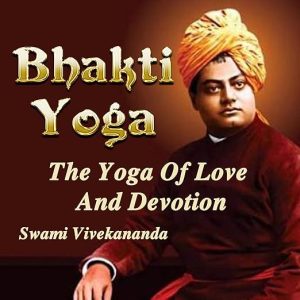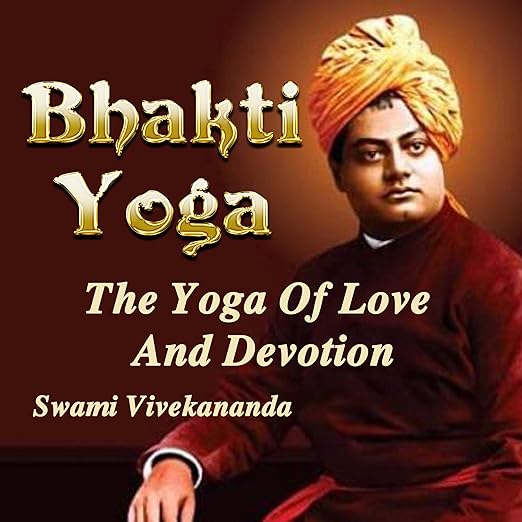
Swami Vivekananda spent barely a decade as a public figure in the West before his death in 1902, and this audiobook is one small, dense piece of the philosophical case he made in that short window. Bhakti Yoga: The Yoga of Love and Devotion collects Vivekananda's teaching on devotional love toward God, built partly around his own reading of Narada's ancient Bhakti aphorisms, real primary texts within the Vedanta tradition. At under four hours, this isn't a survey of Hinduism or even of yoga broadly; it's a focused, single-subject teaching on one specific path among the four Vivekananda identified toward spiritual realization.
Our Take on Bhakti Yoga: The Yoga of Love and Devotion
Vivekananda's core claim here is a genuinely radical one within the philosophical framework he's working in: that bhakti, intense love directed at the divine, isn't a means to some other spiritual end but its own complete fulfillment, superior even to karma yoga or raja yoga because it doesn't require an external goal to justify itself. The text moves through Narada's aphorisms methodically, using them as a structure to build an argument rather than simply presenting them as scripture to be accepted.
This material sits alongside Vivekananda's better known writing on karma yoga and raja yoga as part of a broader body of work he built once his lecture tours had made Vedanta philosophy familiar to Western audiences. Listeners who've encountered his more famous public speeches will find this a quieter, more intimate register, less oratory and more direct instruction.
One listener's reaction gets at something real about how this material lands for readers who've spent time in academic study of yoga philosophy: she described the book taking everything she'd encountered in denser academic form and distilling it into something simpler and more essential, without losing the substance underneath.
Narada's Bhakti Sutra, the aphorisms Vivekananda draws on throughout, is itself an ancient text within the devotional Vedanta tradition, treated by scholars as one of the foundational sources on love-centered spiritual practice long before Vivekananda brought it to a Western audience. Knowing that lineage helps frame what this audiobook actually is: not Vivekananda's own invented philosophy, but his interpretation and defense of a much older devotional tradition, argued in his own voice for readers encountering it for the first time.
Vivekananda's authority on devotional love wasn't purely theoretical. He was the chief disciple of Ramakrishna, a mystic whose own life was organized entirely around intense devotional practice, and Vivekananda's writing on bhakti carries the weight of having witnessed that kind of complete devotion firsthand before ever trying to explain it systematically to a Western audience unfamiliar with the tradition.
Why Listen to Bhakti Yoga: The Yoga of Love and Devotion
Primary-source Vedanta teaching like this tends to reward listeners who already have some entry point into the subject, and the handful of reviews this listing has attracted bear that out. One listener specifically noted growing up in India being told Vivekananda was a great thinker without ever being taught what he actually argued, which speaks to how often this material gets treated as cultural heritage rather than philosophy actually worth engaging with directly.
Clay's narration, and I could not track down a prior narration credit to compare it against, needs to carry genuinely dense philosophical argumentation without either rushing past difficult concepts or over-dramatizing what is, at its core, patient religious instruction. Uneven pacing across a text built from aphorism-and-commentary structure isn't necessarily a flaw here; primary devotional texts often ask for exactly that rhythm, pausing on a single line before moving forward.
Vivekananda organized his broader teaching around four paths toward spiritual realization: raja yoga, karma yoga, bhakti yoga, and jnana yoga, each addressing a different temperament and route toward the same underlying goal. Hearing bhakti yoga specifically situates this audiobook as one piece of a larger, coherent philosophical map rather than a standalone curiosity, useful context for a listener trying to decide where to go next in his catalog after finishing this one.
Vivekananda introduced Vedanta philosophy to a Western audience directly at the 1893 Parliament of the World's Religions in Chicago, an appearance that opened, famously, with the greeting Sisters and Brothers of America and reportedly drew a standing ovation before he'd said much else. That context matters here: this audiobook represents the same voice and philosophical project that made that introduction, just working in a quieter, more instructional register rather than a public address.
Vivekananda went on to found the Vedanta Society in New York in 1894, an institution still active today, and material like this audiobook represents the foundational teaching that made an American audience for Vedanta philosophy possible in the first place. Listeners curious about the tradition's ongoing presence in the West are, in a real sense, hearing the source material that started it.
Devotional primary texts like this one tend to reward repeated, meditative relistening more than a single pass, since a short line built on a lifetime of religious practice rarely lands fully the first time through. The audio format, easy to return to for a specific passage rather than hunting through a printed page, suits that kind of slow, cumulative engagement particularly well.
What to Watch For in Bhakti Yoga: The Yoga of Love and Devotion
This is dense, untranslated-in-spirit philosophical language even where the English itself is plain, and listeners without any prior exposure to Vedanta concepts like karma, bhakti, or the broader four-yoga framework may find themselves needing to relisten to sections rather than absorbing everything in one pass.
One review attached to this listing concerns a print edition's physical quality, a shrunken paperback compared to an earlier, sturdier printing, which has nothing to do with the audio production itself. Worth flagging so listeners don't mistake a packaging complaint about a different format for a comment on this audiobook's content or performance.
At under four hours, this is a genuinely short listen for a subject this dense, which cuts both ways: it's an accessible entry point for a curious newcomer, but readers wanting an exhaustive treatment of bhakti as a practice, rather than as philosophy, may find themselves wanting more practical guidance than a primary text like this is built to provide.
Every review attached to this listing skews positive, with the one exception addressing a print edition's physical packaging rather than content. That pattern is common across niche philosophy and spirituality audiobooks generally: the audience finding this kind of primary devotional text has usually already decided it wants to be there, so don't expect the reviews on file to reflect a broad, skeptical general audience weighing in.
Who Should Listen to Bhakti Yoga: The Yoga of Love and Devotion
This suits listeners with genuine curiosity about devotional spirituality and Vedanta philosophy specifically, especially anyone who's read around the subject academically and wants to hear Vivekananda's own argument directly rather than secondhand summary. It also works well for listeners already familiar with his karma yoga writing who want the companion piece.
Skip it if you're looking for practical yoga instruction, physical practice guidance, or a broad introduction to Hinduism as a whole. This is narrow, philosophical, and devotional in focus, not a general-audience overview of the tradition.
Before You Listen
Do I need to already practice yoga to understand the Bhakti Yoga audiobook?
No physical practice background is required, since this is philosophical and devotional teaching rather than practice instruction. Some prior exposure to basic Vedanta concepts will help the material land faster, though it isn't strictly required.
How does the Bhakti Yoga audiobook compare to Vivekananda's other yoga texts, like his writing on karma yoga?
It's part of the same broader body of work outlining different paths toward spiritual realization, but bhakti gets argued here as complete in itself rather than as a means to another end, which is a distinct claim from how karma yoga is typically framed.
Is the Bhakti Yoga audiobook narrated by Clay easy to follow for a Western listener unfamiliar with Sanskrit terms?
No listener review specifically addresses this, so it's an open question. The material itself uses some Sanskrit-derived terminology, though the core teaching is expressed in plain English throughout.