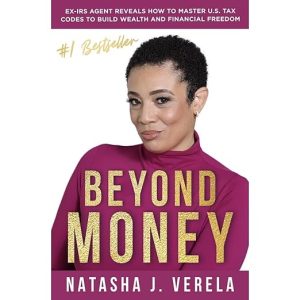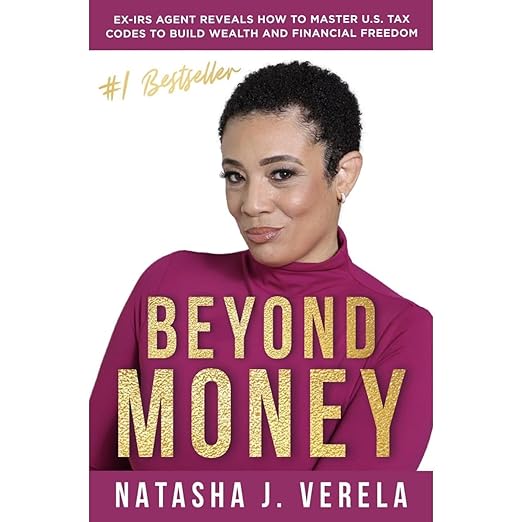
The narrator credit on this audiobook reads Virtual Voice, and that is the first thing a buyer needs to know. No performer was hired. What you hear across four hours and twenty-three minutes is speech synthesis reading Natasha J. Verela's text, which is a legitimate way to publish a short practical book and an entirely different product from a narrated one. The listing states it plainly in a field most people skip, so it is worth repeating up front.
Reviews From Before This Edition Existed
Tax strategy is the actual subject, whatever the title suggests. The premise is a move from being among the most heavily taxed people in the country to being among the least, accomplished through business ownership and real estate rather than through deductions you can claim on a salary. Verela's framing is conversion: turning ordinary income into holdings that the code treats differently, with the intricate parts translated into instructions you can act on.
Four hours and twenty-three minutes is short for that promise, and the page's audience considers the brevity a feature. Good short book on tax strategies, reads one March 2025 verdict, which credits it specifically with explaining those strategies for small businesses. That is the right frame. This is an orientation to a way of thinking about income, not a reference work, and it never claims to be the second thing.
All five written responses grade it five stars, and four of the five were filed before this recording was published in April 2025. Two arrived in August 2024, one the following month, one a week before release. Their enthusiasm is real and it belongs to the text rather than to this edition, which matters more than usual when the edition in question is machine-read.
Concise Enough to Hear Twice Over
Case studies are what the description leads with, and they are the right instrument for this material. Tax planning is impossible to teach in the abstract, because every advantage depends on a structure somebody actually built. Worked examples let a listener see the shape of a decision, the entity behind it, and the outcome, which is the difference between understanding a strategy and merely recognizing its name. The description promises success stories alongside the case studies, and those two things do different jobs: one shows you the mechanism, the other tells you somebody survived using it.
Concise is the compliment that keeps recurring on the page, and the five-star filed on August 28 puts it most usefully: easy, to the point, and dense with information rather than padded out. Financial books have a habit of stretching a pamphlet's worth of ideas across nine hours. This one refuses, and at this length a listener can go through it twice in the time a standard title takes once.
Real estate carries the second half of the argument, and it is where the tag on this listing comes from. Property is the vehicle Verela keeps returning to for turning taxable income into something the code rewards, which makes the book more specific than a general wealth guide and narrower than one. If real estate is not part of your plan, a meaningful share of the runtime will describe a door you have chosen not to open.
An Expert's Pitch Undercut by Synthetic Narration
Specific tax guidance ages faster than almost any other kind of advice, and nothing on this page tells you when the material was written or when it was last checked. The recording went up in April 2025. The book describes codes that legislatures rewrite, thresholds that move annually and treatments that can vanish in a single bill. Assume the principles hold and the particulars need verifying. The structural logic, that ownership is taxed differently from wages, is not going anywhere; the numbers attached to it are provisional by design.
Verela's expertise is the whole pitch, and the copy insists on it, telling you to follow the author's expert advice. A synthesized reading sits awkwardly against that. The person whose judgment you are being asked to trust is not the voice explaining it, and for a book sold on authority rather than on information alone, some listeners will feel that gap more than others.
Secrets of wealth building is how the page's only post-release response, filed in February 2026, describes what it found. That word is worth examining before you buy. Tax code is public, exhaustively documented and used daily by professionals, so what a book like this offers is not secrecy but access, and the difference matters when you are deciding whether a short book can replace a conversation with somebody who signs returns.
Useful Vocabulary Before Your First Tax Meeting
Small business owners are the clearest fit, above all anybody who has just crossed from side income into something that files its own return and has not yet thought about structure. The five-star from August 4 describes the information as powerful and, more importantly, as relatable, which is the useful test for material this technical: whether the examples resemble your situation closely enough to act on.
Salaried listeners with no business and no property will get less, and the description does not hide it. Anybody who already works with an accountant on entity planning will recognize most of the opening stretch, and anybody who wants citations, forms or worked numbers should buy a reference instead. A short spoken overview cannot substitute for either, and does not try.
Use it as a vocabulary lesson and it pays for itself. Knowing which questions to ask, and which structures exist to be asked about, is most of what separates a productive meeting with a professional from an expensive one, and this is a short, clear, unusually direct route to that vocabulary. Just verify the specifics against the year you are actually filing in.
At a Glance
- Subjects: Converting earned income into holdings, business ownership as tax structure, real estate as the vehicle
- Tone: Brisk, practical, faintly evangelical
- Bottom line: A clear four-hour orientation for new business owners, best treated as preparation for a professional rather than a replacement.
Who narrates the audiobook?
Nobody. The narrator field reads Virtual Voice, which means synthesized speech rather than a hired reader. Expect even pacing and no interpretation, which suits instructional material better than it would suit a novel, but do not expect the emphasis a human narrator brings to a complicated sentence.
Is the audiobook useful if you do not own a business or property?
Less so, and honestly so. The entire argument runs through business ownership and real estate as the mechanisms that change how income is treated. A salaried listener with neither will come away understanding what other people are doing rather than with steps to take this year.