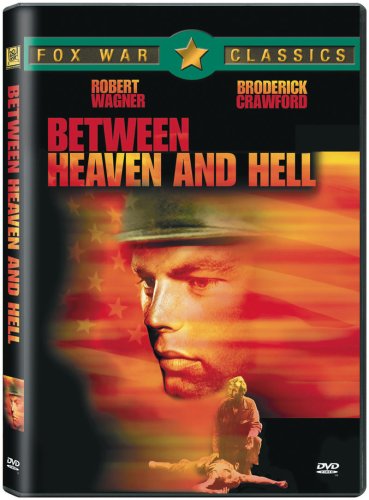
Cotton planter Sam Gifford is not a man you warm to easily at the start of this audiobook. Robert Wagner plays him as someone so thoroughly shaped by Southern class hierarchy that he treats his sharecroppers as agricultural equipment - useful, interchangeable, and not owed anything resembling respect. Setting a WWII drama around a character who begins this way carries real risk: the payoff depends entirely on whether the war's pressures can crack him in ways that feel genuine rather than convenient. This production, starring Wagner alongside Broderick Crawford and Buddy Ebsen, makes a compelling case that they can.
The audio presentation captures the original dramatic energy of the film. Crawford's sadistic officer functions as the pressure point that forces Gifford to reckon with his assumptions about what separates "quality" people from everyone else. When the men he considers his social superiors crack under combat stress while his sharecropper comrade holds together, the reversal is presented as genuinely disorienting for Gifford - and Wagner's performance communicates that disorientation without retreating into easy redemption.
Buddy Ebsen Anchors a Story About Class
Buddy Ebsen's Cpl. Willie Crawford is the quiet moral center of the production. Ebsen was, in 1956, primarily known for comedic and character work, and watching him anchor the emotional credibility of a film about class prejudice and wartime friendship is one of the production's genuine pleasures. Reviewer Daniel B. Bruhn noted that this is very much Ebsen's film for those who pay attention to it - and that reading is accurate. Sam Gifford's transformation only registers because we believe in the person he is changing through. Ebsen makes Crawford real enough that the friendship carries weight.
Crawford's performance as the sadistic officer is less nuanced but serves the story's purposes efficiently. He represents the system Gifford idolizes - military hierarchy mapped onto social hierarchy - and his cruelty forces Gifford to see that the authority he has deferred to all his life carries no moral weight. The Pacific setting strips away the scaffolding of Southern social order and puts the men on equal footing in the dirt. What Gifford discovers is not that class doesn't matter - he never stops being who he is - but that it matters less than he thought, and that the man he dismissed as a sharecropper has more worth than the system told him.
Wagner's Transformation Fits in Under Four Hours
The production holds up well in audio format. The Pacific combat sequences are tense without overwhelming the character work, and the dialogue carries the moral weight of the story without becoming didactic. One reviewer recalled seeing the film in youth and finding it a good story suitable for a family audience - that assessment tracks with the production's restraint. This is not a graphic war story. It is a character study set in war, and the distinction matters for how you engage with it.
Robert Wagner is doing real work here, not simply trading on his screen presence. Sam Gifford is written as genuinely unpleasant at the outset, and Wagner does not soften him. The arc from self-centered cotton planter to someone capable of recognizing another person's full humanity takes the full runtime to complete, and it earns its resolution because Wagner never rushes it. Reviewer leslie fine noted Wagner's craft directly, and that appreciation is well-placed - this performance requires him to be convincingly wrong for most of the story before becoming someone you can root for.
Told Entirely From a Wealthy Southerner's View
The production reflects the constraints of its era in its treatment of Southern race and class dynamics. The sharecropper relationship that anchors the story is presented through Sam Gifford's point of view, which means the story's scope is limited to what a wealthy white Southerner can learn within the frame of WWII combat. Listeners expecting a more expansive treatment of those dynamics will find the perspective narrower than modern sensibilities might prefer. The story is honest about the limits of Gifford's initial worldview without being apologetic about the fact that he is the protagonist rather than Crawford - a choice that reflects the era's conventions and the story's specific interest in the psychology of class privilege under pressure.
Within those constraints, the production is honest about what it is: a story about one man's education in basic human dignity, told through the specific pressures of Pacific combat. The cast - Wagner, Crawford, Ebsen, and Terry Moore - delivers performances that hold together as a genuine ensemble. The reviewer who described both books as written like spy novels was responding to the propulsive quality of the storytelling, which moves quickly enough to stay engaging without sacrificing the character beats that give the arc its meaning.
Skip It If You Want War Over Character
This production rewards listeners who enjoy classic WWII drama with a strong character focus, fans of Robert Wagner or Buddy Ebsen who want to hear their performances in a focused dramatic format, and anyone interested in how mid-century American fiction engaged with class and social prejudice through the lens of wartime experience. The runtime makes it suitable for a single dedicated listening session.
Skip it if you need the war narrative to take center stage over the character study, or if you find productions from this era too constrained in their social framing to engage with on their own terms. For listeners who appreciate the specific pleasures of classic American dramatic storytelling, this is a well-preserved example of the form that rewards patient attention.