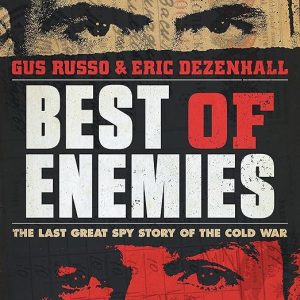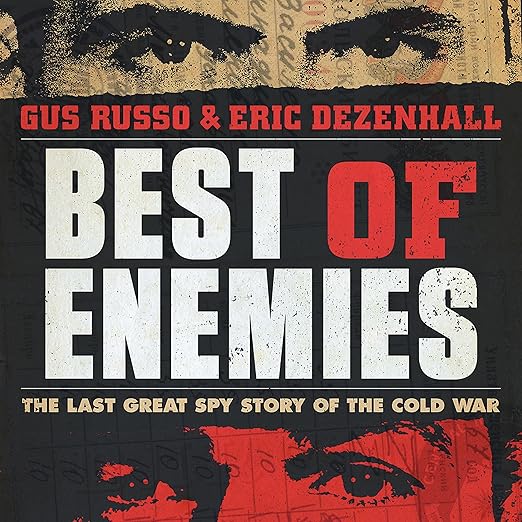
I started listening to Best of Enemies on a gray Tuesday morning when I had a long drive ahead of me and no patience for anything that required too much suspension of disbelief. The irony, of course, is that Gus Russo's account of CIA officer Jack Platt and KGB agent Gennady Vasilenko reads as almost implausibly novelistic despite being entirely true. By the time I pulled into my destination four hours later, I had used up my parking grace period twice and barely noticed.
The premise sounds like the setup to a geopolitical fable: two intelligence officers, one American and one Soviet, both assigned to recruit the other as an asset, instead become lifelong friends. But Russo, who co-authored the book with Eric Dezenhall, grounds this friendship in such specific, unglamorous detail that it becomes impossible to dismiss as convenient mythology. These are not romantic spies. They are bureaucratic survivors in agencies that frequently made their lives miserable, and their bond is born not of ideology but of mutual recognition.
Treachery, Danger, and Hilarious Absurdity Together
What distinguishes this book from the crowded shelf of Cold War memoirs is its tonal range. Russo gives us treachery and genuine danger alongside scenes of such comic absurdity that one reviewer described it as both hilarious and frightening, which is exactly right. The Russian Mafia chapters have the texture of a crime novel. The bureaucratic inanity sections land like deadpan satire. And woven through it all is the improbable tenderness of two men who should have been adversaries but chose otherwise.
The historical anchors are substantial. The discovery of Soviet mole Robert Hanssen, one of the most damaging intelligence breaches in American history, runs through the book as a background current that eventually breaks into the foreground. The 2010 Spy Swap, in which Gennady was freed from Russian imprisonment, provides a narrative payoff that feels earned rather than convenient. And the involvement of Robert De Niro in helping Gennady survive his incarceration is the kind of detail that would strain credulity in fiction but sits comfortably in this account precisely because Russo is meticulous about documentation.
Petkoff's Restraint Across Three Decades of History
Robert Petkoff narrates with the measured confidence that Russo's material demands. He is a narrator who understands that restraint is a form of respect for the story, and he never italicizes moments that are already doing their own work. His handling of the book's tonal shifts, from darkly comic to genuinely harrowing, is consistently assured. For a story that spans roughly three and a half decades and moves between Washington, Moscow, and the shadows in between, this kind of narrative steadiness matters enormously.
Listeners who come to Best of Enemies expecting conventional spy thriller pacing will need to adjust their expectations slightly. The first few hours are deliberately calibrated, establishing the institutional cultures and personal histories that make the central friendship legible. One reader noted a slow start before the story pulled them in fully, which is an honest assessment. Russo is building infrastructure, and it pays dividends once the real pressure begins.
Putin's Russia Looms Over an Old Friendship
The book's greatest achievement is its portrait of two intelligence cultures in mutual exhaustion. By the time Platt and Vasilenko are old men, the Cold War they were trained to fight has dissolved into something messier and less comprehensible, and Russo captures the strange melancholy of that transition. Vladimir Putin's Russia, dreaming of rolling back to Soviet ideals, provides a quietly ominous backdrop for the final chapters. The friendship that should never have happened becomes, in this light, a kind of quiet argument for something the institutions themselves could never quite manage.
The Robert De Niro thread deserves special mention because it is handled with admirable specificity rather than celebrity name-dropping. His involvement in Gennady's story during the Russian imprisonment period is detailed enough to feel real and strange and human, which is the precise register the whole book aims for.
Le Carre Fans Meet the Real Institutions
This is the right listen for anyone who has read John le Carre and wants to know what the real institutional texture of Cold War espionage actually felt like, or for history readers who want their nonfiction to carry some of the propulsion of a novel. It is equally well-suited to listeners who are curious about the Hanssen case or the 2010 spy swap and want the human connective tissue behind those events. Listeners who need conventional thriller pacing from page one, or who have no patience for the bureaucratic comedy that Russo clearly relishes, may find the early chapters slow going.
The Short Version
- Voice: Robert Petkoff delivers Gus Russo's material with the dry authority it deserves, distinguishing the American swagger of Jack Platt from the world-weary cadence of Gennady Vasilenko without overplaying either.
- Big ideas: Cold War espionage, unlikely friendship across enemy lines, institutional absurdity
- Atmosphere: Propulsive and darkly comic with real emotional stakes
- Worth it?: A Cold War story that reads like a buddy film and lands like a history lesson, best for listeners who want truth stranger than fiction.
Questions Listeners Ask
Do you need prior knowledge of the Robert Hanssen spy case to follow the book?
No. Russo provides enough context that the Hanssen material is fully legible on its own, though readers familiar with the case will recognize how Platt and Vasilenko's story intersects with it at key moments.
Is Best of Enemies primarily about the friendship or about Cold War intelligence history?
Both, genuinely. The friendship is the vehicle and the emotional core, but Russo uses it to illuminate how American and Soviet espionage actually functioned at the human level, including the bureaucratic dysfunction that shaped both agencies.
How does Robert Petkoff handle the book's tonal range between comedy and genuine danger?
Petkoff is a measured narrator who lets the material do its own work. He does not overplay the comic scenes or amplify the tension unnecessarily, which keeps the tonal shifts from feeling jarring.
Does the book cover what happened to Gennady Vasilenko after the 2010 Spy Swap?
Yes, the book follows both men through the spy swap and into the aftermath, including the larger implications of Putin's Russia for the world they spent their careers navigating.