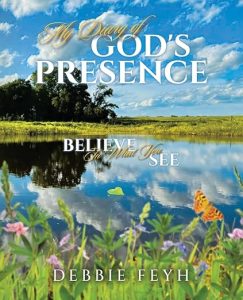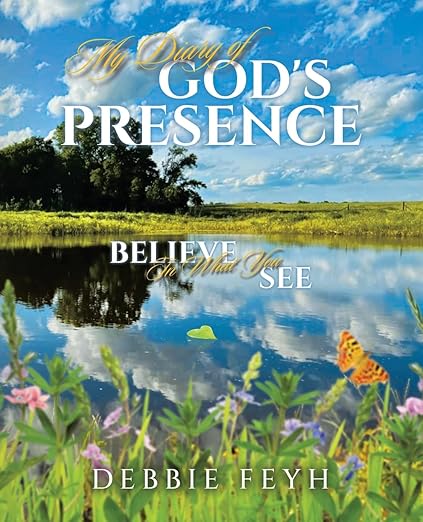
Believe in What You See occupies an unusual position in the audiobook landscape. It's described in the metadata as a devotional journal, which is something closer to a guided written practice than a narrative or an argument. Debbie Feyh reads her own work, which gives the experience an intimacy that professional narration wouldn't quite achieve. This is a book written for a specific listener, and the author's voice makes that specificity felt from the first lines.
The book's central premise is disarmingly simple: pay attention to where you see God in your daily life, write it down, and return to those written records on hard days. The audiobook functions as both an invitation into that practice and a model for the kind of noticing it requires.
The Review
Feyh's questions are organized around the senses and the ordinary: the colors of a sunrise, a bluebird's song, the smell of flowers, the flavor of morning coffee. This isn't accidental. The book's theology is essentially an attentiveness theology, one that asks the reader to find evidence of divine presence in the unspectacular fabric of a day rather than in dramatic revelation. For Christian listeners who feel their faith is most alive in moments of quiet awareness rather than in formal practice, this approach will resonate. Feyh frames the act of journaling not as a private project but as a legacy: "keep track of where and how God is actively involved in your everyday activities," she writes, "leaving a legacy of faith for future generations."
That intergenerational framing is one of the book's more interesting dimensions. Feyh is not just asking listeners to record what they see for their own comfort; she's asking them to build something that will outlast the moment of writing and serve as witness for people who weren't there. That's a more serious and communal act than ordinary journaling, and it gives the book a purpose that extends beyond self-help.
The Best Parts of Believe in What You See
The author-narrated format is the right choice here. Feyh's reading has the quality of someone sharing something genuinely personal, which is appropriate for a book that asks its listener to be equally personal in their own spiritual record-keeping. At just under seven hours, the audiobook is longer than a simple devotional companion typically runs, which suggests it's designed for sustained engagement rather than quick inspiration. The audiobook format for a devotional journal is somewhat unconventional, since journaling is by definition a written act, but Feyh's structure means the audio version works as a sustained reflective experience even without pen and paper nearby.
The book's dual genre classification as science and sports suggests the publisher's metadata may not fully capture its character. This is straightforwardly Christian devotional content, oriented toward nature and outdoor experience as spaces where divine presence is perceived. Listeners who come to it expecting scientific content will be misaligned with what the book is actually doing.
The Caveats
With only a single rating at the time of this review and a 2.0 score, there's very limited listener data to work with. The single rating may not reflect the book's actual quality so much as an early review that didn't align with the book's intended audience. Self-published devotional works in this category frequently find their readership slowly through word-of-mouth within faith communities rather than through platform discovery, and a premature low rating can distort the early signal significantly.
The book was published in May 2025, making it genuinely new at this writing. The physical book is short at 116 pages, and the audio expands that through Feyh's pacing and the reflective space she builds into the narration. Listeners who approach it as a quick listen may find the pace contemplative to the point of slowness; those who engage with it as a devotional practice, pausing to reflect between sections, will find the pacing appropriate.
Who Debbie Feyh Is Writing For
Christian listeners who are interested in devotional journaling as a spiritual practice will find this a warm and accessible guide. Those who experience their faith most readily in natural settings, in the attentiveness Feyh asks for with birdsong and sunrise, will find the book particularly resonant. Listeners without a Christian faith framework, or those looking for secular mindfulness content, should know that this book's spiritual orientation is explicitly Christian throughout. It is not ecumenical and does not need to be. It knows exactly who it is for.
Before You Press Play
- Narration: Debbie Feyh reads her own work with the warmth of personal conviction, making the author-narrator pairing feel intimate and authentic rather than produced.
- Themes: Devotional awareness of God in everyday life, gratitude journaling, recording faith experiences as legacy
- Mood: Gentle and reflective, oriented toward private spiritual practice
- Verdict: A faith-based devotional journal in audio form, purpose-built for Christian listeners who want a structured framework for recording their spiritual encounters with God in nature and daily life.
Frequently Asked Questions
Is Believe in What You See suitable for listeners outside the Christian faith?
No, not comfortably. The book's orientation is explicitly Christian, framing nature and daily experience as encounters with the Christian God. The journaling practice it proposes is grounded in that theological framework. Listeners interested in secular mindfulness or nature journaling without the Christian devotional context will find the book's assumptions misaligned with their own.
Does the audiobook format work for a devotional journal, given that journaling is a written practice?
Feyh structures the audio as a reflective guide rather than a strict journal prompt sequence, which means it functions as a sustained devotional listening experience rather than an instruction manual. Listeners can engage with it purely as audio and then pursue the journal practice separately, or use it as background for their own writing. The two modes are compatible rather than in conflict.
The current rating is very low with only one review. Should that affect the decision to listen?
Not necessarily. With only a single rating, the score is statistically meaningless. Devotional and faith-based self-published titles often accumulate reviews slowly through faith community channels rather than mainstream discovery. The content and the author's clear sense of purpose are better indicators of value for the intended listener than a single early rating.
How long is the audiobook, and how is it best approached as a listening experience?
The audiobook runs just under seven hours. Given its devotional nature, it's best approached in shorter sessions that allow for genuine reflection between sections. Trying to consume it in one or two long sittings will work against the contemplative practice the book is trying to cultivate.