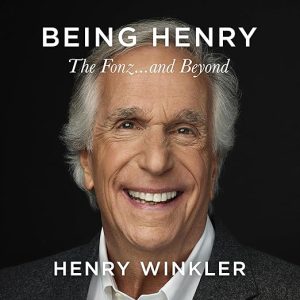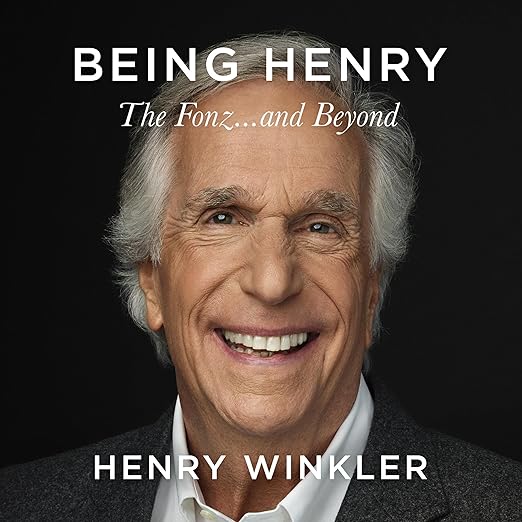
At a Glance
- Narration: Winkler reads it himself for Macmillan Audio, and no other voice appears on the credit line.
- Themes: Typecasting and its long tail, severe dyslexia, family cruelty, late-career reinvention.
- Mood: Warm, wandering, funnier than the subject matter promises.
- Verdict: Worth a credit for the shape as much as the stories, with a rating counter you should disregard completely.
Celebrity memoir is the audiobook category most likely to be one hour of anecdote stretched across a contractual runtime, and the Fonz is exactly the kind of role that produces that book. Henry Winkler avoids it, and the reason has less to do with the stories than with the shape he gives them. He also reads the whole thing himself, which on this particular memoir is not a marketing decision so much as a condition of the thing existing.
What We Made of It
Mark C Lavallee's November 2023 verdict, graded five stars and stated outright to be based on the audiobook rather than the printed book, does the structural analysis better than most professional copy. It puts Winkler beside Samuel Clemens taking the stage in a one-man show, "starting with a topic and meandering through his life only to bring it back to the starting topic at the end," and says that is what each chapter does. As an account of the method it is exact.
That distinction between the recording and the page earns its keep here more than usual. A chapter that wanders is a liability on paper and an asset in a voice, because the digressions arrive as talk rather than as architecture a reader has to keep track of while turning pages.
Underneath the delivery the material runs heavier than the tone suggests. Severe dyslexia carried through a childhood the copy calls disheartening. A role so total that afterward the work stopped coming. Then Arrested Development, Parks and Recreation, and Barry, a second run the publisher credits with revealing depth and pathos the first one never asked for. Winkler does not compress the gap between those two careers, and refusing to compress it is why the anecdotes hold.
The Library Journal line the publisher chose to print says Winkler "shines in his narration of his memoir commemorating 50 years of showbiz work." That is a trade verdict rather than a buyer's, and the publisher selected it, so weigh it accordingly. It remains the only assessment of the performance that a shopper can read before pressing play, which on a self-narrated memoir is more than many listings offer.
Sandi D.'s November 2023 response goes where the memoir cannot follow: a family race car used in the movie Heroes, filmed in Petaluma, with relatives allowed on set as extras. A review arriving with its own Winkler story attached tells you something true about who buys this. People are not shopping for a Hollywood history. They are settling a long-standing affection, and the book is built to meet exactly that.
Author narration on a memoir about dyslexia carries its own argument. A man who could not read easily as a child sits and reads over nine hours of his own sentences aloud, take after take, and nothing in the copy points at it. The book does not need to point at it. That fact belongs to the object you are buying, and it is the strongest reason to take this version over the printed one.
Weak Spots in Being Henry
The rating counter is broken, and it is worth seeing precisely how. The page shows 4.6 out of four ratings. Four whole-star votes can only average 4.5 or 4.75, so 4.6 is not a number four people are able to produce between them. Meanwhile five written responses sit displayed underneath, one more than the counter admits exists at all.
Those five written grades come to twenty-four, a mean of 4.8, which is not 4.6 either. So the headline number disagrees with the votes it claims to be counting and with the verdicts printed below it, in two different directions at once. None of this reflects on the book. It does mean the figure at the top of the listing should play no part in your decision.
Kindle Customer's February 2025 entry, the single dissent in an otherwise unbroken run of top marks, names the real structural risk: "The story jumps back and forth in time, which always kind of annoys me." The same response finds the stories "fun but nothing too deep." Both readings are fair. A memoir organized by association instead of chronology asks a listener to hold two timelines with no page to glance back at.
Nothing on the listing carries a content warning, and the memoir does travel to some hard places by its own description: a childhood it calls disheartening, a career that simply stopped. The copy promises self-deprecating humor over that material, which is a mercy for most buyers and a limit for anybody hoping the book will sit inside the damage rather than move briskly past it. Decide which of those you want first.
Best Suited For
Fans who know the Fonz and little else will get the biggest return, because the surprise on offer is architectural rather than gossipy: the second career turns out to be longer and stranger than the famous one. It also lands for anyone carrying a dyslexia story of their own, or raising a child with one, since that thread carries through to the end by the publisher's own account.
Rick C's April 2025 response describes arriving here from Winkler's fishing book, "I've never met an idiot on the river," wanting more about the childhood that book only glanced at. That is the correct order of approach. This is the full version of what the lighter title sampled, and it is the one to hand somebody who finished that and wanted the rest.
The wrong buyer here is somebody after a set-by-set account of Happy Days or an industry history of the period. Hollywood is the setting and not the subject, and the production credits, Macmillan Audio out of Celadon Books, promise a memoir rather than a research project. A strict chronology is not on offer either, and the associative structure will irritate anyone expecting one. Anybody who came for the man rather than the career has found the right recording.