Before You Press Play
- Narration: Rosalyn Landor's timing with Quinn's comic dialogue is precise: she knows exactly where to hold the pause and where to drive through, which is the fundamental skill this material demands.
- Themes: Enemies-to-lovers, childhood rivals, Regency-era family dynamics
- Mood: Light and witty, with a slow-burn romantic payoff that earns the setup
- Verdict: Julia Quinn working her best archetype, with Rosalyn Landor's narration making every comic exchange land the way it should.
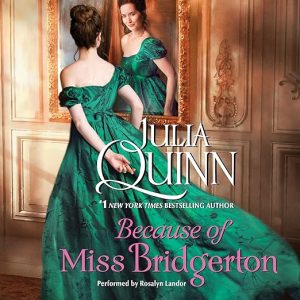
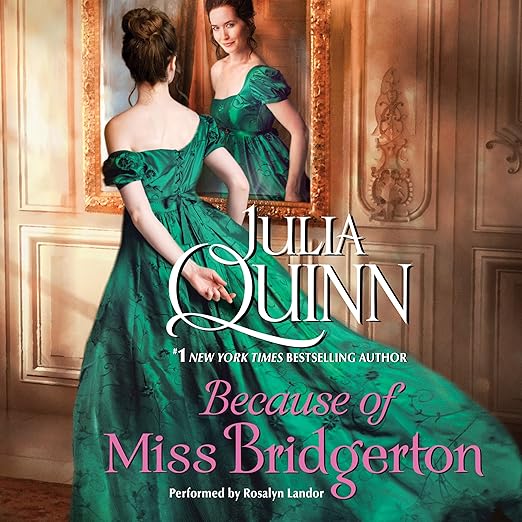
Billie Bridgerton climbed a tree she had no business being in, and George Rokesby was the one who had to fetch her down. That incident, which opens the novel with the kind of propulsive absurdity Julia Quinn deploys with particular skill, tells you nearly everything you need to know about the dynamic the book will spend the next nine hours complicating. This audiobook is the first entry in Quinn's Rokesby series, a prequel to the main Bridgerton novels set a generation earlier, and it arrives with the full weight of its franchise expectations already in place: expectations it satisfies on its own terms.
What makes 'Because of Miss Bridgerton' work is precisely what reviewer 'lopez' identifies: 'snappy, witty dialogue for clever and endearing characters.' Quinn's sentences move with genuine comic rhythm, and the enemies-to-lovers structure here is the classic Pride and Prejudice architecture, two people who are certain they cannot stand each other gradually discovering that the certainty was covering something else entirely. The audiobook format suits this material exceptionally well because the dialogue-heavy chapters benefit enormously from a skilled voice performance, and Rosalyn Landor is one of the narrators most capable of delivering Quinn's timing at full effect.
The Strengths
Rosalyn Landor narrates, and she is the right narrator for this material. Landor has deep experience with Regency and historical romance, and her delivery of Quinn's comic dialogue carries the timing that genre comedy requires. The rhythm of a Quinn novel depends on individual sentences landing correctly, on knowing when a pause serves the joke and when it kills it, and Landor has that calibration fully in hand. She handles both Billie's tomboyish frankness and George's more contained exasperation with differentiation that stays consistent and clear across the full nine-hour runtime. That consistency across a long audiobook is not a small technical achievement.
The cast of characters here is built for series potential. Reviewer Sheila M notes it as 'a worthy successor to the fabulous Bridgerton series with a whole batch of new characters, a different time period, and a different set of troubles.' The Rokesby brothers, Edward and Andrew, appear alongside George, and the relationships between these families are established with enough specificity that the prequel reads as a genuine beginning rather than a retroactive addition. Quinn clearly planned this series with the full family history in mind, and the audiobook rewards listeners who pay attention to the background dynamics as much as the central romance.
Before You Commit to Because of Miss Bridgerton
Reviewer Kristin Young names the dynamic precisely: the 'shared animosity gradually discovering what they love about one another' structure, the Pride and Prejudice romance archetype, is Quinn's home territory, and she is working at the top of her skill level here. The novel does not try to be something other than what it is. This is a character comedy with historical setting and a slow-burn romantic payoff, and it delivers both without apology and without the kind of elaborate plot machinery that sometimes disrupts Quinn's natural strengths.
The novel's treatment of Billie as a genuinely competent, physically capable woman who is not merely tomboyish but actually skilled at the outdoor pursuits that define her is worth noting as a Quinn choice rather than a period-accurate one. Billie climbs trees, manages animals, and moves through the physical world with a confidence that the Regency setting would have worked to constrain. Quinn allows that competence to exist without making it the source of constant social friction, which gives the character room to be interesting rather than merely transgressive. That authorial decision is part of what makes the enemies dynamic work: George is not annoyed by Billie because she violates gender norms. He is annoyed by Billie because she is specifically, personally irritating to him, and that distinction produces better comedy.
The period setting, a generation before the main Bridgerton novels, means that some of the social constraints and family pressures operate differently. Billie has grown up running wild with the Rokesby brothers, which gives the enemies dynamic a specific quality: these are not strangers who dislike each other on first impression. They have genuine shared history, and the antagonism is rooted in familiarity rather than fresh prejudice. That distinction matters considerably for how the relationship development reads. It is more interesting than a standard cold-start enemies-to-lovers dynamic because the baggage has genuine weight.
Lopez's review flags one honest limitation: Quinn 'goes off the rails when she tries' to build elaborate plots. This is a plot-light book, which is a feature for readers who want the character chemistry to carry the weight. Listeners who prefer intricate storylines with significant narrative stakes should calibrate expectations; the pleasure here is in the dialogue, the misunderstandings, and the emotional architecture of two people discovering they were wrong about each other. That is entirely enough, executed at this level.
Who Should Listen to Because of Miss Bridgerton
Fans of the main Bridgerton series who want more of Quinn's voice and a fresh cast will find this a natural extension. Historical romance listeners who appreciate the enemies-to-lovers structure, particularly when executed with genuine wit rather than perfunctory antagonism, will find this audiobook one of the cleaner examples of the form. First-time Quinn readers can start here without the main series; the prequel is self-contained and the family connections work as background rather than prerequisites.
Listeners who prefer their historical romance with significant historical detail, political complexity, or explicit heat will find this on the lighter end of all three dimensions. Quinn's strength is the character comedy and the emotional payoff, not world-building or explicit content. The spice level is moderate for the genre, leaning toward charm and wit over heat. That is a deliberate register, and Landor's narration honors it precisely.