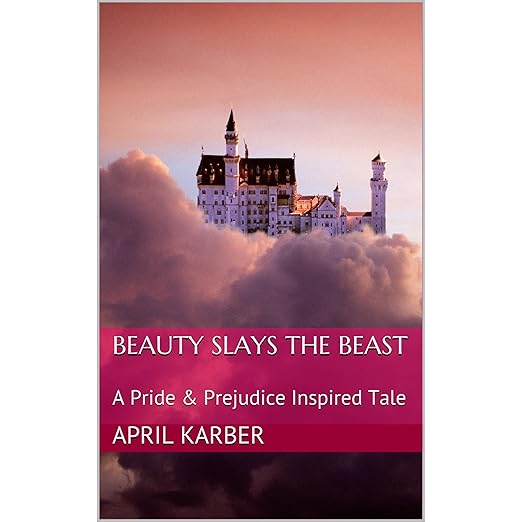
- Narration: Virtual Voice narration, AI-generated; clean and error-free, sufficient for the short runtime and fast-paced fairy-tale format.
- Themes: Classic literary mashup, captivity romance, love versus darkness
- Mood: Dark and fantastical, compressed and fast-moving
- Verdict: A short, niche audiobook that delivers its Pride and Prejudice meets Beauty and the Beast premise with genuine commitment; go in knowing it is fan fiction, not literary fiction.
Elizabeth Bennet strikes a bargain with a monster to save her father, and the beast in question turns out to be something neither Austen nor the old fairy tale quite imagined. April Karber's Beauty Slays the Beast is a short, audacious mashup that places Pride and Prejudice characters inside a Beauty and the Beast frame, and this audiobook delivers the premise efficiently in just over two hours. The Virtual Voice narration is AI-generated, which is worth noting upfront for listeners who find AI narration a significant factor in their listening experience.
The fan fiction tradition has always been drawn to exactly this kind of collision: what happens when one beloved story's characters are dropped into another beloved story's structure? Karber's version leans into the fairy-tale logic fully. Elizabeth's captor is not a distant Darcy analogue but a figure shaped more by the beast archetype: brooding, dangerous, concealing something. The Pride and Prejudice social machinery, the Bennet family dynamics, the class pressures that make Austen's novel so precisely calibrated, are repurposed here as emotional and plot furniture for a darker, more supernatural scenario.
Karber Commits Fully to Fairy-Tale Logic
The audiobook works best when it commits to the fairy-tale logic without apologizing for it. Karber is not writing literary fiction; she is writing a fantasy hybrid for readers who love both source texts and want to see what happens when they collide. The emotional question, whether love can survive fear and captivity and the discovery of a hidden past, is structurally the same question both the Austen novel and the traditional fairy tale ask through different means. The mashup finds that shared question and builds toward it.
Reviews are genuinely mixed, and honestly so. One reviewer found the central idea 'intriguing' but objected to certain sexual references. Another described it as 'entertaining' while noting that some elements felt 'unfinished or unexplained.' A third argued that taking 'this story as it is and not what you think it should be' allows you to appreciate its particular pleasures. That last observation is probably the most useful framing for potential listeners: Karber is writing something specific and partial, not a comprehensive literary achievement.
Virtual Voice Handles Two Short Hours Fine
The Virtual Voice narration is AI-generated and reads the text without significant errors or mispronunciation. At two hours and four minutes, the runtime is short enough that any narration limitations are less consequential than they would be across a full-length novel. The story moves quickly, the chapters are short, and the plot covers ground at a pace that suits the compressed fairy-tale format.
The story has a niche and it fills it. Fans of Pride and Prejudice retellings, fans of Beauty and the Beast adaptations, and fans of the mashup genre specifically will find this one a distinctive entry. The combination is not common, and Karber's instinct to fuse the two at the level of emotional logic rather than just setting them side by side gives the audiobook more coherence than a less committed mashup might achieve.
Explicit Content and Loose Threads Noted
The audiobook includes content that some reviewers flagged as sexual, and listeners with preferences about explicit content should know that it is present, if not dominant. The structural loose ends noted by reviewers are real; this is a short work that covers significant narrative ground quickly, and some plot threads are handled with more economy than thoroughness. That is a trade-off built into the format rather than a failure of craft, but it shapes the reading experience.
Expectations shaped by either source text should be adjusted. This is neither Austen retelling nor straight fairy-tale adaptation. It is something narrower and stranger: a hybrid that uses both traditions as raw materials for a new construction. Listeners who approach it as fan fiction rather than as literary fiction will calibrate their expectations more accurately.
The specific choices Karber makes in aligning the two source texts are more interesting than they might first appear. Elizabeth Bennet's sharpness and verbal precision, her defining qualities in Austen's novel, translate into this darker setting as a form of self-preservation. She negotiates with a monster the way she negotiated with social convention in the original: carefully, with strategic humor, buying time while she assesses what she actually wants. That continuity of character across a very different fictional world is the most genuinely creative element of the mashup.
The audiobook's short runtime is both a limitation and an argument in its favor. At just over two hours, Karber covers the emotional arc of captivity, discovery, and the transformation of fear into something else without overstaying the premise. The compression means certain elements feel rushed, as reviewers noted, but it also means the story does not exhaust the audience's patience with its own central conceit. Fan fiction has always operated in compressed forms, and this audiobook respects that economy.
Short Mashup Built for Genre-Savvy Fans
Readers who enjoy fan fiction mashups combining classic literature with fantasy or fairy-tale elements will find this a short and entertaining listen. At just over two hours, it is an easy audiobook to complete in a single session. Listeners expecting the emotional or comedic precision of Austen's original, or the mythic depth of the older fairy-tale tradition, will find this a lighter treatment of both. Those open to the experiment on its own terms will find the collision of Elizabeth Bennet and the beast mythology more coherent than they might expect.