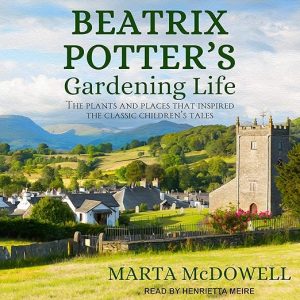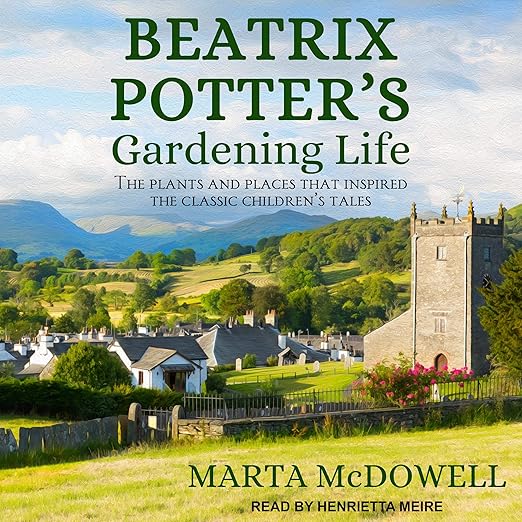
Beatrix Potter's Gardening Life succeeds at something genuinely difficult: making a children's author most listeners think they already know intimately feel newly interesting, by focusing entirely on the part of her life the Peter Rabbit books only hint at. Marta McDowell's biography, narrated by Henrietta Meire, treats Potter's lifelong relationship with gardens and plants as its own complete subject, and the audiobook version of that argument mostly holds up, with one significant caveat worth addressing directly.
Three Movements, One Farmland Legacy
McDowell structures the book in three clear movements: a gardener's biography tracing the moments and places that shaped Potter, especially her home at Hill Top Farm in England's Lake District, followed by a season-by-season tour through what actually blooms in her gardens across the year, and closing with a practical traveler's guide for visiting those same gardens today. Owl's review affectionately dubs this 'The Tale of Mrs. Heelis,' a nod to Potter's married name after she became a working farmer and landowner in her own right, and draws a lovely comparison to the more grounded, pastoral corners of Wind in the Willows as a tonal cousin to Potter's own gardens.
More than 150 million copies of Potter's books have sold worldwide, and that scale of cultural footprint is precisely why a book this specifically focused, on gardening rather than on her full biography or her publishing career, can work: general Potter biographies already exist, but McDowell's angle carves out real, previously under-examined territory. Tea & Books' review describes McDowell guiding listeners through Potter's development from her early childhood interest in plants through her growth as an artist to her final years as an estate farmer, a full-circle arc that gives the gardening focus genuine narrative shape rather than reading as a niche curiosity.
Potter's gardening life eventually became inseparable from a much larger conservation legacy: she used her book royalties to buy up farmland across the Lake District, and upon her death left more than 4,000 acres, including numerous working farms, to Britain's National Trust, a gift credited with helping preserve the region's landscape as it is known today. That philanthropic outcome gives McDowell's gardening-focused biography real stakes beyond charming anecdote, since Potter's plant-and-place obsession quite literally reshaped a piece of England's countryside for generations after her.
Potter's early path to publication is itself a well-known piece of literary history worth a brief mention here: after publishers turned down Peter Rabbit, she arranged a small private print run herself before Frederick Warne & Co. finally picked it up, a detail that adds useful context to McDowell's portrait of a woman who trusted her own instincts about her work, in the garden and on the page alike, well before the wider world caught up.
Meire's Warmth Fits a Working Farmer
Henrietta Meire's narration suits biography of this register well: warm without tipping into precious sentimentality, which matters for material that could easily curdle into overly whimsical Peter Rabbit nostalgia if handled without restraint. Potter herself was, by every account this book draws on, a serious working farmer and plantswoman later in life, not merely a beloved illustrator, and a narration register that respects that seriousness while still honoring the charm of her early creative life is the right balance for this specific subject.
The season-by-season structure of the middle section also happens to suit audio's linear format better than it would suit flipping through a print reference: hearing what blooms in spring, then summer, then autumn, in sequence mirrors how a garden actually unfolds over a real year, rather than requiring you to jump around a printed almanac. For listeners who enjoy garden writing generally, in the literary horticulture memoir tradition, that structural choice pays off cleanly in the audio format specifically.
Potter also became a genuinely serious Herdwick sheep breeder in her later years, winning recognition within Lake District farming circles for her flock, which is a detail that reframes the entire biography's central claim: this was not a famous author dabbling in a cottage garden for relaxation, but someone who built a second, fully legitimate career in hands-on land management. Henrietta Meire's narration treats that later-life farming identity with the same seriousness as Potter's earlier creative years, which keeps the book from flattening her into a single, simpler image.
Potter's Paintings Stay in the Print Edition
One of the attached reviews flags something important for anyone considering the audio edition specifically: the print version includes extensive full-color reproductions of Potter's own art and paintings, present in what the reviewer calls their 'full color glory.' None of that visual material survives into an audio-only listen, which matters more here than in most biographies, since Potter was foremost a visual artist and her botanical illustrations are arguably as central to her legacy as her prose. Listeners who want the full visual experience should pair this audiobook with the print or ebook edition rather than treating audio as a complete substitute.
The traveler's guide section, covering how and where to visit Potter's actual gardens today, also functions better as a printed reference you might tuck into a suitcase than as something absorbed once through headphones and then recalled months later while actually planning a Lake District trip. Consider the audio edition your introduction to the material and a print copy your practical trip-planning companion if an actual visit is somewhere on your horizon.
Literary garden biography is a small but real genre of its own, sitting somewhere between horticultural writing and traditional biography, and it rewards a specific kind of patient curiosity: readers drawn to how a creative life and a relationship with land shape each other over decades, rather than readers wanting a fast-moving narrative arc. McDowell's structural choice, biography, then seasonal garden tour, then travel guide, is a genuinely distinctive way to organize that kind of book, and it translates to audio as three related but tonally distinct listening experiences within one purchase.
Literary Gardeners Will Love This Biography
This is a natural fit for lifelong Potter fans who grew up on Peter Rabbit and want to understand the adult woman behind those stories, as well as for gardeners generally who enjoy literary biography with genuine horticultural substance rather than gardening reduced to a cute biographical footnote. One reviewer, who reads a Potter biography every year, suggests this holds up even for readers who already know the broader Potter story well.
Skip this one, or at least supplement it with a print copy, if seeing Potter's actual artwork and garden photography is a major part of why you are interested, since none of that visual material makes it into the audio edition. Listeners wanting a comprehensive full-life biography rather than a garden-focused lens should also know this book's angle is deliberately narrower than a standard cradle-to-grave account.
Common Questions
Does this audiobook include Beatrix Potter's actual illustrations?
No, the print edition's full-color reproductions of Potter's art and garden photography do not carry over to the audio-only format; pair this with a print copy if the visuals matter to you.
Do I need to have read the Peter Rabbit books to enjoy this audiobook?
No prior familiarity is required, though longtime fans of Potter's fiction will likely get an extra layer of enjoyment from seeing the adult woman behind those stories.
Is this biography focused on Potter's writing career or her gardening life?
Specifically her gardening and horticultural life, from her early plant curiosity through her years as a working farmer at Hill Top, rather than a full cradle-to-grave account of her publishing career.
Does this audiobook include practical travel information for visiting Potter's gardens?
Yes, a closing traveler's guide section covers how and where to visit her actual gardens today, though that content works better as a printed trip-planning reference than something recalled purely from a single listen.