Before You Press Play
- Performance: Kodi Mann's narration suits the intimate, conversational register Kashmir Maryam is writing in, warm and direct, as though the author herself is speaking to you rather than performing for an audience.
- What it covers: Faith and resilience in modern life, mental health through an Islamic lens, the unique challenges facing Muslim women
- Feel: Gentle and affirming, interspersed with genuine emotional weight around contemporary struggles
- Our call: At under two hours, this is a compact but sincere offering for Muslim women navigating the space between traditional faith and modern pressures.
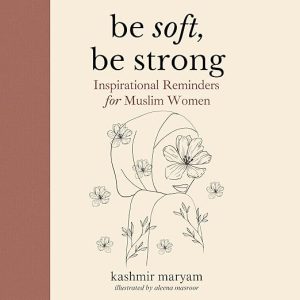
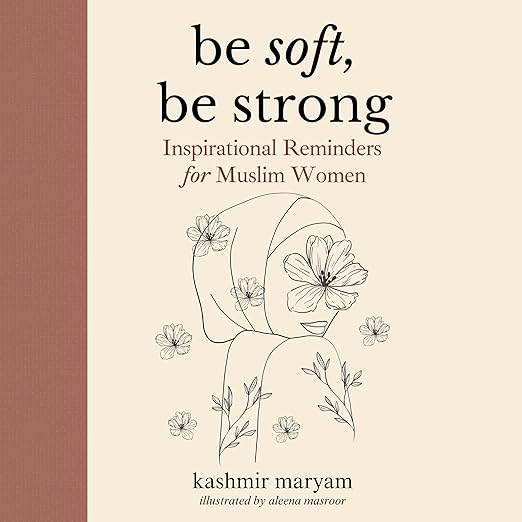
I tend to approach faith-based audiobooks the same way I approach any other: with interest in the quality of the writing and the authenticity of the voice, regardless of whether the tradition in question is my own. Be Soft, Be Strong, the first volume in Kashmir Maryam's Dear Muslimah series, is a short book, under two hours, and it is written with such transparency of intent that the question of audience is settled immediately. This is a letter from one Muslim woman to others, addressed specifically and without apology, and the specificity is the point.
Maryam writes from the premise that the particular challenges of practicing Islam in the contemporary world, the pressures of social media, the complexity of mental health conversations, the navigation of religious identity in spaces that don't fully understand or respect it, deserve to be named and acknowledged directly, not smoothed into generic inspiration. The book promises, in her own words from the preface, "genuine and unfiltered words from my heart" so that her Muslim sisters know their struggles are acknowledged and valid. That framing is not marketing language; it is the book's actual operating mode throughout.
What We Made of It
What makes this work is that Maryam is not performing comfort. She is offering it, and the difference is significant in audio form, where the distance between sincerity and performance is immediately audible. The topics she covers are specific enough to avoid the genericness that undermines much inspirational nonfiction: the beauty and complexity of wearing hijab in contemporary spaces, the challenges of finding a righteous community, the intersection of mental health and Islamic teaching, the particular loneliness of seeking a suitable spouse within a faith tradition that has specific requirements. These are not abstractions. They are things real people in her audience are navigating every day.
The Quranic verses and hadith are woven throughout the text as supporting framework rather than as primary content, they anchor the human conversations Maryam is having without overwhelming them. One reviewer who described herself as a writer noted the way Maryam "weaves wisdom and spirituality into each section, offering comforting words amidst the chaos of the modern world," and that description is accurate to what the book is doing structurally. The inclusion of poetry as one of the book's modes was noted by multiple reviewers as particularly effective, it changes the listening texture and gives the more emotionally heavy passages room to breathe.
Why Listen to Be Soft, Be Strong
Kodi Mann's narration makes the already brief runtime feel intimate rather than thin. The delivery has the quality of being spoken to directly, which is exactly what Maryam's epistolary framing requires. One reviewer who described picking up the book while her kids were distracted and finding value even in one or two pages at a time is describing something important about how this audiobook actually functions: it is designed for the interrupted rhythms of real life, not for long uninterrupted listening sessions. The format rewards returning to rather than sitting with in a single block.
Multiple reviewers mention gifting this book, which tells you something useful about how it functions in community. It is a book people want to share with Muslim women in their lives precisely because the specificity of what it addresses, the acknowledged-and-valid quality of particular struggles, makes it feel like a useful form of care to pass on. That kind of organic recommendation pattern is meaningful for a short debut from a relatively new author.
What Might Not Land
At one hour and fifty-one minutes, this is genuinely brief for a nonfiction audiobook. Readers who want depth of theological argument, extended case studies, or systematic treatment of the topics Maryam raises will need to look elsewhere. This is a collection of reflections and reminders rather than a rigorous examination, and its value is emotional and spiritual rather than analytical. If you come wanting the latter, you will find the book lighter than you need.
The audience is also specific in ways worth being explicit about. This is written for Muslim women, with Islamic theological grounding, and its comfort and empowerment are rooted in that specific tradition. It is not a general spirituality book with Islamic elements present as flavor. Non-Muslim listeners may find it of interest as an inside perspective on contemporary Islamic feminism, but the book's direct address is not to them.
Who Should Pick Up Be Soft, Be Strong
Listen if: You are a Muslim woman looking for faith-based encouragement that takes your specific contemporary struggles seriously rather than offering platitudes; you appreciate the integration of Quranic verse, hadith, reflective prose, and poetry in a single accessible form; or you want a short audiobook that functions well as a daily companion rather than a single sitting commitment.
Consider skipping if: You are looking for theological depth or systematic exploration of the topics raised, or if you want an inspirational listen that speaks across faith traditions rather than within one specific community.
Is Be Soft, Be Strong primarily theological, or is it more like personal essays with Islamic grounding?
It sits closer to personal essays and reflections than to theology. Maryam uses Quranic verses and hadith as supporting framework and anchors throughout, but the primary mode is a conversational, heart-to-heart address to Muslim women about specific contemporary challenges. The theological content is present but not the organizing structure of the book.
Does Kodi Mann's narration work for this kind of intimate, personal address, is it suitable for the letter-to-reader tone Maryam is writing in?
Reviewers describe the listening experience as warm and sincere, which aligns with what Mann's narration is doing. The intimate, conversational quality that Maryam's framing requires, she is writing letters, not lectures, comes through in the audio production. Multiple reviewers who mention returning to the book repeatedly describe the listening experience as consistently engaging, which suggests the narration holds up under repeat listening.