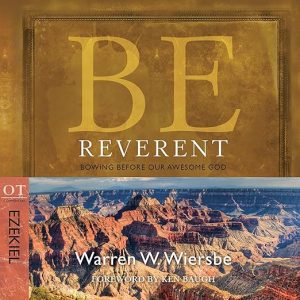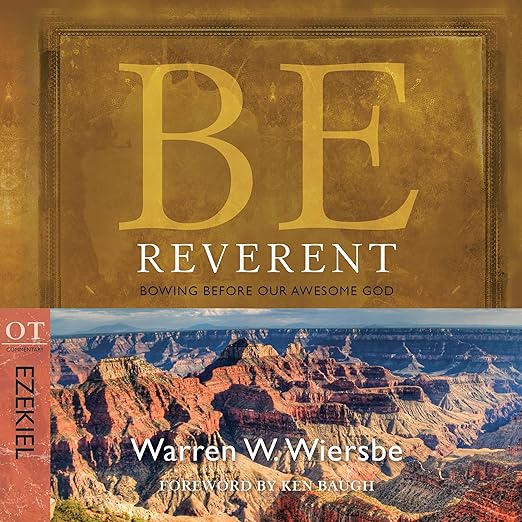
I came to Be Reverent from outside the evangelical tradition that formed Wiersbe's primary readership, which meant I was encountering it as a literary and theological text rather than as the devotional companion it was designed to be. That distance gave me a particular kind of vantage point on what this commentary is attempting, and I think it is worth being clear about both what it achieves and where its limitations lie.
Warren Wiersbe spent decades building the BE series of Bible commentaries, a project that aimed to make serious scriptural study accessible to ordinary readers rather than confining it to seminaries. Be Reverent is his treatment of Ezekiel, one of the most formally strange and visually overwhelming books in the Hebrew Bible. The challenge of writing about Ezekiel is significant: the book opens with a vision that has generated more interpretive controversy than almost any other passage in scripture, and it contains some of the most politically charged prophetic literature in either testament.
A Closer Look at Be Reverent (Ezekiel)
The opening chapters of Ezekiel, with their wheels within wheels and four-faced living creatures, have been the subject of everything from mystical Jewish interpretation to twentieth-century speculation well beyond the text. Wiersbe does not engage with the more eccentric readings, but he does not dismiss the interpretive difficulty either. He approaches the vision with a literalist hermeneutic that reads the imagery as symbolic communication of divine majesty rather than as literal description. One reviewer who had read Ezekiel annually for years described finding new clarity through Wiersbe's guidance, which is the clearest endorsement a commentary can receive: making a difficult text more available to serious readers than it was before.
The structure of the BE series involves walking through the biblical text section by section with practical applications woven into the exegesis. This approach is less systematic than academic commentary and more accessible than devotional reading alone. The updated edition reviewed here includes study questions and a new introduction by Ken Baugh, which extend the book's utility for group or classroom settings. The study questions are appropriately challenging without being academic, and they push the reader toward application rather than just comprehension.
What Makes Be Reverent (Ezekiel) Worth Hearing
Ezekiel contains some of the most significant prophetic material in all of scripture, including the valley of dry bones in chapter 37 and the Gog and Magog sections in chapters 38 and 39 that have been the subject of end-times speculation for centuries. Wiersbe treats these with more restraint than much popular prophecy literature does. He provides the prophetic interpretation without turning the commentary into an exercise in contemporary geopolitical mapping, which is a choice that will frustrate some readers and relieve others. One reviewer noted wanting a bigger book on the prophetic portions, which is fair: Wiersbe prioritizes accessibility over exhaustive treatment, and on sections this rich, the result can feel compressed relative to the complexity of the material.
Milton Bagby's narration is well-suited to the material. He reads with the measured authority that theological commentary demands, and he does not editorialize or perform. For a ten-hour listen covering dense scriptural content, this restraint is exactly right. The audio format works reasonably well for the commentary structure, though listeners who want to follow the cross-references Wiersbe provides throughout will find themselves pausing frequently if they are doing serious study alongside the listening.
Things to Know Before Starting Be Reverent (Ezekiel)
One reviewer was direct about leaving with many questions and feeling that a bigger book was needed. This is an honest response to a book designed as an introduction to a complex text rather than as a definitive treatment. Wiersbe's commentary works best as the first serious guide through Ezekiel, not the last. For listeners who want to go deeper, the study questions in the updated edition point toward further engagement, and the cross-references throughout the text suggest directions for follow-up reading.
The updated edition's new introduction by Ken Baugh is more than a formality. It contextualizes Wiersbe's approach within the current pastoral landscape, making the case for why the book's central argument about reverence has particular relevance for contemporary congregations that have prioritized accessibility to the point of losing the sense of divine otherness that Ezekiel insists upon. That framing gives the audiobook a contemporary hook that the original publication lacked, and it is one of the more useful additions a revised commentary can offer.
Who Warren W. Wiersbe Is Writing For
Be Reverent is most valuable for Christians doing a sustained personal study of Ezekiel who want a guide that takes both the text and their own seriousness seriously. It is accessible enough for readers without formal theological training and rigorous enough to reward those who have it. Listeners who approach it as a standalone audiobook without the corresponding biblical text will get something from Wiersbe's theological vision, but the full value of the commentary depends on engaging with the primary text alongside it rather than as a substitute for it.
- Narrator: Milton Bagby delivers Wiersbe's commentary with measured authority, allowing the theological weight to land without becoming performative or overly reverent in tone.
- Subjects: Holiness and the nature of divine glory, prophetic vision and its modern application, reverence as corrective to comfortable faith
- Tone: Contemplative and devotionally serious, with occasional prophetic urgency
- Bottom line: The most useful companion to a sustained personal study of Ezekiel, though it works best alongside rather than in place of the primary text.
Common Questions
Is Be Reverent useful for someone who has never studied Ezekiel before?
Yes, and this is arguably the audience it serves best. Wiersbe is explicit about making the difficult text accessible, and several reviewers specifically noted finding clarity on Ezekiel for the first time through his guidance.
Does Wiersbe engage with end-times interpretations of Ezekiel 38 and 39?
With measured restraint. He acknowledges the prophetic significance of those chapters without mapping them onto specific contemporary events, which separates him from more sensationalist prophecy commentary and will please some readers while frustrating others.