
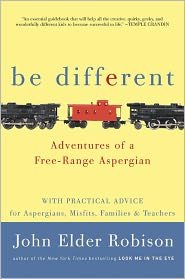
Robison narrates Be Different in person, and that choice matters more here than in most memoirs, because the audiobook amounts to Robison talking directly to whoever is listening, the way a mentor might talk to a kid who feels the same way Robison once did at twelve. This is not a straight continuation of Look Me in the Eye. It is a second collection of stories, pulled from childhood, adolescence, and young adulthood, each one built around a specific piece of advice: how to read a room full of strangers, why manners matter more than most people realize, how to survive being the kid everyone singles out. The diagnosis did not come until age forty, which means every strategy in this book got built by trial and error first and only named afterward.
Toy Makers, Rock Bands, and Blurted Mistakes
What stands out is how concrete the advice stays throughout. The synopsis lays out the questions almost like a table of contents: how to read others and follow their behaviors in uncertain social situations, why manners matter, how to harness intense concentration to master a difficult skill, how to deal with bullies, when to make an effort to fit in and when to embrace eccentricity instead, how to identify a special gift and use it to your advantage. None of it arrives as abstraction. Each chapter starts with something that actually happened, a job with a toy maker, a stint working for a rock band, an incident of blurting out the wrong thing at the wrong moment, and works backward from there to the lesson eventually pulled out of it. The synopsis calls these stories endearing, and that word fits: they read as funny before they read as instructive, which keeps six hours of advice from ever tipping into a lecture.
That structure asks something specific of a listener, patience with a string of loosely connected episodes instead of one continuous throughline. It sits closer in shape to a collection of advice columns than to a memoir with a plot, and if you came in expecting the second thing, the shift might take an hour or two to settle into. Once it clicks, the episodic format works in the book's favor. Each story is short enough to sit with on its own, which suits a subject built around specific, repeatable social situations rather than one sweeping arc. It also means a listener can return to a single chapter later, the one on bullies, say, or the one on when to embrace eccentricity, without needing the rest of the book fresh in memory.
Robison Tells It in the Voice That Lived It
The case for the audio edition specifically comes down to voice. A guide to social skills written by someone who spent decades cataloging exactly how those skills went wrong, and eventually right, benefits from being heard in that same voice instead of filtered through a hired narrator performing empathy from the outside. The synopsis describes the approach as delivered with trademark honesty and unapologetic eccentricity, and that is a tricky register, dry, blunt, entirely unsentimental, for anyone but the person who actually lived it to fake convincingly across six hours.
A practical argument backs up that case too, specific to the subject matter. The book is about reading social cues most people absorb without trying, eye contact, tone, the unwritten rules of a conversation. Hearing those rules talked through out loud, rather than reading them silently off a page, mirrors the actual skill the book is trying to teach. It is advice about spoken interaction, delivered as spoken interaction, a tidier match between form and content than most self-help audiobooks manage. Add to that a genuinely wide range of source material, toy companies, touring musicians, classrooms, therapy offices decades later, and the six hours never settle into a single register long enough to feel repetitive.
Print Metadata Sitting on an Audio Listing
A couple of things are worth flagging before committing six hours. The listing's publisher field reads Crown Archetype Hardcover, January 1, which is print-edition metadata sitting on what is supposed to be an audio listing. No separate confirmation of the audiobook edition's own details shows up here beyond that borrowed line, which means you are getting print-book bibliographic information attached to an audio product, worth knowing going in rather than assuming the two match exactly.
One vote is on record, with no written review attached to explain it, and the rating that results tells you less than it appears to: the arithmetic behind it resolves to exactly three out of five, since a full five-star sweep is not possible here, two of the five stars going unaccounted for by that single vote. That is one data point with zero context for what that listener did or did not connect with, not a verdict on the book, and it is worth remembering that no other reviews exist here to weigh against it, favorably or otherwise.
Toolbox Stories for Teens and Adults Alike
Teenagers and adults navigating an Asperger's or autism diagnosis are the intended audience, and just as much the parents, teachers, and partners trying to understand someone who is. The Children's Health tag on this listing undersells the scope somewhat; nothing in the synopsis narrows this to a kids' audience, and questions like reading social cues, handling authority figures, and finding your own gifts apply well past childhood. The synopsis closes on the idea that every person, Aspergian or not, has something unique to offer the world, and that inclusive framing carries through the whole audiobook rather than reading as a sentiment tacked on at the end. Skip it if you want a linear account of Robison's life from start to finish; that is what Look Me in the Eye is for. Come here for the toolbox instead, one built from the stories that produced it.
Before You Press Play
- Read by: Same name in the author and narrator fields. Robison narrates this one personally, and no reviews are attached yet to weigh the reading against.
- At its heart: Asperger's diagnosed in adulthood, social-skill coaching, self-acceptance and eccentricity
- Vibe: Practical and dry-humored, closer to a toolkit than a tearjerker
- Short version: A specific, useful listen for anyone parsing an Asperger's diagnosis or living alongside one, thin on independent reviews but strong on lived detail.
Who narrates the Be Different audiobook?
Robison narrates it personally. The listing's author and narrator fields share the same name, which makes this a self-narrated audiobook rather than a professional voice actor's outside interpretation of someone else's stories and advice, a distinction that matters for a book this dependent on tone.
How long is the Be Different audiobook and who publishes it?
It runs six hours and one minute. The listing's publisher field carries print-edition details, Crown Archetype Hardcover, rather than audio-specific ones, so treat that particular field as borrowed bibliographic data rather than a fully confirmed audio publisher credit for this edition.






