In Brief
- Performance: Loretta Soffe narrates her own material with a coach's directness, though this appears to be her first audiobook credit.
- What it covers: Executive career setbacks, redefining success, women's leadership and ambition
- Feel: Candid, funny, and unafraid of hard truths
- Our call: A specific, well-told career memoir and coaching hybrid that will resonate most with women balancing ambition against motherhood and marriage.
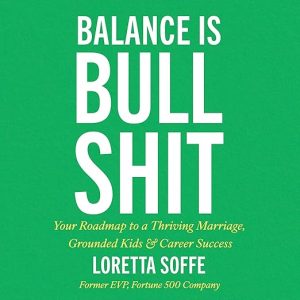
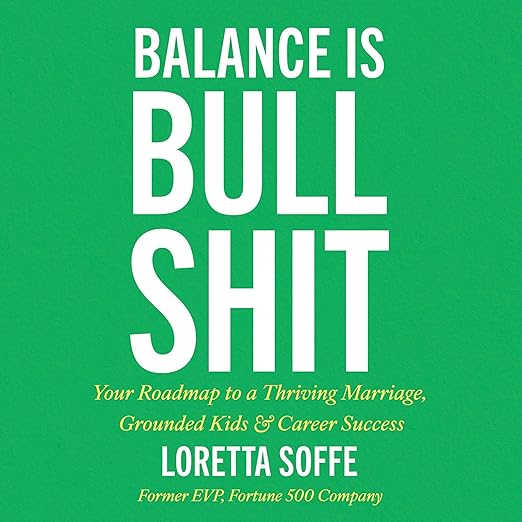
Getting fired at the peak of a corporate career is not the ending most executive memoirs lead with, but Loretta Soffe puts it right in her pitch for this audiobook. A former EVP at Nordstrom turned executive coach, Soffe spends just over seven hours arguing that the whole concept of work-life balance sold to ambitious women is, as her title bluntly puts it, bullshit, and that a more honest framework built around intention serves career, motherhood, and marriage better than any tidy balancing act ever could.
She narrates her own material, tracing her path from cashier to boardroom and describing what she calls a role-reversed marriage along the way, and that specificity, an actual title, an actual company, an actual firing, rather than composite anecdotes, is what separates this from a lot of interchangeable corporate leadership audio.
Coaching Experience Stands In for a Track Record
Self-narration by a business author works best when the person has genuine platform experience speaking to their own material out loud, and Soffe's background as an executive coach, someone whose job already involves talking people through hard career truths in real time, shows in how directly she delivers her own harder admissions. No existing narration track record is available to compare her against here, since this appears to be her first audiobook credit, but coaching experience is a reasonable, if unproven, indicator of comfort in front of a microphone, and nothing in the material suggests she needed a professional narrator standing between her and the listener.
Reviewer JD's five-star review praises Soffe for sharing 'raw, unedited details from her life,' specifically naming her background as the daughter of immigrant parents, the fifth of five children, and a former competitive swimmer before her Nordstrom career, details that ground the book's later leadership advice in a fuller personal history than a typical corporate memoir bothers to provide.
The phrase 'role-reversed marriage' gets only a brief mention in the synopsis, but it quietly signals one of the more interesting undercurrents in the book: a domestic arrangement where Soffe's career ambition, rather than her husband's, set the shape of the household. Executive memoirs rarely dwell on this kind of practical partnership detail, defaulting instead to vague gestures at generic spousal support, and Soffe naming it directly suggests she treats the marriage itself as a deliberate strategic choice rather than an incidental backdrop to her career.
Honesty, Grace and Humor Meet a Sobering Reality
Reviewer Imad-Merve's five-star review carries a title that doubles as its own verdict, calling this anything but a typical balance book, and the review itself highlights exactly what makes this stand apart from the genre: it focuses on 'the human and unconventional side of a high-powered career,' including what the reviewer calls 'the sobering reality of being let go' after Soffe's twenty-five-year run at the company. Most executive-track career books treat a firing as a footnote on the way to a comeback chapter; Soffe treats it as central material, which gives the back half of this book real emotional weight a purely tactical business guide would not have.
Reviewer January-December's five-star review calls the book 'a gift to share your stories and wisdom of corporate and societal pressures and challenges,' and specifically praises the balance of 'honesty, grace and humor' throughout, a combination that matches my own sense of the tone: candid about real professional pain without curdling into bitterness toward the company or industry that let her go.
The title is a direct swing at an entire genre of women's leadership writing built around the promise of having it all, and Soffe is explicit that she thinks the balance framing itself sets women up to fail rather than helping them succeed. Her own arc, cashier to boardroom at a company known for promoting heavily from within its own retail floor, gives that argument real biographical weight rather than leaving it as an abstract complaint about corporate culture in general.
The synopsis is specific about naming its audience as women 'in her 30s, 40s, and beyond,' which is a narrower and more useful promise than the vague, unbounded framing a lot of leadership books default to. That specificity tracks with Soffe's own multi-decade climb through one company's management ranks; she is writing from and toward a particular career stage, well past entry-level uncertainty but still years from retirement, where the tension between ambition and everything else in life tends to sharpen rather than resolve.
Scarcity and Discipline Built This Backstory
The synopsis names a specific target audience directly, women navigating career, motherhood, marriage, and ambition simultaneously, and readers outside that demographic, men in leadership roles, for instance, or women without children weighing whether the motherhood-focused material still applies to them, should know the book's examples and framing are built primarily around that exact intersection of pressures rather than a universal leadership audience.
Because this reads as a blend of personal memoir and practical coaching rather than a pure how-to guide, listeners wanting a strictly tactical, step-by-step career playbook may find the memoir chapters, however well told, slow the pace toward actionable advice. The two modes are woven together rather than cleanly separated by chapter, so expect to move between story and strategy throughout rather than in isolated, skippable sections.
The specific biographical details reviewer JD highlights, daughter of immigrant parents, fifth of five children, a former competitive swimmer, are not incidental color; they establish a scarcity-and-discipline backstory that Soffe returns to when explaining her own drive toward the Nordstrom boardroom, and listeners should know the book leans on that personal formation story at least as heavily as it leans on tactical leadership advice. This sits closer to the vulnerability-driven leadership writing associated with authors like Brené Brown than to a pure business-strategy playbook, which is worth knowing if you came expecting the latter.
Soffe's Coach-Honed Voice Suits the Blunt Title
Working mothers, women in or approaching leadership roles, and anyone who has been fired or pushed out of a job they built their identity around will find real, specific recognition in Soffe's story, and her direct, coach-honed narration voice suits the blunt title's promise. Reviewer January-December's suggestion that this works for couples and grandparents navigating these pressures secondhand, through a family member's career, is worth taking seriously too.
Soffe's own closing pitch, that this book is a blueprint for designing a life on your own terms rather than chasing an externally defined balance, is a fair summary of what she actually delivers rather than an inflated jacket-copy promise. The book earns that framing by staying grounded in her specific twenty-five-year Nordstrom arc rather than drifting into generic empowerment language, which is exactly the kind of concrete backing a 'no-fluff' claim needs to hold up under scrutiny.
A gender-neutral leadership framework, or a book organized around clear sequential action steps rather than woven memoir and advice, is not quite what this delivers, so sampling a chapter first to confirm the format fits is worth doing, since Soffe's approach here prioritizes lived experience and reframed intention over checklist-style instruction.
Good to Know
Is Balance is Bullshit more of a memoir or a career advice audiobook?
It blends both, weaving Loretta Soffe's personal story, including being fired after twenty-five years at Nordstrom, together with practical coaching strategies rather than separating them into distinct sections.
Does Loretta Soffe's narration work well for this kind of business memoir?
Yes, her background as an executive coach used to talking people through hard career truths comes through in a direct, confident narration style, even though this appears to be her first audiobook credit.
Who is the audience for the Balance is Bullshit audiobook?
The synopsis targets women navigating career, motherhood, marriage, and ambition specifically, though one reviewer notes it also resonates with couples and grandparents observing that struggle secondhand.
Does this audiobook offer step-by-step strategies or mostly personal storytelling?
Both are woven together throughout rather than cleanly separated, so listeners wanting a strictly sequential action-step guide should expect memoir chapters interspersed with the practical coaching material.