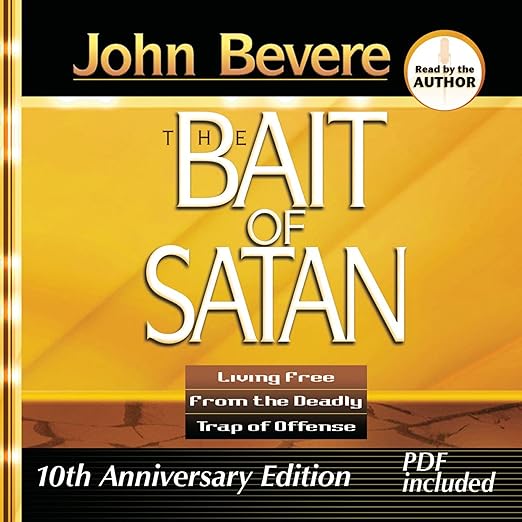
- Performance: John Bevere reads his own material with the directness of a practiced preacher - clear, authoritative, and paced for retention rather than performance.
- What it covers: offense and forgiveness, spiritual freedom, the trap of victimhood
- Feel: Urgent and convicting
- Our call: A self-narrated Christian teaching that delivers its central argument with clarity and genuine pastoral weight.
John Bevere identifies offense as the primary mechanism by which Satan draws believers away from their relationship with God, and the argument he constructs in Bait of Satan is more sophisticated than that premise might suggest. This is not a feel-good message. Bevere is direct, sometimes uncomfortably so, about the human tendency to cling to grievance, to rehearse past hurts, to interpret every difficulty as someone else's fault. The audiobook - this is the tenth anniversary edition - is narrated by Bevere himself, and that choice shapes the entire listening experience. You are not hearing someone interpret his message; you are hearing the teacher make his case directly.
More than 400,000 copies of the print edition were in circulation before this audio version was produced, and that scale of readership is not incidental context. It tells you something about what Bevere is addressing. Offense is not a peripheral spiritual problem; it is a pervasive human experience, and the fact that this book found such a large audience suggests Bevere is naming something that a lot of Christians recognize in their own lives but lack the framework to address. The tenth anniversary edition adds testimonials from readers of the original and a devotional supplement with discussion questions, scriptures, and prayers - which means the audiobook is doing more structural work than a typical teaching title.
What John Bevere Delivers
The central claim is this: how you respond to offense determines your spiritual trajectory. Bevere is not asking whether you will be offended - he assumes you will be, repeatedly, by people you trusted and institutions that failed you. The question is whether offense becomes a cage or a crucible. He is drawing on a fairly specific scriptural framework, primarily New Testament teaching on forgiveness and the warnings against allowing bitterness to take root, but he extends those frameworks into psychological and relational territory that most sermons do not reach.
One reviewer described the book as exactly what they needed, noting a life shaped by abuse, trauma, and PTSD - and the relief of finally being offered a framework that asked them to look at their own response rather than simply validating the damage. That is a significant testimonial. Bevere is not minimizing harm; he is arguing that remaining in the victim position is itself a spiritual strategy of the enemy, and that recognizing this is the first step toward genuine freedom. Listeners who have encountered similar frameworks in therapy-adjacent spirituality will recognize this terrain, but Bevere roots it more explicitly in scriptural accountability than most self-help treatments do. Another reviewer described it as a modern Christian classic, which reflects how thoroughly the book has embedded itself in evangelical reading culture since its original publication. That status is earned by the clarity of its central argument rather than by the warmth of its delivery.
What John Bevere Gets Right
Bevere's narration is the decisive reason to choose audio over print for this title. He delivers the teaching sections with a preacher's precision - clear point, scriptural support, application - and the pacing reflects someone who has given these messages from a platform and knows where listeners tend to disengage or resist. The testimonials in this edition are read with appropriate gravity; they are not promotional appendices but genuine illustrations of the book's core argument, and Bevere gives them room to breathe.
At five hours, the audiobook is a manageable listen that rewards a focused approach rather than background audio. The discussion questions and devotional supplement sections at the end function well in audio for personal reflection, though listeners using this title in a small group setting may want the print edition alongside it for easier reference during study sessions. The scripture citations are woven throughout the main teaching, which means the listening experience builds progressively rather than requiring you to track references separately.
Where John Bevere Loses Some Ground
The section on the difference between forgiveness and reconciliation is one of the most practically useful passages in the book. Bevere makes a clear distinction that much Christian teaching blurs: forgiving someone does not require restoring the relationship, and the confusion between these two things keeps many believers either holding onto offense (because they fear forgiving means minimizing what was done) or exposing themselves to ongoing harm (because they believe forgiveness requires full restoration). Getting that distinction right is spiritually and psychologically consequential, and Bevere's narration of that section carries the emphasis you would expect from someone who has watched this confusion damage congregations firsthand.
Also pay close attention to the section on the compulsion to tell your side of the story - one of the practical questions the synopsis raises directly. Bevere's analysis of why we need to be understood, and how that need becomes a mechanism for sustaining offense, is one of the more astute psychological observations in contemporary Christian teaching. It does not feel like therapeutic language dressed in scripture; it feels like scripture applied with genuine pastoral experience behind it.
Who Should Pick Up Bait of Satan
This audiobook will be most valuable for Christians who recognize patterns of bitterness, resentment, or ongoing offense in their own spiritual lives, for small group leaders looking for a substantive teaching to anchor a study series, and for listeners who have found secular forgiveness frameworks incomplete and want a scripturally grounded alternative. Those outside a Christian framework will find the scriptural authority central rather than supplementary - Bevere is not making a generically philosophical argument, and the teaching only coheres fully within that worldview. Listeners expecting a soft or affirming tone should know this title challenges rather than comforts.
Before You Listen
Does John Bevere narrating his own audiobook make the teaching more effective?
Yes, noticeably. Bevere's delivery has the cadence of someone who has taught this material from a platform many times - he knows where the argument turns, where listeners resist, and where the application lands hardest. A third-party narrator would lose that institutional knowledge of the material.
Is this audiobook of Bait of Satan suitable for small group study?
It works well as a teaching anchor for a group, though the devotional supplement with discussion questions is easier to reference in print. The fifth-hour addition of testimonials and the structured Q&A sections were specifically designed for group engagement and function clearly in audio for personal reflection.
How does the tenth anniversary edition audiobook differ from the original?
It adds testimonials from readers who encountered the original book and a devotional supplement with discussion questions, scriptures, and prayers. These additions make this version more comprehensive as a study tool rather than simply an updated reprint.