At a Glance
- Voice: Virtual Voice handles this first entry in the Backwards Books series; the synthetic narration is functional but lacks the spiritual warmth that Danison's near-death experience material calls for, making the print edition preferable for close reading.
- Big ideas: near-death experience and transformation of belief, the nature of God and the soul, manifesting awareness and spiritual agency
- Atmosphere: Earnest and expansive, with occasional pedagogical density
- Worth it?: For listeners already drawn to NDE literature and willing to adjust to a synthetic narrator, Backwards offers a distinctive personal cosmology that goes further than most accounts in building a practical framework from the experience.
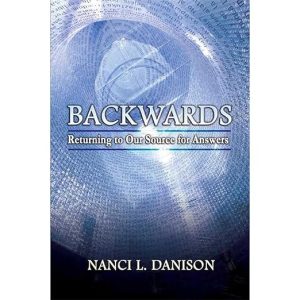
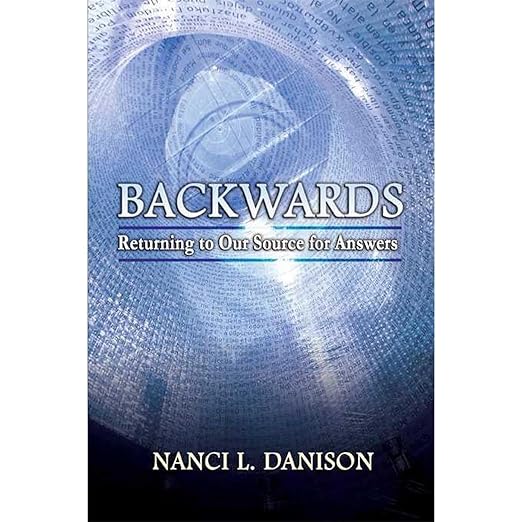
Near-death experience literature occupies a peculiar corner of the spiritual memoir shelf, sitting between personal testimony and theological argument, never quite belonging to either. Nanci L. Danison's Backwards: Returning to Our Source for Answers, the first book in the Backwards Books series, is narrated by Virtual Voice and arrives with a 4.5 rating across 416 reviews, which signals a readership that found the material substantive enough to tolerate the synthetic delivery. This audiobook runs six hours and 48 minutes, a compact presentation for a framework that attempts to address the nature of God, the structure of the afterlife, the purpose of incarnation, and the mechanics of self-healing within a single volume.
The context that shapes Backwards is Danison's reported death and the information she claims to have received during it. She is not, she insists, synthesizing other traditions or speculating philosophically; she is reporting what she experienced as direct transmission. That framing is essential to understand before listening, because the book's tone, which combines the quiet authority of a firsthand witness with the systematic ambition of a theological text, only makes sense if you accept the premise that Danison is transcribing rather than constructing. Listeners who approach it as personal metaphysics rather than verified doctrine will find more traction.
A Closer Look at Backwards: Returning to Our Source for Answers
The territory Danison covers overlaps substantially with other notable NDE accounts. Reviewers have placed her work alongside Michael Newton's Journey of Souls and Destiny of Souls and Neale Donald Walsch's Conversations with God series as touchstones in the field. What distinguishes Backwards from those parallels is the specificity of its practical framework. Danison doesn't limit herself to describing what the afterlife felt like; she attempts to derive actionable spiritual principles from the experience, covering multiple levels of awareness, consciously manifesting physical reality, receiving informational downloads from universal knowledge, and self-healing practices.
Whether that practical ambition succeeds depends entirely on where a listener stands before pressing play. For those already embedded in metaphysical literature, as one reviewer noted, the information itself may not be new; but Danison's presentation, her commendable and simple writing style and concrete examples, gives familiar concepts a freshness of framing. For listeners new to NDE accounts or to this particular cosmological orientation, the density of topics covered in six hours can feel like a rapid-fire introduction rather than a sustained exploration of any single idea.
What Makes Backwards: Returning to Our Source for Answers Worth Hearing
The audiobook's most distinctive quality is the completeness of Danison's cosmological system. Where many NDE accounts focus on the emotional and experiential dimensions of the near-death event, leaving the theological implications for the listener to extrapolate, Danison does the extrapolation herself. She addresses who God is, what God expects, where heaven is located, whether hell exists, whether religion is necessary, how unconditional love differs from the conditional kind, and what happens immediately after death. That comprehensiveness makes Backwards function more like a primer than a memoir, which is unusual and, for the right listener, genuinely useful.
The Virtual Voice narration is the audiobook's primary limitation. This material benefits from the warmth and conviction of a human voice, particularly in sections where Danison describes states of awareness and connection that are inherently emotional. A synthetic narrator renders the content accurately but strips it of the spiritual intimacy that makes this genre work at its best. Listeners for whom the ideas matter more than the delivery will manage; those for whom presence in the narration is essential to engaging with this kind of material should consider the print edition instead.
Things to Know Before Starting Backwards: Returning to Our Source for Answers
One of the book's more overlooked structural moves is how Danison addresses the question of religion explicitly rather than by implication. She does not position organized religion as the enemy of her cosmological framework, but she does argue clearly that institutional religion and the direct spiritual knowledge she received are different things. That distinction, handled without polemicism, is one of the passages that explains why readers with traditional religious backgrounds have found the book less threatening than the NDE genre sometimes appears.
The section on unconditional love, and specifically on how Danison differentiates it from what she experienced during her NDE versus what humans typically practice, is the book's most theologically careful passage. Danison is precise here in a way she is not everywhere else, and the distinction she draws has genuine implications for how the rest of the framework holds together. Listeners who find the opening chapters moving at a summary pace should stay patient; the later sections on self-healing and manifesting physical reality are where Danison's practical framework becomes most concrete.
The series arc matters here too. Backwards is the first volume, and Danison has continued the framework in subsequent books in the Backwards Books series. The first volume is designed to establish the cosmological foundation rather than to fully develop the practical applications, which means some sections read as introductory. Readers who find themselves wanting more depth on any specific topic will find the series structure provides it across later installments.
Who Nanci L. Danison Is Writing For
Listeners already engaged with NDE literature who want a more systematically developed framework than most accounts provide will find Backwards rewarding. Those new to the genre who want a comprehensive rather than anecdotal introduction to this cosmological orientation will get substantive coverage at a manageable length. Listeners who require human narration to engage emotionally with spiritual material should opt for the print edition rather than the audiobook. Skeptics of NDE claims who are looking for empirical grounding rather than personal testimony are not the intended audience, and the book does not address that framing.
Common Questions
Is the Backwards audiobook a good entry point for near-death experience literature if I haven't read in this genre before?
It works as an entry point for the cosmological material Danison develops, but it assumes a basic openness to NDE accounts as legitimate sources of spiritual information. Listeners who want a more narrative or less systematized introduction to the genre might find something like Michael Newton's Journey of Souls a gentler starting point.
Does the Virtual Voice narration significantly diminish the Backwards audiobook experience?
For content that relies on emotional presence and spiritual intimacy, synthetic narration is a real limitation. The material reads clearly, but listeners who find that a warm human voice is essential for this kind of introspective content will get more from the print edition. The 4.5 rating suggests many listeners were not deterred, but it's worth knowing before you commit.
Is Backwards Book 1 a standalone listen or do I need to continue the Backwards Books series to get the full picture?
It functions as a standalone in that the cosmological framework is fully established within this volume. However, the first book is explicitly foundational, meaning some topics are introduced at a survey level that the later volumes in the series develop further. Listeners interested in any specific topic Danison covers will find the series provides more depth on each.
How does Nanci Danison's approach in Backwards compare to other NDE audiobooks like those by Michael Newton?
Newton's work is more focused on soul development across multiple lives and draws on hypnotic regression rather than direct NDE testimony. Danison's framework is based on her own death experience and is more theologically comprehensive, addressing God, heaven, and spiritual agency in a single systematic argument. They cover overlapping territory from different starting positions.