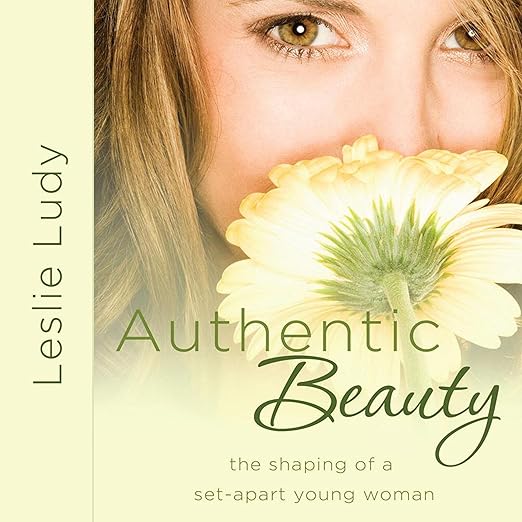
Leslie Ludy writes at you, not about you. The opening line of the copy places a princess inside every young woman, in search of her prince, and what follows is addressed straight to the reader: what you can experience starting today, what you long for, what your feminine heart is actually asking for. Prose built that way wants a voice, and this audiobook gives it the most direct one available, because Ludy reads it herself. Six hours and forty minutes of second-person address delivered by the woman who wrote it is a different proposition from the same text on a page, and whether that reads as intimacy or as pressure depends almost entirely on your relationship to the theology underneath it.
Nothing about the argument is hedged anywhere on the record. Ludy's own account, quoted at length in the description, is that she spent her young adult life looking to an earthly romance to fill what she now believes only Christ was meant to fill, moving through one shallow relationship after another and ending each time lonely and heartbroken. The book proposes a substitution rather than an adjustment: Jesus as the Lover of the soul and the center of existence, with every other longing reorganized around that. The copy calls this becoming a set-apart young woman in what it describes as a perverse generation, which tells you the register before you press play.
A five-star filed on May 17, 2004 describes the technique well. That entry credits Ludy with an approachable style, notes that the book explicitly asks to be read as two friends talking in a coffee shop, and identifies the tools in use: allusion, anecdote and long lists. It also names the sequence the whole book depends on, falling in love with the true Prince before any human one. Read that as a description of method rather than of doctrine and it holds up. This is persuasion by warmth and repetition, not by argument, and the audio format suits warmth and repetition better than print does.
Why It Works in Audio
A five-star filed on May 17, 2007 gives the clearest picture of the effect on a returning reader. That response describes coming back to the book after having read it once already and finding more in it the second time, calls it filled with insights and encouragements, and summarizes the challenge it makes: look past yourself toward a Savior offering forgiveness, love and hope, which the entry frames as the three things people find hardest to accept. That same entry is working from an updated and expanded edition, one carrying writings by Ludy's husband, Eric, alongside her own, which means the column is grading more than one version of this book. Devotional writing lives or dies on whether the reader trusts the writer, and trust is exactly what this one earns from its intended audience.
The self-narration matters more here than on most nonfiction. The book's central passage is a personal confession, first person and unguarded, about looking for rescue in the wrong places. Having the author speak that passage rather than an actor removes a layer that would otherwise sit between the testimony and the listener. It also means the tone stays consistent across nearly seven hours, which counts on a book that alternates between direct instruction, scriptural reference and autobiography. Whatever else the record leaves unexplained, the casting decision was the correct one.
Before You Commit to Authentic Beauty
Useful limits arrive with a four-star from April 11, 2006, and it earns that rating by being specific about them. It places the book with younger readers, middle school and high school rather than college, and says it works best for girls struggling to filter what the world tells them about their appearance, their faith and their interactions with boys. It also recommends it as a text to work through inside a mentorship rather than alone. Then comes the honest craft note: the prose is often flowery and verbose, which that reader concedes will please some readers and not others. On six hours of audio, verbose is a real consideration.
What the star average is measuring deserves a second look. The badge reads 4.1 across twenty-four ratings, while every written response on display sits at four or five stars, which means the unseen votes are considerably harder on this book than the visible ones. Those visible responses were also all filed before the recording existed, the newest four years before it and the oldest fourteen, so none of them concerns this file. Add the copy's own line recommending parental guidance for younger girls due to some subject matters, without naming any of them, and the record leaves a buyer working from very little.
Who Will Get the Most From It
A five-star from May 2013 describes the natural use case. That reader first encountered the book as a teenager, loved it then, and returned to it years later while working through it with a teenage girl, seeing it a second time through someone else's eyes. The phrase used is worth keeping: reading it feels like sitting across a table from the author and learning from her. That is what this title is for. It is a mentorship text, at its best when an older reader and a younger one go through it together, and the audio edition makes shared listening easy in a way a paperback passed back and forth never quite manages.
Give it without hesitation to evangelical Christian teenagers and the parents, youth leaders and mentors around them, and to anyone who already holds the theology and wants it applied to relationships and self-image. Not recommended for listeners outside that framework, since the book does not argue for its premises and never treats them as open questions, and not for anyone who bristles at prescriptive writing about how young women should dress, date or think. The book knows exactly whom it is speaking to, and it speaks to them for nearly seven hours without once softening the terms.
Which edition of Authentic Beauty does this audiobook use?
No edition statement appears anywhere on the record. The title has circulated in more than one version over two decades, and nothing on this 2018 recording indicates which text was read into the file, whether any supplementary sections came with it, or how long the version being read actually runs in print.
Is this audiobook appropriate for a middle school listener?
The copy aims it at teen and college-aged girls and advises parental guidance for the youngest, though it never says which topics prompted the warning. Since the book deals directly with dating, physical relationships and self-image, most parents will want to preview it or listen alongside a younger teenager.
What does the audiobook mean by a set-apart life?
A life reorganized entirely around Christ rather than around romance. A 2014 five-star puts the takeaway simply: Jesus wants to be our Prince first, so that every detail of a life, good and bad, can be handed over. The copy frames it as making Christ the first love of the heart.
Is Authentic Beauty a straight read, or does it work like a study guide?
A straight read. Nothing on the record lists discussion questions, a workbook or companion material of any kind, and the copy describes a personal and practical book rather than a curriculum. The structure comes from its chapters, so anyone wanting written exercises will need to build them separately.