Key Details
- Narration: Marty McDonald self-narrates with genuine keynote-speaker energy, and the personal disclosure lands as earned rather than performed.
- Themes: risk-taking, entrepreneurship, women's career advancement
- Mood: Candid, propulsive, and personally invested throughout
- Verdict: A memoir-forward career guide that works best for listeners drawn to McDonald's own voice and story specifically.
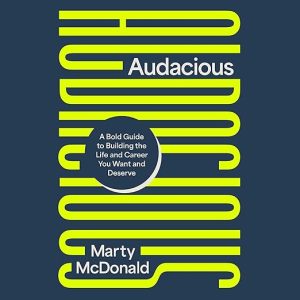
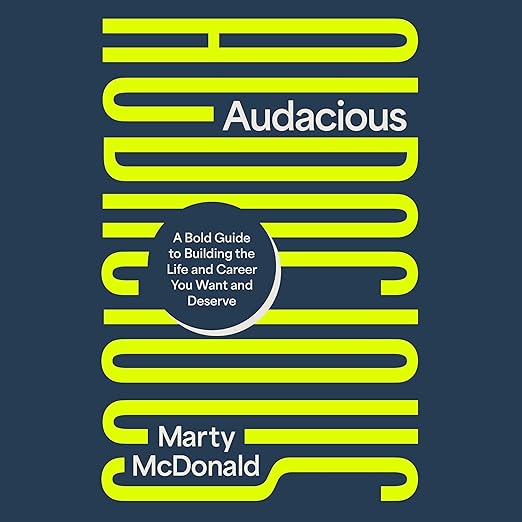
Boss Women Media and the Black Girl Magic summit are the two platforms Marty McDonald built before she ever pitched a candy company CEO in a hallway, and that hallway pitch, for a Black Girl Magic gummy bear flavor that ended up selling in Sugarfina stores nationwide, becomes the origin story this audiobook keeps circling back to. McDonald narrates Audacious herself across just under seven hours, turning her own career, its wins and its failures both, into a guide for women who want to stop playing it safe. The synopsis frames the book around specific, teachable moves: setting aside fear, growing comfortable with risk, and treating a 'no' as the start of a conversation rather than the end of one.
Strategy and Discipline Over Fluffy Motivation
McDonald organizes the book around a short list of concrete shifts rather than abstract inspiration: setting aside fear to write a different narrative, growing comfortable taking risk, understanding what real investment in yourself requires, treating a 'no' as an opening move rather than a closed door, and finding ways to make a difference beyond your own career. Reviewer Kevin Mc, who works in real estate, specifically credits the book with applying 'to all industries and areas of life' precisely because it favors 'strategy, discipline, and belief' over what he calls 'fluffy motivation,' with every chapter leaving the listener with something to do.
What separates Audacious from a standard career-advice book is how directly McDonald uses her own failures alongside her wins. The synopsis promises 'unflinching honesty' about both triumph and failure, and reviewer Crystal Coleman backs that up, describing how Marty 'shares her heart and experience' throughout each chapter as genuinely moving, immediately buying the Kindle edition and planning to buy the print edition too. That is a meaningfully stronger reaction than most business-book reviews tend to generate on their own.
The synopsis is careful to frame Audacious as broader than a career guide specifically, pitching it toward anyone 'looking to level up in your career, create a life of meaning, or embrace the wild unknown of new possibilities'. That three-part framing matters because it signals McDonald is not narrowly coaching entrepreneurship; the audacious mindset she is teaching is meant to transfer to relationships, creative pursuits, and personal reinvention just as readily as it applies to a business pitch, which widens the potential audience well beyond women specifically building a company of their own.
Her Narration Shifts Between Story and Instruction
McDonald narrates with the assured cadence of someone used to keynote stages, and it shows in how naturally the emotional beats land without feeling performed. Given that both of her own platforms are live-event stages she has run for years, that stage experience translating cleanly into the recording booth is not surprising, but it is a real asset: the self-disclosure throughout reads as earned rather than staged, exactly the quality a hired narrator reading the same script cold would struggle to reproduce.
The book is written specifically for women, and for Black women in particular, building on McDonald's own platforms, and reviewer Anjelica's response gets at why that specificity works rather than narrows the audience: she describes having followed McDonald for a while already, and says Audacious gave her 'that push I needed to start taking bold steps' toward goals she had been sitting on. Specific audience address, delivered by the person who actually lived the experience, tends to land harder than generalized advice trying to speak to everyone at once.
McDonald's narration also shifts register cleanly between the storytelling passages and the more direct, instructional sections, a distinction that matters for a book blending memoir and guide as deliberately as this one does. The hallway-pitch origin story and other personal anecdotes get room to breathe and land as story, while each of the five core practices arrives with a crisper, more clipped cadence that signals a concrete takeaway without McDonald needing to announce the shift out loud. That register control is a genuinely difficult narration skill, and it is easy to take for granted until a book that lacks it forces a listener to hunt for the actionable line buried inside a longer anecdote.
Barriers That Land Differently Without Her Experience
Listeners should know upfront that this sits closer to motivational memoir than structured business strategy text. Real, applicable guidance runs throughout, but McDonald's own story, the hallway pitch, the specific setbacks behind her successes, carries as much narrative weight as any framework does. Anyone expecting a rigid, step-by-step business playbook with minimal personal narrative may find the balance tilted more toward story than most traditional career guides attempt.
At just under seven hours, Audacious moves at a fuller pace than a typical business-book audiobook, giving both the personal storytelling and the practical guidance real room to breathe. That is mostly a strength, but it does mean the book asks for more sustained attention than a tighter three or four hour business title would, so it rewards a few longer sessions more than scattered short listens squeezed between other tasks.
Because the book is explicitly built around McDonald's own experience as a Black woman navigating entrepreneurship and media, some of the specific barriers she describes facing, being underestimated in rooms, having to fight harder for the same opportunities, will land differently for listeners without that same lived experience. The broader lessons about risk and self-belief still translate, but listeners should expect the specific examples and framing to be drawn from McDonald's particular vantage point rather than a generically universal one.
Sugarfina and Two Platforms as Verifiable Proof
Listeners who have grown skeptical of the broader women's-empowerment business-book genre generally, having heard bold promises about audacity and risk-taking from other authors before, should know McDonald's specific credibility rests on verifiable, named achievements, the Sugarfina placement, the two platforms she still runs today, rather than on unverifiable claims of financial success alone, a meaningfully more grounded credibility case than the genre sometimes offers.
The book's title choice is also worth a moment's thought: calling it Audacious rather than something softer signals upfront that McDonald is not interested in gently coaxing a reader toward small, safe changes, and listeners who prefer incremental, low-risk career advice may find the book's baseline expectation of bold action a harder fit than its warmth and candor might otherwise suggest.
Boss Women Media Fans Get Extra Value
Women looking to make a career or life change, especially anyone drawn to McDonald's own platforms or her particular blend of candor and strategy, are the clearest audience. The self-narration adds real value for listeners who respond to hearing lived experience delivered directly by the person who lived it, rather than filtered through a third party reading someone else's words.
Listeners already familiar with Boss Women Media or the Black Girl Magic summit specifically will likely get an extra layer of value hearing McDonald connect her public platform work directly to the personal history behind it, since the book effectively narrates the origin story of both ventures alongside its broader career advice.
Readers wanting a purely tactical, story-light business manual, minimal memoir, maximum framework, should look toward a more conventional strategy title instead. McDonald's approach here is deliberately personal, and that is the whole point of the book, not a detour from it.
A Few Questions About Audacious
Does Marty McDonald narrate the Audacious audiobook herself?
Yes, and her keynote-speaking background comes through clearly in the pacing and delivery.
How long is the Audacious audiobook?
Just under seven hours.
Does the Audacious audiobook include the story of McDonald's gummy bear pitch to a candy company CEO?
Yes, that hallway pitch is the book's central origin story and a recurring reference point throughout.