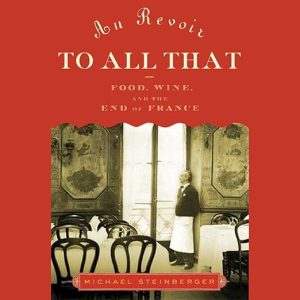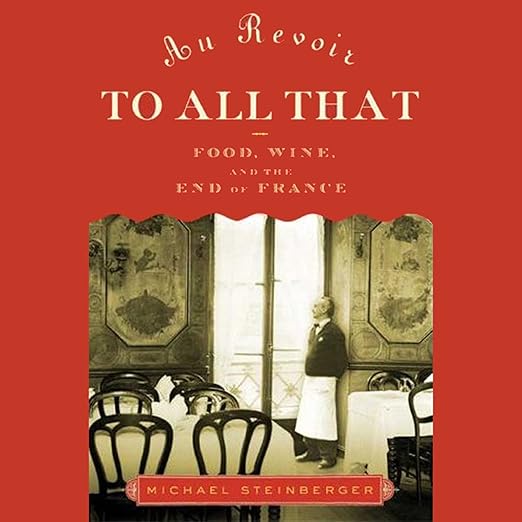
Michael Steinberger's Au Revoir to All That asks an uncomfortable question of Francophile food culture: what if the decline of French cuisine is not a temporary setback but a structural consequence of how France relates to its own traditions? Steinberger, who writes about food and wine with a journalist's instinct for following institutional power, arrives at answers that are more interesting and more uncomfortable than simple nostalgia. The audiobook version of this investigation, narrated by Stephen McLaughlin over nine-plus hours, works best for listeners who want the food writing embedded in the cultural and economic reporting that gives it actual weight.
McDonald's Outearns Bistros in Steinberger's France
The central thesis is striking even now: that France, once the unchallenged center of global gastronomy, has become a place where McDonald's is the second-most profitable market in the world, while Parisian bistros and brasseries disappear at what Steinberger calls an alarming rate. He does not argue this from sentiment. He reports it through interviews with top chefs, winemakers, farmers, bakers, the head of McDonald's Europe, activist Jose Bove, and crucially, the editorial director of the Michelin Guide, an institution whose power over French restaurant culture is enormous and whose operations are famously secretive. Getting that interview is an achievement in itself, and the Michelin chapter is one of the most illuminating in the book.
One reviewer who described the book as a reality check captured what makes it valuable: Steinberger does not allow the romance of French food to insulate the industry from honest assessment. An AOC designation, he demonstrates, does not necessarily signify quality, and a Michelin star is as much a commercial pressure as an honor. The book asks what happens when the institutional frameworks that were supposed to protect culinary tradition actually calcify it, and when the chefs who might reinvent French cooking find it easier to win recognition in London or New York than in Paris.
McLaughlin Makes Bad News Sound Appetizing
McLaughlin's narration brings a readable quality to Steinberger's prose that suits the nine-hour listening span. The material is not light, but it is written by someone who has eaten at the tables he is writing about and who understands that the best food writing makes you hungry even when it is delivering bad news. The reporting on France's wine industry in crisis, on the artisanal products threatened with extinction, on the social changes that have transformed how the French eat at home and when they eat out, builds into a cumulative portrait that is more affecting than any single chapter suggests.
The cultural angle is inseparable from the culinary one, which is where the book most distinguishes itself from straightforward food writing. Steinberger connects the decline of the bistro to France's diminished self-confidence as a nation, its complicated relationship with globalization, and the generational shift away from the multi-hour lunch culture that once structured French working life. For listeners who travel to France or who follow European cultural politics, this context transforms what might otherwise be food nostalgia into something more analytically substantial.
Dated to 2009, but Structurally Still Right
A caveat worth naming: the book was published in 2009, which means some of its predictions and portraits are now historically dated. The French culinary scene has continued to evolve since Steinberger wrote, and some of the chefs and institutions he describes as emblematic of the crisis have subsequently adapted, closed, or changed character. Listeners should treat the reporting as a snapshot of a particular cultural moment rather than as a current guide to where French gastronomy stands today. The structural analysis, however, remains pertinent.
Diagnosing Wine Politics Rather Than Recommending Restaurants
Listeners who approach the book expecting practical restaurant recommendations or recipes will find it more diagnostic than prescriptive. Steinberger is a reporter, not a guide writer, and his interest is in why things happened as they did rather than in telling you where to book a table in Paris. Readers who found the book compelling as a cultural diagnosis, including multiple reviewers who describe it as essential reading for anyone who has spent time in France over the past few decades, are responding to that analytical quality rather than to any practical utility.
The section on French wine is among the more clarifying treatments of appellation politics and the pressures facing small producers that a general reader is likely to encounter. Steinberger has spent enough time in vineyard country and in conversation with winemakers to understand both the commercial logic and the cultural stakes of what is being lost. His account of the tension between AOC traditions that were supposed to protect regional character and the market realities that have gradually hollowed them out is one of the book's more sobering threads, and one that has only gained relevance in the years since publication.
Wine Enthusiasts and Francophiles Get the Most
Food writers and serious food lovers with an interest in the institutional and cultural dimensions of cuisine will find this audiobook among the more substantial works in the food reporting genre. Anyone who has spent significant time in France and noticed the changes Steinberger describes will find their impressions given analytical context. Wine enthusiasts interested in the crisis facing French wine appellations will find dedicated chapters of direct relevance. Casual food fans looking for chef profiles or restaurant romance will find Steinberger's approach more demanding than what they came for. The book rewards listeners who bring some prior engagement with both French culture and the sociology of taste.
Before You Listen
How does this audiobook handle the Michelin Guide, given how secretive the organization is?
Steinberger secured an interview with the editorial director of the Michelin Guide, which is unusual. The resulting chapter examines how the Guide's power over restaurant culture operates, how a star can function as commercial pressure rather than pure honor, and what the institution's secrecy protects. It is one of the book's more revealing sections.
Is the Au Revoir to All That audiobook still relevant given it was published in 2009?
The structural analysis of French culinary decline and the cultural forces driving it remains pertinent. Specific details about individual chefs and restaurants reflect conditions as of 2009, so listeners should treat the specific portraits as a historical snapshot while recognizing that the underlying argument about tradition, globalization, and institutional calcification continues to apply.