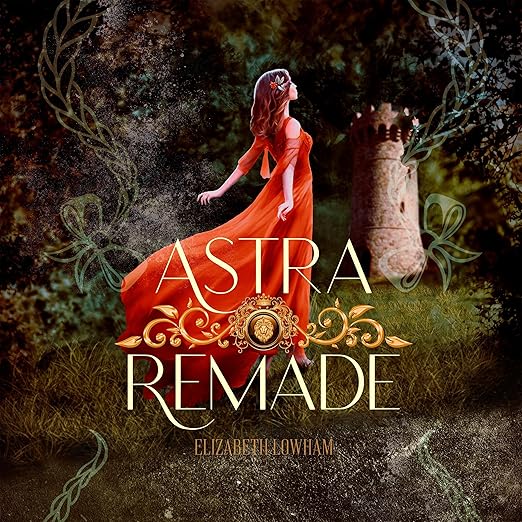
Quick Take
- Narrator: Jess Moran's narration honors Lowham's lyrical prose with the right pacing, giving the fairy-realm isolation sequences a melancholic texture that supports the emotional arc.
- Subjects: Vanity as a form of fear, trust built between people who have only known betrayal, fairy-realm truth-telling culture
- Tone: Lyrical, quietly tense, and warmly resolved
- Bottom line: Elizabeth Lowham's Rapunzel retelling is a small, beautifully made fantasy that earns its emotional resolution through character honesty rather than plot momentum, a careful, deliberate book.
I finished Astra Remade on a Sunday afternoon with the window open, the kind of afternoon where you do not want anything too loud or too fast. Elizabeth Lowham's fairy-realm Rapunzel retelling is exactly the right book for that kind of afternoon. It is quiet in the best sense: deliberate, attentive to character, and built around emotional logic rather than plot velocity. I came away from it with the particular satisfaction that comes from watching two people learn to tell the truth when everything in their history taught them not to.
The premise is clever in its inversion. Astra makes a wish to be irresistibly beautiful, which immediately becomes a catastrophe, a violent mob of suitors, a king with dark magic who will not take no for an answer, and a banishment to the fairy realm that feels like punishment but turns out to be necessary. In the fairy realm, she finds Dust: a prince raised by fairies, isolated in a tower, the rightful heir to a kingdom he has never been allowed to enter. Fairies, in Lowham's world, do not trust, it is their first rule, and Dust has been raised entirely within that culture. He is guarded not out of personality but out of education.
First, the Big Picture
The most interesting structural choice Lowham makes is keeping Astra and Dust physically separated for much of the book. They communicate through a portal system rather than face-to-face, which means their relationship is built entirely on words before it is built on presence. For two characters who have spent their lives performing rather than revealing themselves, Astra through vanity, Dust through fairy-trained wariness, this setup makes honesty both more difficult and more meaningful. One reviewer noted that their chemistry was palpable despite the inability to see each other for most of the book, and that is the right read. The restraint is a feature.
Astra's redemption arc is the book's emotional spine. She begins as someone whose wish reveals her deepest insecurities, the beauty she asked for was always about fear rather than vanity, and ends as someone who has confronted those insecurities with help and without shortcuts. Lowham does not rush this. The reconciliation with her sister, mentioned by reviewers as a particularly warm element, arrives as a consequence of Astra's internal changes rather than as a plot-driven event. That kind of character-first structure is rarer in fantasy than it should be.
Why Astra Remade Works as an Audiobook
Jess Moran's narration serves Lowham's prose well. Lowham writes with a lyrical quality, one reviewer described it as lush and lyrical, and Moran's pacing honors that without letting the sentences become self-indulgent. The fairy realm sequences, which have a particular texture of strange beauty and underlying menace, are where Moran's work is strongest. The dragons and depthfiends that populate the fairy realm are genuinely threatening in her delivery rather than becoming fairy-tale decoration.
The romance is explicitly clean, multiple reviewers noted this as a feature rather than a limitation. There is no physical escalation here. The intimacy is entirely emotional, which makes the payoff feel earned in a different register than most YA fantasy romance. Readers who find sexually charged content a barrier will find this a welcome exception.
What Might Not Land
The pacing is slow by genre standards. Lowham is in no hurry, and that is a deliberate choice that the story supports, but listeners who came from a fast-paced action fantasy may find the first third requires adjustment. Give it two hours before assessing, because the fairy realm's rules and Dust's character need that time to establish themselves properly.
The book is part of the Beauty Reborn series, a loose collection of fairy tale retellings by Lowham. It functions as a standalone, though readers who have encountered the first book in the series will recognize connections.
Who Should Pick Up Astra Remade
Readers who want fairy tale fantasy with genuine emotional intelligence and a romance that earns its resolution through character honesty rather than physical chemistry. Those specifically looking for clean fantasy romance with literary ambitions will find this one of the stronger recent entries in that category. Lowham is, as one reviewer put it, an author to keep your eye on.
Before You Listen
Is this a Rapunzel retelling, and how closely does it follow the source material?
It draws from Rapunzel's tower isolation premise, Dust has been confined to a tower in the fairy realm, but the story diverges significantly from there. The gender-bent element (Dust as the isolated tower figure) and the fairy-realm setting give it a distinct identity from standard Rapunzel adaptations.
Do I need to read the first Beauty Reborn book before starting Astra Remade?
No. The book functions as a standalone fairy-tale retelling. Readers familiar with the first book in the series will recognize some connective tissue, but Astra's story is complete and coherent on its own.