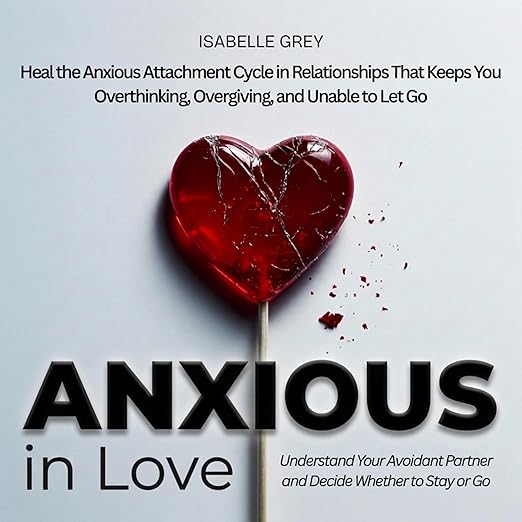
Slot machines pay out on an unpredictable schedule, and that comparison is the load-bearing idea in this audiobook. The argument runs like this: when a partner withdraws and then comes back warm, present and fully there, the relief you feel is proportional to the anxiety that preceded it, so the worse the withdrawal, the better the reunion lands. Five hours and twenty-six minutes go into unpicking that loop. The copy handles its own analogy honestly too, noting the obvious difference, which is that a slot machine does not also hold you after a nightmare or remember your mother's birthday. That one line does more work than most books in this category manage in a chapter.
Dopamine, Cortisol, and Skipped Attachment Basics
Dopamine and cortisol carry a great deal of weight in the setup, and this is where a listener should be careful. The claim is that your nervous system floods with dopamine in proportion to the cortisol that came before it, and it is stated as established mechanism rather than as metaphor. Nothing on this listing points to a source, a credential or a research base behind it, and the record carries no bibliography note and no field describing the writer's training. The framework may well be sound. It arrives, though, with the confidence of clinical fact and the sourcing of a magazine feature, and in audio you have no footnote to glance at while the sentence goes past.
Attachment theory is where most books in this space begin, and this one begins by assuming you are already past it. The premise is that you can explain anxious and avoidant styles to anyone who asks, and that understanding the theory has done nothing to get you out of the pattern, because a nervous system does not care what you know. It learned its lessons about love before you had language. That is a genuinely useful place to start. It skips the two hours of definitions that similar titles spend on ground the intended listener covered years ago, and moves straight to the harder question: what do you do with a diagnosis that explains everything and changes nothing.
Six Frameworks Built for Discernment, Not Exit
Discernment, not exit, is how this book describes its own job, and that distinction is the strongest reason to pick it over the dozen titles with similar covers. It states plainly that it will not tell you what to decide. It also refuses the opposite move, warning that it will not let you hide in hope, and landing on a formulation that will stay with some listeners: hope without information is not loyalty, it is a trap with a nicer name. Sitting between those two refusals is genuinely unusual. Most books in this category are either a permission slip to leave or a manual for staying, and this one is trying to be an instrument instead of an argument.
Scripts are what you are actually buying. The contents run to six promised components: a body-level assessment for telling avoidant attachment apart from plain disinterest, the good-enough trap in which a partner does just enough to stop you leaving, a conversation built to reveal whether he can hear you at all, an honest account of what transformation requires if you stay, a seven-question decision framework designed to honor either answer, and a description of what earned security looks like on the far side. That is a lot of architecture for five and a half hours, and the architecture is the product. The prose around it is persuasion; the frameworks are what you would come back for.
Zero Written Reviews Behind a Confident Narrator
Votes exist on this page. Reasons do not. The listing shows a perfect five-star average assembled from three ratings, with not one written response underneath it, which means nobody has stated in words whether the seven-question framework holds up, whether the conversation script survives contact with an actual partner, or whether the assessment distinguishes anything you could not have worked out alone. For a book whose entire pitch is that it will help you tell one situation from another, that is precisely the wrong column to find empty. Three anonymous votes cannot verify a promise. They can only establish that three people did not regret the purchase.
Someone else speaks the second person aloud here, and that changes what it is. The copy is written directly at you, in the present tense, about your nervous system, your brain chemistry, your relationship. On the page that reads as intimacy. Coming from Francesca Harrall, a reader hired to voice sentences an author wrote about a stranger's private life, it becomes a third party describing your situation back to you with complete confidence. Some listeners will find that steadying. Others will find it presumptuous, particularly in the passages that tell you what you have concluded before you have concluded it. That is the difference between reading an argument and being handed one.
Written for a Capable Woman's Complex Decision
Regulated decision-making is the outcome on offer, and the listener this fits is specific: someone with a withdrawing partner who has already read the attachment literature, already owns the vocabulary, and is stuck at the point where knowing has stopped helping. The copy names its reader directly as a capable woman making a complex decision, and frames the partner as male throughout, so anyone whose situation sits outside that configuration should expect to translate as they go. Five and a half hours is about right for the job: long enough to work through six frameworks properly, short enough to finish before the decision itself goes stale.
Partners hunting for validation should skip this, and so should anyone who wants a verdict handed over, because the refusal to supply one is the design rather than an oversight. Listeners in an actively unsafe situation need something other than a discernment tool, and this record carries no advisory anywhere to say so. Anyone who buys on the strength of the crowd should also look closely at what the crowd here amounts to. Nobody has written a single word about this recording, which leaves you weighing a five-hour argument against its own sales copy and three unexplained stars.
Before You Listen
What is the running time of this audiobook, and does the author read it?
It runs five hours and twenty-six minutes. Francesca Harrall is credited as the reader rather than Isabelle Grey, so this is a hired performance rather than an author recording. Blackstone Publications released it on March 9, 2026 under the ASIN B0GRWBDL5K.
Does the audiobook come with a workbook or downloadable material?
No PDF, worksheet or companion file is listed anywhere on this listing. The copy describes a body-level assessment, conversation scripts and a seven-question framework, all of which are page-shaped material, so plan on taking notes yourself or keeping something to write on nearby.
Which categories is this title filed under?
Two genres are attached: health and wellness alongside relationships, parenting and personal development, with one Psychology and Mental Health tag. Neither series field is populated and the page count is blank, marking this a single title rather than one unit of a program.
What is the Four-Stage Trap Cycle the description names?
The copy identifies four stages by name: pursuit, withdrawal, reconnection and retrigger. The book maps that loop and then works through both nervous systems involved, with the stated aim of explaining why each side behaves as it does without casting either partner as the villain.