I will be transparent about something: reviewing a book called Anthropic Claude as someone who works extensively with AI tools puts me in an unusual position. I am not a neutral observer of this subject. I have opinions about how AI is described, framed, and taught, and those opinions were activated pretty immediately when I looked at the table of contents for this one.
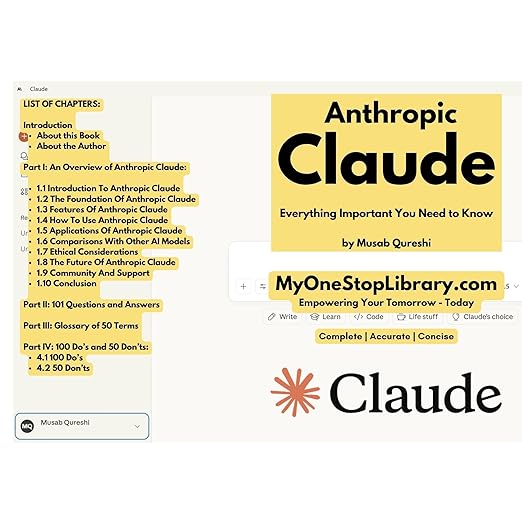
Published in March 2026 as part of the Essential Skills for Life Collection, this is a short, structured overview of Anthropic's Claude AI system by Musab Qureshi, with a Virtual Voice narration across five and a half hours. The format is divided into four parts: an overview, a hundred Q&A pairs, a fifty-term glossary, and one hundred dos and fifty don'ts. That structure tells you almost everything you need to know about the kind of book this is.
What We Made of It
The overview section covers the expected ground: what Claude is, how it was developed, its features, use cases, ethical considerations, and how it compares to other AI models. These are all reasonable topics for a primer. The difficulty is that each of these subjects, treated with actual depth, would fill a book on its own. Qureshi has written a summary of summaries, which may serve a very specific reader who genuinely has no existing framework for thinking about large language models and wants a fast orientation before going deeper elsewhere.
The Q&A format is the most practical section of the book, and in text form it would function reasonably well as a reference. As an audiobook experience, a list of a hundred questions and answers read aloud by a synthetic voice is a fairly difficult listening task. The format works in print; it translates awkwardly to audio.
The Best Parts of Anthropic Claude
If there is a listener for whom this works, it is someone who learns better through listening than reading, has no prior familiarity with AI assistants or large language models, and wants a broad orientation map before investing in deeper resources. The glossary section at the end can function as a kind of vocabulary builder for those encountering this territory for the first time. Terms like constitutional AI, prompt engineering, and safety alignment are defined, which gives beginning users a framework for reading more technical material later.
The ethical considerations chapter also has potential value, as it at least names the categories of concern around bias, transparency, and AI safety, even if the treatment is necessarily brief. For someone encountering these ideas for the first time, the chapter provides enough scaffolding to know what questions to ask next.
What Might Not Land
The most significant issue with this book is currency. The AI landscape changes at a pace that makes any book describing specific capabilities or comparisons effectively dated within months of publication. This title was released in March 2026 and describes a rapidly evolving system. Some of what was accurate at time of writing may already be outdated, and more will follow.
The Virtual Voice narration accentuates the book's structural limitations. A synthesized voice reading through a hundred Q&A pairs without the inflection or emphasis that signals which answers are more important, which distinctions are subtle, and which warnings deserve particular attention is a mismatch between format and content. The book has no reviews to draw from, no reader community that has engaged with it, and no established reputation in the AI literacy space. That absence is worth taking seriously.
Who Should Listen to Anthropic Claude
This is a narrow recommendation. If you are an absolute beginner to AI tools who learns primarily by listening, and you want a quick orienting overview before diving into more substantive resources, this may serve as a first pass. For anyone with existing familiarity with AI systems, the content will feel thin. For anyone who prefers human narration, the Virtual Voice format will be an obstacle. Primary alternatives would be Anthropic's own published documentation, the growing body of technology journalism covering large language models, or books by AI researchers and ethicists who engage with the subject at a level of depth this title does not attempt.
Frequently Asked Questions
Is this an official Anthropic publication or an independent author's overview?
This is an independently published book by Musab Qureshi, not an official Anthropic publication. It is part of the Essential Skills for Life Collection, which publishes overview texts on various technology and practical topics. Anthropic has its own documentation available through its official channels.
How current is the information given that AI technology changes rapidly?
The book was released in March 2026, which means specific details about Claude's capabilities, comparisons with other models, and technical features may already be partially outdated. AI systems update frequently, and any book describing specific features or performance characteristics has a limited shelf life.
Does the book require any technical background to understand?
No, it is structured as an overview for beginners. The glossary of fifty terms and the Q&A format are designed for readers with no prior AI background. Anyone with moderate familiarity with AI tools will likely find the content too thin.
How does the Virtual Voice narration affect the experience of listening to a hundred Q&A pairs?
It is a challenging format for audio. A synthesized voice reading through a long list of questions and answers without natural variation in emphasis or pacing makes it difficult to retain information or recognize which items deserve more attention. This section may work better in print than as audio.