Before You Press Play
- Read by: Virtual Voice delivers the step-by-step instructional material cleanly, though the synthesized delivery flattens what could be a warmer, more mentor-like tone.
- At its heart: Food self-sufficiency, traditional skills for modern times, preparedness without paranoia
- Vibe: Calm and practical, with an undercurrent of genuine urgency about self-reliance
- Short version: A solid practical primer for anyone drawn to Amish-inspired homesteading, with the caveat that Virtual Voice narration keeps it at textbook distance.
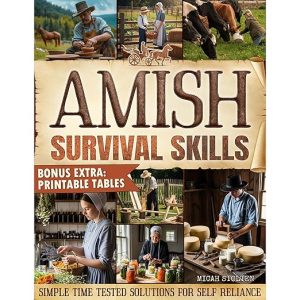
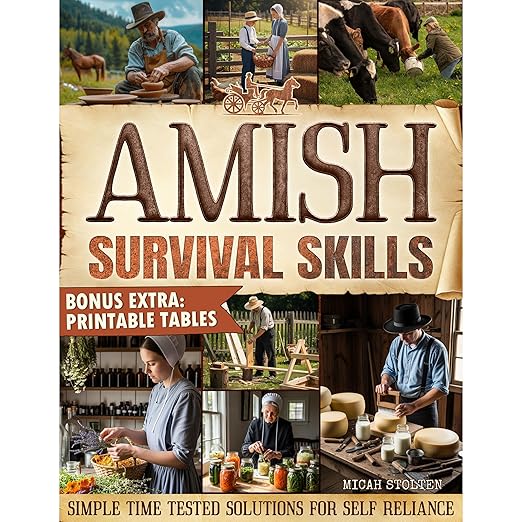
When the cost of groceries climbs month after month and the news cycle carries another story about supply chain fragility, there is a certain logic to asking what people did before any of these systems existed. Amish Survival Skills, narrated via Virtual Voice, takes that question seriously as a practical audiobook rather than a philosophical one. Micah Stolten frames the Amish lifestyle not as nostalgia but as a working model of household resilience that modern families can draw from selectively, without requiring a full lifestyle conversion. The result is one of the more grounded entries in the preparedness and sustainable-living category.
Running at three hours and thirteen minutes, this is a focused, chapter-by-chapter practical guide rather than a philosophy text or a homesteading memoir. The four core chapters cover food preservation, home remedies, gardening and farming, and practical survival skills. Within each, the approach is systematic, explaining not just what to do but why specific methods produce reliable results. Stolten's framing treats the Amish community as living proof of concept rather than as a romantic ideal, and that grounding keeps the book from drifting into the wishful thinking that undermines a lot of self-reliance content.
Generations-Tested Amish Methods, Starting With Food Preservation
The Amish framework is not incidental to the book's structure. Stolten uses it as an organizing lens: these are skills that have been practiced continuously, tested across generations, and refined without the prop of commercial infrastructure. The argument is that the simplicity of Amish methodology is its strength, not its limitation. Whether you are worried about grid failures or simply tired of paying for what you could produce yourself, the premise holds across different motivations for picking up the book.
The food preservation chapter is the most immediately applicable section for most listeners. Stolten covers canning, fermentation, and larder management with practical specificity, including the economic reasoning behind maintaining a home food supply rather than relying entirely on weekly shopping. The home remedies section is careful to frame traditional Amish approaches as complementary rather than as replacements for medical care, which keeps the content grounded rather than veering into the kind of unfounded health claims that undermine books in this category. One reviewer with 45 years of experience as a soils engineer described this as "almost an advanced textbook" and recommended not trying to absorb it all in one sitting. That is honest and useful guidance.
The inclusion of printable PDF charts and trackers as a companion download adds practical utility that the audio format alone cannot provide. Listeners who access that companion material alongside the audio will find the combination extends the book's practical reach significantly.
Why This Works Best as Passive Listening
The audiobook format suits preparedness content better than people might expect. Much of what Stolten covers is best absorbed in a passive listening state, the kind of engaged but hands-free attention you give to a podcast. Listeners working in the garden, processing food, or driving between errands can absorb the material in exactly the context where they will later apply it. The three-hour runtime means you can complete the full book across a few sessions without losing the thread, and the chapter structure makes returning to specific sections straightforward.
Reviewers consistently highlight the practical density of the material. One listener noted that compared to other prepping-adjacent books they had encountered, this one offered ideas that were "explained and easy to apply." Another called it "comprehensive, inspiring, and invaluable." The word that shows up most often across the positive feedback is applicable, which is exactly the right standard for a book in this category. The Amish angle also differentiates it from the more fear-driven end of the preparedness market, where the rhetoric often serves anxiety rather than capability. Stolten's framing is about sufficiency and peace of mind rather than collapse scenarios, a tonal choice that makes the content more useful for a wider range of listeners.
Competent AI Narration, Missing a Neighborly Warmth
The narration is handled by Virtual Voice, the AI narration system used for some audiobook releases. The delivery is competent for instructional content, hitting the words clearly and maintaining an even pace through the more technical sections. It does not, however, carry the warmth or personal authority that a skilled human narrator would bring to this kind of material. An experienced narration by someone who actually practices homesteading would have added considerable texture to the gardening and remedy sections in particular. As it stands, the presentation is functional rather than engaging, which creates some distance from content that is at its best when it feels like advice from a neighbor rather than instructions from a manual.
One reviewer gave the book four stars and noted plainly that they "learned a few things, not many." For listeners who already have meaningful experience in any of the four core areas, Amish Survival Skills is more likely to serve as a confirmation of existing knowledge than a revelation. The book positions itself as a comprehensive starting point, and it succeeds at that level. Those who come to it with real depth in soils or fermentation or herbal medicine will find the relevant chapters introductory rather than advanced, despite the occasional technical sections that surprised the soils professional reviewer.
Homesteading Newcomers Get a Structured Starting Point
This audiobook is well matched to listeners who are new to homesteading or self-reliance practices and want a structured overview rather than scattered online tutorials. It is particularly useful for people who feel the pull of more self-sufficient living but have no clear entry point. The four-chapter structure provides a logical sequence from food preservation through farming to broader survival skills, and the Amish framing keeps the content culturally grounded rather than survivalist-adjacent. Experienced homesteaders will likely find the material confirmatory rather than instructive. Those who require genuine warmth in their audio guides should note the Virtual Voice limitation. The PDF companion download is worth accessing for the tracking tools, which extend the book's practical value well beyond the three-hour audio runtime.
Good to Know
Does the Amish Survival Skills audiobook include the PDF charts and trackers?
Yes. The synopsis confirms that exclusive bonuses including printable charts and trackers are available as a companion PDF download alongside the audiobook. Access is typically provided through your audiobook library after purchase.
Is this audiobook appropriate for complete beginners to homesteading?
Yes. Stolten structures the book as an entry-level guide to four core areas: food preservation, home remedies, gardening, and survival skills. However, one reviewer with deep technical expertise in soil science found some sections surprisingly advanced, so the depth varies by chapter.
How does the Virtual Voice narration hold up for a practical instructional audiobook like this?
The AI narration delivers the instructional content clearly and at a consistent pace, which works for step-by-step material. It lacks the personal warmth a human narrator would bring to lifestyle content, so listeners who prefer a mentor-style voice may find it slightly flat.
Is Amish Survival Skills focused on disaster preparedness, or is it more about sustainable living?
Both, but the tone leans toward sustainable living and self-sufficiency rather than collapse scenarios. Stolten frames the skills as practical tools for peace of mind and independence from commercial systems, not as emergency-only measures.