Christy's Objection to the Book's Own AI Narrator
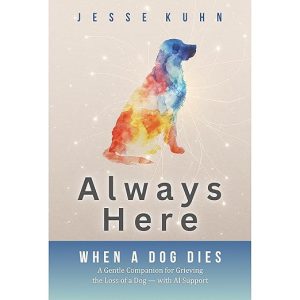
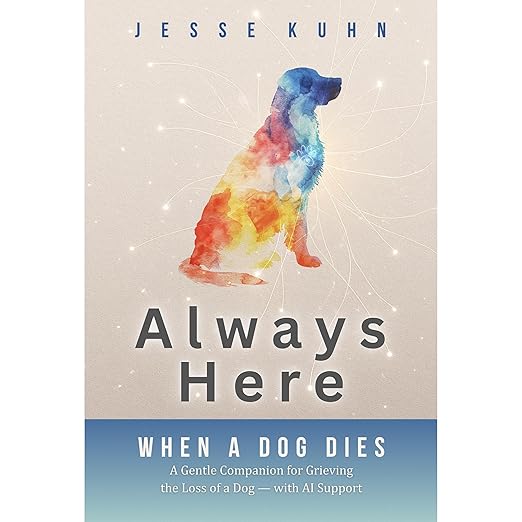
Grief books are hard to assess honestly, and this one arrives carrying a complication I had not run into before. This audiobook lists Virtual Voice in the narrator field, which is the listing's own way of saying the reading is machine generated rather than performed by a person. Two screens further down, the publisher's description offers gentle guidance on how to use modern tools, including an AI companion, to speak your truth when you cannot share it with another human being.
Those two facts sit on one page, and one of the five reviewers has already run into the second of them. Christy, at four stars, praises the author's text as "gentle and compassionately written", says "I found it helpful", and then withholds the fifth star for a reason stated outright, beginning "I am not interested in AI being my companion" and ending with an unwillingness to set up an online journal "in light of the facts available about AI". That objection is aimed at the book's content. It applies with rather more force to the reading.
I want to be exact about what that does and does not mean. A Virtual Voice credit is a statement about how the file was produced, not a verdict on how anything sounds, and I am not going to treat it as one. What can be stated is the fact of the credit and the fact of the collision. Somebody who declined this book's AI journal on principle would find the same category of technology reading the book aloud to them, and that is a purchasing consideration a listener deserves in front of them rather than discovered afterwards.
Longer Than Marriage, Yet Kept Deliberately Brief
Comparison is this book's central move and the copy makes it plainly. The average U.S. marriage lasts eight years, the publisher notes, while a medium-sized dog often lives ten to thirteen. For a great many people the bond with a dog has therefore run longer and held steadier than some of life's closest human ties. Whether or not the marriage figure survives scrutiny, the emotional logic behind it lands, and it explains why this grief so often outruns what people expect of themselves.
Brevity here is deliberate rather than thin, and the entire recording lasts two hours and four minutes. A note on length in the description says the book is intentionally brief by design, because grief is exhausting and focus is fractured. That instinct is correct, and it is also the place where paper and audio diverge most sharply, since some of the printed version's brevity is achieved through white space and stillness on the page, and white space has no equivalent in a recording.
Readers Say It Made Them Feel Less Alone
Reviewers who engaged with the content describe consistent qualities. Danny calls it "a heartfelt space for anyone grieving" and itemizes short reflections, "soft rituals, and gentle prompting". Norman writes "This book made me feel less alone" and singles out the explanation of "why losing a dog hurts so much" along with the rituals as a way to handle feelings that had nowhere else to go. Two independent readings of the same object, and both of them match the description closely rather than reaching past it.
One further notice, filed in February 2026, gives the most audio-relevant account anyone here has written. It reports that the book "sits with you in it, which I really appreciated" instead of trying to repair the pain, and that "The writing is calm, thoughtful, and easy to take in" when you are struggling. A text engineered to be absorbed under stress is a text of short sentences and simple structure, and short sentences and simple structure are the most forgiving material any reading can be handed.
The Bonus Journal and a Puzzling Rating Gap
Paper is what the bonus is made of. Every copy is promised a free Pet Memorial Journal, described as a printable keepsake with prompts and space for photos, memories and mementos. That journal is not incidental either; the same reviewer who felt less alone names it specifically as something loved. A printable keepsake attached to a recording is a promise worth verifying before purchase, because what ships with an audio edition and what ships with a book are not reliably the same set of files.
Dates matter more than usual on this page. The audio edition came out on the fifth of January 2026, and three notices were already up by then, filed on the first of September, the eighth of September and the first of November 2025. Those three describe the text. Of the two that followed, one consists of the title Came on time and the single word Great, which is a delivery report about a physical parcel. Four people have commented on the content, and exactly one of them wrote after this recording existed.
The rating tells a slightly cooler story than the reviews do. Twenty-six grades produce a 4.4 while the five you can read average 4.8, so for the counter to land where it does the twenty-one ratings nobody wrote up have to average somewhere between roughly 4.2 and 4.4. That is a perfectly respectable number and it is measurably below the enthusiasm you can actually read. Somebody quieter than these five had a more moderate experience and did not explain why.
For the First Raw Weeks, With Two Caveats
Anyone in the first raw weeks after losing a dog is precisely who this was written for, and the two-hour length is a mercy rather than a limitation. The book asks nothing of you structurally: reflections, prompts and rituals, taken at whatever pace holds together. If concentration is the thing grief has taken from you, a short recording you can restart anywhere is a kinder object than a book you keep failing to open.
People who want the body-based work will find it set out in the publisher's copy as giving the nervous system gentle evidence of safety through breath, presence and connection. That material suits being heard, because breathing instructions delivered aloud are easier to follow than breathing instructions read off a page while you try to breathe. Households where children have lost a family dog may find the reflection format usable together, though nothing on the listing addresses that use directly.
Hesitation is warranted in two cases. Anyone uneasy about AI in a grief context now has a documented reason to sample first, since a reviewer has already declined part of this book on exactly those grounds. And the printed memorial journal, which is the piece of this package a recording is least equipped to hand over, is worth confirming before you commit.
Before You Listen
Who narrates the Always Here audiobook?
No person does. The narrator field reads Virtual Voice, which is the listing's label for a machine-generated reading rather than a recorded performance. That label describes how the file was produced rather than how it performs. Given that one reviewer explicitly declined the book's AI journaling component on principle, sampling before purchase is the sensible step here.
How long is Always Here, and why is it so short?
Two hours and four minutes. The brevity is stated as intentional in the publisher's own note on length, which argues that grief is exhausting and focus is fractured, so every word was chosen with care. In print that shortness is partly achieved with white space, an effect that does not survive into a recording.
Do I still get the Pet Memorial Journal with the audiobook?
The listing promises a free printable Pet Memorial Journal with prompts and space for photos and mementos, and one reviewer names it as a highlight. What the page does not confirm is whether that printable file accompanies the audio edition specifically. Verify before buying if the journal is part of why you want this.