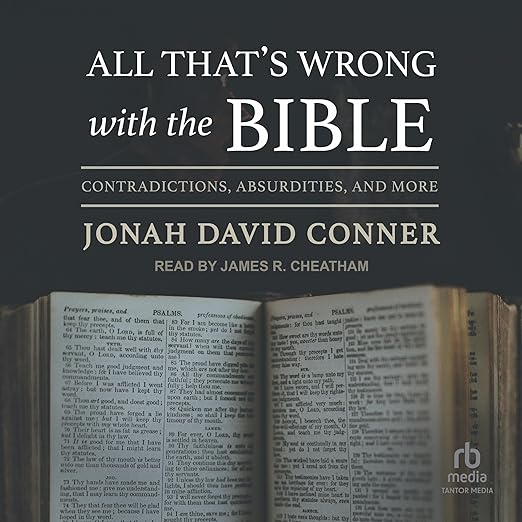
In Brief
- Voice: James R. Cheatham delivers the dense analytical content with clarity and steady pacing, handling technical religious vocabulary without stumbling.
- Big ideas: Biblical inerrancy under scrutiny, scribal changes to the New Testament, unfulfilled prophecy, and the gap between evangelical claims and manuscript evidence.
- Atmosphere: Cool and methodical, like a well-prepared legal brief read aloud by someone who has done years of research in original languages.
- Worth it?: A compact and rigorous audiobook that makes the skeptical case against biblical inerrancy without sensationalism or contempt for former believers.
Writing critically about a sacred text requires a discipline that is easy to underestimate: the argument must be precise enough to address actual claims, careful enough to distinguish between textual, historical, and moral categories of criticism, and honest enough to acknowledge what it can and cannot prove. Jonah David Conner brings all three qualities to this audiobook, and the result is one of the more methodically rigorous entries in the ex-evangelical literature. All That's Wrong with the Bible does not traffic in outrage or in the kind of theatrical apostasy that makes some skeptical religious writing feel more like performance than argument. It traffics in evidence, and that restraint is what gives it staying power beyond the initial reading or listening encounter.
Conner's background as a linguist and a graduate of Liberty University positions him unusually well for this particular project. He knows the apologetic arguments from the inside, and he knows how to read the original language sources in ways that most critics of the Bible cannot. This audiobook proceeds case by case through the most salient problems in the Christian Scriptures: factual inaccuracies, moral difficulties, unfulfilled prophecies, and the evidence of scribal modification throughout the textual tradition. The second edition, which this audiobook represents, includes a substantially revised chapter on scribal changes to the New Testament and an entirely new section on textual differences in Greek manuscripts.
What Conner avoids throughout is the tone of someone who is angry at what they once believed. The analysis is cool, the evidence is presented systematically, and the counterarguments from evangelical apologists are taken seriously enough to be engaged rather than dismissed with a wave of the hand. That quality makes the audiobook useful even for listeners who are still inside the tradition and want to understand what the skeptical case actually looks like when it is made carefully and without malice.
James R. Cheatham narrates with a steady, clear delivery that suits the book's analytical register well. The material is dense in places, particularly in the discussions of manuscript variants and scribal history, and Cheatham manages the technical vocabulary without stumbling. His pacing gives listeners enough time to follow the argument without dragging through the evidence-heavy sections into tedium.
Short Audiobook, Long-Term Reference Tool
The audiobook is short, running under four hours, and that brevity is a deliberate feature of Conner's design. He is not trying to write the definitive refutation of biblical inerrancy. He is trying to provide a concise, well-organized entry point into the most significant problems with that claim. Each chapter is targeted and focused, which makes the audiobook easier to revisit or to cite than longer and more sprawling treatments of similar material that run to hundreds of pages.
For listeners who grew up in fundamentalist or evangelical environments and are working through their own questions about biblical authority, this audiobook offers something particular: a model of how to engage those questions without contempt, without theater, and without abandoning intellectual rigor in favor of emotional release. Conner writes as someone who took the tradition seriously enough to study it deeply before finding it wanting, and that commitment to seriousness runs through every chapter without apology.
The audiobook also works as a reference tool for those who want to understand specific categories of biblical criticism. Because the chapters are organized around distinct types of problems, listeners can return to the manuscript section or the prophecy section independently rather than needing to listen through the entire work each time a specific argument comes up in conversation or research.
Short on Space for Prophecy and Gospels
The book's scope is limited by its length, and some of the topics Conner raises, particularly the questions around prophecy and the historical reliability of the Gospel accounts, deserve more space than he gives them here. Readers or listeners who want to go deeper will need to follow up with longer treatments, and the audiobook does not always provide a clear roadmap for that next step or a bibliography of where to continue.
Listeners who are committed to evangelical inerrancy will find the counterarguments they expect, and Conner does anticipate those counterarguments to a degree. But this is not a balanced account designed to represent both sides equally; it is a case for the prosecution, and it presents itself as such without apology. Knowing that going in helps calibrate expectations about what the audiobook is and is not designed to accomplish for any given listener.
Listeners approaching this audiobook from a secular academic background may find some of Conner's engagement with apologetics more generous than necessary, since he spends real space responding to arguments that many scholars would consider settled. That generosity reflects his own background, however, and makes the audiobook more credible to listeners who share that background and want evidence that their own former counterarguments have been genuinely considered before being set aside.
Pairs Well With Bart Ehrman's Manuscript Work
This audiobook is most immediately useful for people who are questioning the doctrine of biblical inerrancy and want a compact, evidence-based overview of the textual and historical problems that doctrine faces. It is also valuable for those who study religious texts professionally or academically and want a clear summary of the most common critical positions, presented by someone with relevant linguistic training and genuine insider knowledge of the tradition being examined.
Readers who have appreciated Bart Ehrman's work on New Testament manuscripts will find Conner's approach complementary, especially in the chapters on scribal changes and Greek textual variants. And for anyone who has ever been given easy assurances about the Bible's perfection and found those assurances intellectually insufficient, All That's Wrong with the Bible offers a more honest and more rigorous conversation than most popular religious literature provides.
Before You Listen
Is this audiobook anti-religion broadly, or is it specifically about textual and historical claims regarding the Bible?
The audiobook focuses specifically on claims of biblical inerrancy, not on religious belief more broadly. Conner examines textual, historical, and moral problems with the text itself rather than attacking the practice of faith or religious identity.
Does this audiobook cover the same ground as Bart Ehrman's books on the New Testament?
Conner covers some overlapping territory, particularly around scribal changes and manuscript variants, but his treatment is more compressed and his background as a linguist brings a different perspective. The audiobook works well as a companion to Ehrman's longer treatments.
What does the second edition add to the original audiobook content?
The second edition includes a significantly expanded chapter on scribal changes to the New Testament with additional examples, plus a completely new section examining textual differences in Greek manuscripts of the biblical text.
Is this audiobook appropriate for someone still inside an evangelical tradition who has sincere questions about inerrancy?
Yes. Conner treats the apologetic counterarguments seriously rather than dismissing them, which makes the audiobook more useful for listeners who want to understand the debate rather than simply hear one side of it amplified to confirm existing doubts.