At a Glance
- Performance: Tom Satterly narrates his own show with the directness of a combat veteran who has learned to open up; his voice carries lived authority without performative emotion.
- What it covers: Military trauma and healing, veteran community, relationships under pressure
- Feel: Candid and grounded, occasionally raw
- Our call: Veterans, first responders, and military families who want honest conversation rather than hero mythology will find genuine value in this audiobook.
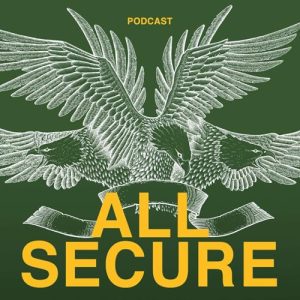
Tom Satterly's name carries weight before this audiobook even begins. A retired Command Sergeant Major who served in Delta Force and saw some of the most harrowing combat operations in modern American history, Satterly spent decades operating in silence. All Secure is what happens when that silence ends. Co-hosted with his wife Jen Satterly, this is not a conventional memoir read aloud; it is a podcast production that functions as ongoing, intimate conversation between two people who have lived the costs of military service from different angles. The audiobook format suits the material in ways a traditional narrative might not.
I came to this one knowing something of Satterly's background from coverage of his advocacy work around veteran mental health. Sitting with it as an audiobook listener rather than a reader changed how I received it. Satterly's voice in the recording room carries the same quality you hear in veterans who have finally decided to speak plainly: measured, deliberate, with occasional flashes of dry humor that make the heavier material land harder by contrast. This is a show built for the people who need it most.
All Secure occupies an unusual space in the veteran narrative genre. Rather than structuring itself as a single continuous story of service and sacrifice, it spreads its testimony across a range of topics: relationships between veterans and their partners, healing modalities, current events affecting the military community, and the psychology of transition from active duty to civilian life. The breadth is both a strength and a limitation. Listeners wanting a single cohesive arc will need to adjust expectations; what Satterly and Jen offer instead is something more like an ongoing record of how two people navigate a life that has been shaped by extraordinary circumstances.
The inclusion of Jen's perspective is what genuinely distinguishes this from most veteran memoirs and podcasts. Military spouses occupy a complicated position in most narratives about service: they are supporting characters, waiting at home. Here, Jen Satterly speaks as a full partner in both the trauma and the recovery, and her voice adds texture that Tom's solo perspective could not. Their dynamic as hosts reflects the dynamic of their marriage: they push each other, they disagree, they find their way through difficult conversations on air in a way that models the kind of communication they're advocating for.
Speaking Directly to Veterans Managing Invisible Injuries
The clearest argument for this audiobook is its specificity of address. Satterly is not speaking to a general audience curious about military life from a safe distance. He is speaking directly to veterans managing invisible injuries, to active duty service members watching their colleagues struggle, to first responders who recognize the same patterns in their own work, and to the families and partners trying to understand what the person next to them has carried home. That directness of address makes every episode feel less like content and more like a letter written to a known recipient.
The production values are consistent with a professional podcast operation. Audio quality is clean, the conversational pacing is comfortable over long stretches, and Satterly's natural speaking register sits in a range that holds attention without demanding it. For listeners who consume a lot of long-form audio, this is the kind of program that rewards being heard rather than passively absorbed. The three-hour-plus runtime across episodes gives the material room to develop rather than reducing complex subjects to sound bites.
Reviews describe the show as both entertaining and deeply felt, which is an accurate summation. Satterly does not perform vulnerability; he demonstrates it, and that difference matters enormously in a genre where authenticity is frequently claimed but less frequently delivered. The 4.9 rating from over 1,600 listeners reflects an audience that has found something real in the work.
The Same Unpolished Voice From Every Episode
Listeners approaching All Secure expecting a traditional audiobook memoir with a beginning, middle, and end will encounter a structure that requires some recalibration. This is episodic material, and the experience reflects that. Topics shift across the runtime, and some segments will resonate more personally than others depending on the listener's relationship to military or first responder culture. Satterly is candid about serious subjects including PTSD, relationship breakdown, and suicide, which makes this essential listening for those it serves while also meaning it is not a light background listen for an afternoon.
The self-narration is worth noting specifically. Satterly does not have the vocal training of a professional narrator, but that is entirely beside the point here. His voice in this audiobook is the same voice he uses in every episode of the show: unpolished in the best sense, completely unguarded, and carrying the weight of a life lived in extreme circumstances. The intimacy that creates is something a professional narrator hired to read a transcript could not replicate.
An Honest, Ongoing Conversation About What Service Costs
Veterans, active duty service members, first responders, military spouses, and anyone closely connected to someone who has served will find this audiobook rewarding. Satterly speaks their language and does not simplify their experiences for an outsider audience. Mental health professionals who work with veteran populations may also find value in the candid discussions of trauma, healing, and relationship dynamics.
Listeners who prefer structured narrative nonfiction with a clear throughline may find the episodic format harder to settle into. This is not the audiobook for someone looking for a traditional combat memoir or a single story told from start to finish. It is, however, exactly the right listen for someone who wants honest, ongoing conversation about what military and first responder service actually costs.
Who narrates the All Secure audiobook, and does the self-narration work?
Tom Satterly narrates alongside Jen Satterly. The self-narration works exceptionally well here because the conversational intimacy is central to the show's appeal. This is not a polished studio performance; it is two people speaking directly and honestly, which is exactly what the material requires.
Is this audiobook suitable for someone who has no military background?
While the primary audience is veterans, first responders, and military families, civilians curious about the realities of military service and the challenges of transition and healing will find the show accessible. Satterly and Jen explain their world without dumbing it down, but the conversations do not require prior military knowledge to follow.