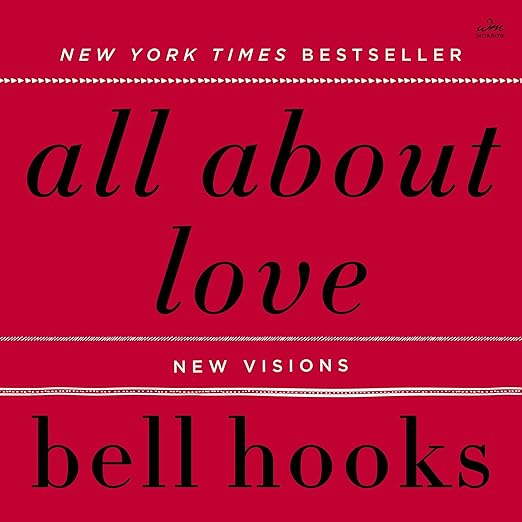
The craft of All About Love begins with a definitional argument. Bell hooks opens the book not with a scene or a story but with a grammatical observation: the word "love" is most often defined as a noun, yet we would all love better if we used it as a verb. That shift - from state to practice, from feeling to action - is the philosophical center of the entire audiobook. January LaVoy, who narrates the book, delivers that line with the weight it deserves. In the first moments of listening, you understand both what hooks is doing and what six hours in her company will require of you. This is social philosophy rendered in accessible prose, and the audiobook format gives it a particular intimacy that print cannot replicate.
Diagnosing a Society Starved of Care
All About Love is the first volume in bell hooks' "Love Song to the Nation" trilogy, published in 2000 and re-examined by new generations of readers ever since. Its central diagnosis is that contemporary American society suffers not from a deficit of romance but from a deficit of care, compassion, and unity - and that this deficit is structural, produced by social arrangements that fail to teach people how to love. That argument is simultaneously personal and political, which is hooks' characteristic mode. She draws on her own life, on philosophy (particularly Erich Fromm, whose work shadows the entire book), on scripture and spiritual traditions, and on contemporary culture to build a picture of what love actually requires and what stands in its way.
Scholarly and Confessional in the Same Breath
One reviewer described the book as a deeply moving examination of love in all its forms - one that challenges conventional ideas - with hooks' signature blend of intellect and heartfelt wisdom. Another called it soft in tone, conversational in communication, all without sacrificing sources for provocation. Both descriptions are accurate, and they point to the particular quality that makes LaVoy's narration such an asset: hooks writes in a voice that is simultaneously scholarly and confessional, and LaVoy holds both registers in a way that feels natural rather than performed.
The book's treatment of family, romantic love, community, and spiritual love as interconnected rather than separate domains is one of its more structurally interesting choices. Hooks does not treat romantic love as the apex and everything else as preparation or consolation. She treats it as one practice within a larger practice - important but not sovereign. That reframing is one of the most practically useful things the audiobook offers, because it shifts the listener's attention away from questions about specific relationships and toward questions about the habits and structures that make care possible or impossible.
LaVoy Turns the Prose into Conversation
The case for audio specifically is LaVoy's narration. Bell hooks wrote in a consciously accessible voice - she wanted the book to reach beyond academic audiences, and the prose reflects that intention. LaVoy reads the book as if she is having the conversation hooks intended, rather than delivering a text. The rhythm of hooks' sentences, which alternate between declarative precision and something more exploratory and essayistic, comes through clearly in the narration in a way that silent reading can sometimes miss.
The six-hour runtime places All About Love among the shorter serious nonfiction audiobooks, which is appropriate for the material. Hooks is dense but not long-winded - each chapter makes a distinct argument and moves on, which means the audiobook rewards both focused listening in extended sessions and shorter chapter-by-chapter engagement over multiple days. The reviewer who found it an easy enough read with impactful takeaways captures this quality exactly: the accessibility is real, and it coexists with genuine intellectual rigor rather than substituting for it.
Feminist Analysis Rooted in Black Christian Faith
All About Love is a book with a perspective, and that perspective should be named clearly. Hooks writes from a feminist and spiritual standpoint that is critical of patriarchal structures as fundamentally incompatible with loving relationships. She is also deeply engaged with religious and spiritual traditions - particularly Black Christian traditions - in ways that some secular readers have found unexpected or at odds with her feminist framework. For most readers these elements are complementary; for some, one or the other may create friction.
The book was published in 2000, which means some of its cultural references and some of the social conditions it describes have evolved. The core philosophical argument remains as relevant as ever - the lovelessness hooks diagnoses has, by most accounts, deepened rather than diminished in the years since. But listeners should know this is a book from a specific cultural moment rather than a recent social survey.
Practice over Prescription for Skeptical Readers
This audiobook is for listeners who want to think seriously about what love actually means as a practice rather than a feeling - who have found themselves frustrated by relationships, social disconnection, or a cultural conversation about love that seems to be answering the wrong question. It is equally well-suited for readers familiar with hooks' other work and those arriving here fresh; All About Love is designed to be accessible without prior knowledge of feminist theory or hooks' broader project.
Listeners who want concrete relationship advice in the self-help tradition will find this a different kind of book than they may expect from the title. It offers structural analysis and ethical reframing more than prescriptive guidance. And listeners who approach spirituality and religious tradition with resistance should know the book moves in that territory with genuine conviction rather than as ornament. Those who can engage both the intellectual and the spiritual threads will find All About Love one of the more useful audiobooks in the social philosophy space.
Before You Listen
How does January LaVoy's narration serve the particular tone bell hooks cultivated in this audiobook?
LaVoy's narration honors both hooks' scholarly precision and her confessional, conversational register. The audiobook format actually suits hooks' intentional accessibility well - LaVoy delivers the book as a conversation rather than a lecture, which aligns with what hooks was trying to do on the page.
Does All About Love audiobook contain spiritual and religious content, and how central is it to the argument?
Yes, and it is substantive rather than incidental. Hooks draws on Black Christian traditions, spiritual practices, and religious philosophy as integral parts of her argument about what makes love possible. Listeners who engage with that dimension will find the book richer; those who approach it with resistance should know it is not separable from the central argument.
Is this audiobook better experienced in extended sessions or in shorter chapter-by-chapter listening?
Both work. At six hours total, the book is short enough for a single extended listening session, but hooks' chapter structure is self-contained enough that shorter sessions of one or two chapters at a time allow the arguments to settle before moving on. The material rewards being sat with rather than consumed quickly.