Quick Take
- Performance: Virtual Voice AI narration handles the fast-paced YA material with adequate clarity but lacks the emotional range to fully convey the romantic tension and action sequences at the heart of the series finale.
- What it covers: prophecy and destiny, romantic choice, outsider navigating institutional power
- Feel: Fast-paced and emotionally charged
- Our call: A satisfying series conclusion for invested readers of the Demonland books, though the AI narration keeps it from reaching its full potential in audio.
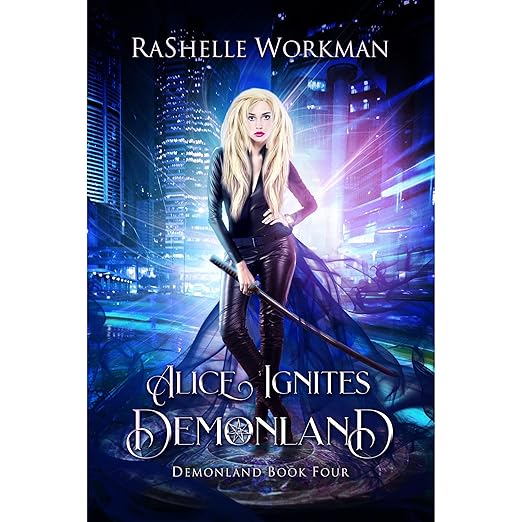
Alice's journey through the Demonland series reaches its conclusion in book four, and RaShelle Workman frames the finale around a threshold-crossing that the earlier volumes have been building toward: the angel realm, which turns out to be no Wonderland at all. Alice Ignites Demonland picks up after a significant loss and delivers the series' final trial, final war, and final romantic choice in a four-hour-fifty-three-minute listen narrated by Virtual Voice AI technology. The audiobook is the fourth and concluding installment in a series that topped Amazon bestseller charts across multiple categories including paranormal fantasy, teen romance, and fairy tales.
Workman's structural decision to send Alice into the Seraph Academy - essentially a boot camp for angel-adjacent misfits - serves a function similar to the institutional sequences in other serial fantasy: it establishes a new power system, introduces characters who will matter in the finale, and forces Alice to define herself in relationship to an institution whose rules she did not choose. The centuries-old prophecy that makes Alice relevant to the war between angel factions is handled without the telegraphing that many series finales succumb to. Reviewers have noted that the conflict resolution surprised them, which is a genuine compliment for a book in which the broad shape of the ending is never in serious doubt.
First, the Big Picture
The Wonderland framework that structures the Demonland series operates more as tone and character DNA than as direct allegory. Alice's outsider status, her tendency to stumble into situations where the rules are being made up by someone else, and her habit of asking questions that the established players find inconvenient - these echo Lewis Carroll's original without requiring readers to track specific parallels. By the fourth book, the Wonderland comparison is background texture rather than structural constraint, which is the right call for a series that has developed its own internal mythology.
The talking weapon introduced in this volume is, based on reviewer responses, the new character who generates the most warmth. It arrives as a comic counterpoint to Alice's more serious predicament and functions throughout as both practical asset and emotional anchor in scenes where Alice is otherwise isolated. The romantic resolution - the question of which man Alice chooses - is handled without the narrative cheating that some fantasy series resort to. One reviewer stated that the man she chose was exactly who they had been rooting for from the start; another praised the closure across all storylines as complete and satisfying. The character interactions, which one reviewer singled out as believable and well-realized, reflect Workman's consistent investment in her supporting cast across all four volumes.
The audiobook format suits Workman's pacing, which prioritizes momentum over atmosphere. The action sequences - the war between angel factions, the trial itself, the climactic confrontations - benefit from audio delivery, which prevents the chapter-skip temptation that a fast-reading reader might give in to. At under five hours, this is a compact listen relative to the story it contains, which reflects Workman's efficiency as a plotter. Nothing in the synopsis is there for decoration.
The Virtual Voice narration is functional for the material. Workman's prose is dialogue- and action-heavy, which plays more naturally to AI narration's strengths than literary prose or complex emotional interiority would. The romantic scenes are where the limitation is most audible - the Voice handles confrontation and exposition cleanly but does not carry subtext in the way a human narrator would, which means some of the final emotional beats register slightly flat in audio compared to what a reader brings to the text. Listeners who have followed the series through earlier formats may want to read the climactic chapters rather than listen to them. One reviewer praised Workman's ingenuity across the series as consistently brilliant and surprising, a claim that the finale's unexpected conflict resolution does not contradict.
What to Watch For in Alice Ignites Demonland
The Seraph Academy sequences are slower than the surrounding material, and some listeners who came to this series for its pace may find the institutional setup sections a test of patience. That patience is rewarded: the faction war that the academy exists to prepare for is more legible - and the stakes more personal - for having lived inside the training sequences first. The angel weaknesses that Alice discovers during her time there are not simply plot conveniences; they become the basis for her tactical approach in the final confrontation.
The prophecy thread requires attention across the full runtime. Workman plants its implications early and returns to them at intervals, but the full significance of Alice's specific position in the centuries-old conflict is not legible until the final third. On a first listen, this rewards listeners who maintain continuity across the full runtime rather than taking extended breaks between sessions. The series finale structure, more than the earlier volumes, depends on cumulative revelation.
Is This One for You?
This audiobook is squarely for listeners who have read or listened to the first three Demonland books. As a series finale, it depends on established character relationships, the established rules of Alice's world, and emotional investment built over three prior volumes. Listeners considering entering the series at this point should start with Alice in Demonland. For invested series readers, this conclusion delivers what it promises: a romantic resolution, closed storylines, and a satisfying use of the angel-realm expansion. Listeners who find AI narration too flat for emotionally complex material may prefer the print edition for the finale specifically.