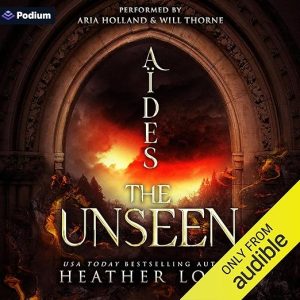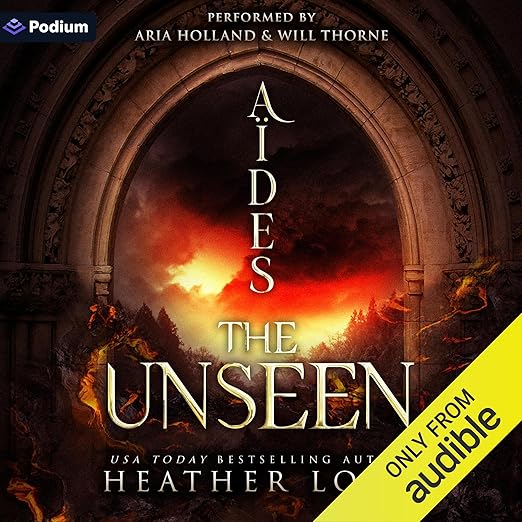
Duet style is how this description signs off, in a single line at the very bottom, after the poetry about olive trees and buried names. That line matters more than a closing tag usually does, because the narrator slot on the audiobook holds exactly one name. Aria Holland is credited, and a duet needs two. Either the copy is naming a format the credit does not disclose, or the credit is a name short, and the listing gives a buyer no way at all to tell which.
First, the Big Picture
Irina does not know she is Persephone, and that gap is the whole engine of the book. Heather Long takes the myth everyone thinks they already know and pushes it forward into a chain of mortal lives, so that the woman at the center has to walk back through every one of them to recover herself. The reframe carrying the story is stated outright in the copy: the oldest lie of all is that she was ever a girl stolen. Everything the plot does afterward works to dismantle that one sentence.
Graven is the Lord of the Dead under another name, and Long's version of him is not the brooding possessive figure this trope usually delivers. He has spent centuries looking for a soul's twin scattered across mortal lifetimes, and the threat he poses points outward, at the gods keeping her bound, rather than inward at her. Readers arriving from the darker end of the subgenre should calibrate accordingly: the danger in this book is real, and none of it comes from the love interest.
Podium Audio runs this at ten hours and fifty-three minutes, divided by the book's own structure into a before and an after. One name sits in the narrator slot: Aria Holland. Given a text that alternates between two immortals across several lifetimes and several registers, the workload inside that credit is heavy, and the copy's closing promise suggests the finished production may not match what the credit says. Anyone buying for the format specifically should treat the sample as the only reliable evidence available.
What Makes Aïdes the Unseen Worth Hearing
Romance readers who have read other Hades and Persephone retellings will recognize the shape and, I suspect, be surprised by the emphasis. The pull here is not the abduction and not the bargain over the seasons. It is recognition: two people who have found each other repeatedly and lost the thread every time, meeting again with only one of them able to remember it. That is a far more painful setup than the standard version, and it earns the length it takes.
Mythic time gets handled with an unusual amount of patience. Part one builds the original meeting and the disappearance; part two picks the thread up lifetimes later, carrying the consequences of everything the first half established. A first-time reader of these retellings called the result stunning, and the split is what makes that reaction available: you spend half the book knowing something the protagonist has forgotten, which converts every reunion scene into something much closer to grief.
Persephone's agency is the argument, and the copy states its thesis without apology: this time, she chooses. Whether a mythic romance can carry that weight depends entirely on whether the choosing scenes land, and Long stages them late enough that you have watched the alternative for hours first. The gods around them supply the obstruction, and the description is explicit that some of them will stop at nothing to keep her bound. The center holds because the book keeps asking a question about consent the original myth never bothers to ask.
What Might Not Land
Pacing is where the book asks for patience up front. Someone who came to it a week after release awards four stars, says the opening drags until the second part arrives, and then praises the narrators, plural, for bringing the tale to life. Both halves of that response are useful: part one has to build a world, a mythology and a marriage before part two can spend any of it, and the plural is the only corroboration anywhere on the page for the duet line in the copy.
September is the earliest date in the written column, and this recording reached the store in February. Responses that predate an audio edition are not worthless, but they are testimony about a text rather than about a performance, and a buyer weighing the star average deserves to know which of the two the average is mostly made of. The listing does not separate them, and no filter on the page will do that sorting for you.
Aria Holland's job is complicated by a naming decision the book makes and the column quietly undoes. Long calls them Irina and Graven; most of the written responses call them Persephone and Hades. If you go in expecting the Greek names to be spoken aloud, you will spend the first stretch translating, and that friction is by design: the book is arguing that the names you know were assigned by the wrong people. Worth knowing, so the friction reads as intention rather than error.
Who Should Listen to Aïdes the Unseen
Anyone who reads mythic romance for the reunion rather than the chase should start here. It will find its people among listeners who want a slow burn stretched across lifetimes, who prefer a devoted immortal to a cruel one, and who like a romance that keeps arguing with its own source material. The listing says nothing at all about heat level, so treat that as unknown rather than as absent.
If you want the abduction plot played straight, this is not it, and the description says as much on the page. Stay away if you need a fast open, and stay away if reincarnation structures frustrate you, because the middle stretch is a woman walking deliberately back through every life she has lived. That is a design choice rather than a detour. Fantasy readers who want a war instead of a reckoning should also look somewhere else.
Take the two-part structure seriously when you plan your listening. Part one is foundation and part two is consequence, and the payoff only lands if you reach the second half with the first still fresh in your head. Spread it too thin across too many weeks and the recognition scenes lose exactly the thing that makes them hurt.
Against other Hades and Persephone retellings, this is one of the more thoughtful entries: it takes a myth usually staged as possession and restages it as recovery, and it hands the woman at the center the argument rather than the ordeal. The listing's confusion about how many voices you are buying is close to the only thing standing between this and an easy recommendation. Expect to be moved before you are convinced.
At a Glance
- Narrator: Ten hours and fifty-three minutes carrying two immortals, one mortal life and a chorus of interfering gods, all resting on a single credited reader.
- Subjects: Hades and Persephone retold, reincarnation and recovered memory, consent rewritten, love across lifetimes
- Tone: Lush, mournful, slow to ignite
- Bottom line: Buy it for the second half, and give the first half the patience it openly asks for.
Common Questions
Why does the description say duet narration when one narrator is credited?
The copy closes with that line and the credit names Aria Holland alone, so two fields on the same page disagree. Podium Audio reconciles them nowhere else in the listing. Either a second reader went uncredited or the phrase describes an intention rather than the finished production, and if format is your reason for buying, the sample is what settles it.
How long is the Aïdes the Unseen audiobook, and how is it structured?
Podium Audio lists ten hours and fifty-three minutes, and the book divides into two parts: the original meeting and the disappearance, then the consequences lifetimes later. The description sets that up explicitly, moving from the twisted corridors of memory to the roots of the olive tree where the protagonist's name was buried.
Do I need to know the myth before starting this audiobook?
No. The description supplies everything the plot depends on: a Lord of the Dead hunting a queen whose soul has been scattered through mortal lifetimes, a woman called Irina who does not know what she was, and gods who remember far too much. Prior knowledge changes what the reframing feels like, but it is not a prerequisite.
Is this part of a series, or does it stand alone?
The listing carries no series name and no series number, and the description presents a complete arc from first meeting to final choice. Nothing on the page points to an earlier or a later volume. Treat it as a standalone unless Podium Audio adds series fields later, and note that the copy resolves its central question rather than deferring it.