The Short Version
- Narrator: The narrator field reads Virtual Voice, so what you are buying is synthetic speech laid over a checklist-shaped text.
- Subjects: Practical AI for non-technical beginners, prompt writing, workplace productivity, privacy basics.
- Tone: Brisk, upbeat and relentlessly practical.
- Bottom line: A workable three-day starting point for true newcomers, and far too basic for anyone already using these tools.
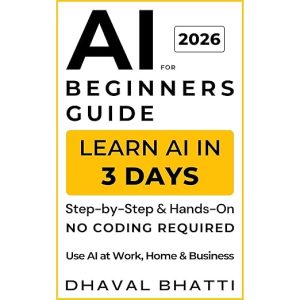
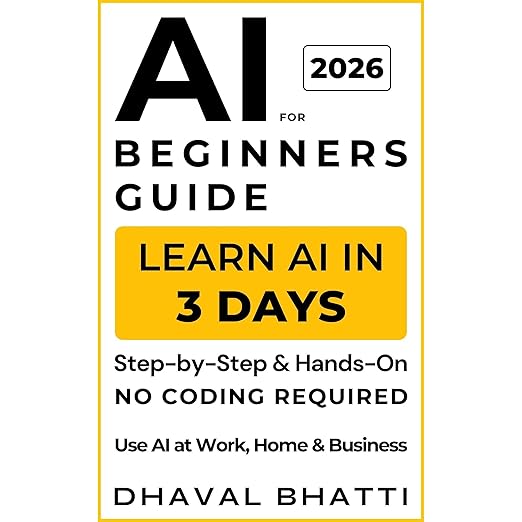
Prompt packs you cannot copy are the first problem this audiobook has to solve. Dhaval Bhatti's description promises a free hundred-and-one-prompt bonus with the instruction to copy, paste and go, a prompt cheat-sheet you save, and a progress tracker the book calls a Hero Meter. The closing line invites you to tap Buy Now. All of that was written for a screen, and the recording inherits it unchanged, which means a listener spends two hours and fifty-three minutes hearing about materials designed to be looked at.
Each Day Ships One Tangible Output
Structure is the selling point and it is a sound one. Day one covers foundations and a first practical win; day two introduces a prompt formula built on goal, details, tone and role, plus privacy settings; day three breaks an intimidating project into steps and ships one tangible output. Divide the runtime by three and each day comes to under an hour, which is an honest promise rather than an inflated one. A beginner really can clear this in a working week's worth of evenings, and I would rather have a book that promises three days and delivers them than one that promises mastery and delivers a reading list.
Synthetic Delivery Costs a Human Signal
The narration credit reads Virtual Voice, meaning the recording is machine-generated rather than performed by a person. That is a fact rather than a verdict, and it lands differently on different material. For a how-to built from short procedural steps, checklists and named tools, synthetic delivery costs less than it would in a memoir or a novel, since nothing here depends on timing or characterization. What it does cost is the small human signal that tells you when a step has ended and a new one has begun, and steps are almost all this book contains.
Currency is the book's asset and its liability at once. The description names ChatGPT in a specific version, Gemini, Copilot and Apple Intelligence, and a guide anchored to four named products in one particular configuration ages faster than one built on principles. The prompt formula will survive. The screenshots of anybody's settings menu, described aloud, will not, and a listener buying this two years from now should expect a portion of it to be archaeology.
Finishing Beats a Longer, Abandoned Book
One five-star response identifies exactly the reader this was made for. D.Stephens describes a familiar dead end: "I downloaded apps, read prompts, watched videos- it all felt daunting and perhaps a bit more than I have time for." That is the actual barrier for most people, and it is a time and confidence problem rather than a technical one. A three-day frame with a finish line attached is a legitimate answer to it.
Brevity is the second argument, and it is not a small one in this category. Under three hours means you finish, and finishing is where most self-directed learning fails. A longer, more thorough book on the same subject that a listener abandons at chapter four delivers less than a short one they complete on a weekend.
Modesty is the third. Patrick's four-star notice sets expectations in a single line, calling it good for starting out and laying a framework. Nobody here is claiming transformation. The description's own outcomes are tone-flipped emails, meeting briefs, summarized threads and one-pagers, which is a realistic account of what a non-technical person gets out of these tools in week one.
Praise for Layout in a Recording Without One
Depth is the recurring complaint and the three-star notice states it without malice. JRobert Rakow praises the ease of following it and then draws the line: "This book is very BASIC, elemental level." That reviewer wanted to know how the tools connect to spreadsheets and documents and did not find out. Anyone who has already run a dozen prompts through a chatbot will be listening to material they know. The same notice opens by praising the layout, which is worth pausing on, because layout is precisely what a recording cannot deliver.
Dates are the thing to check here. The five written responses were all filed in 2025, between August and November, while the audio arrived in January 2026. The description advertises itself as updated for 2026 and the year sits in the title, so every opinion visible on this page was formed before this recording appeared. That is a gap worth holding in mind when the score looks reassuring.
Two of those five deserve individual asterisks. One five-star notice consists of two words in its body, "Try it", and describes nothing. Another closes with a disclosure that the reviewer received a free copy and is voluntarily leaving a review, which is honest of them and still worth registering. Sixteen ratings produce the 4.4 average, so the base is thin enough that the written responses carry real weight, and two of the five are not carrying much.
Office Workers Get Workplace Artifacts Immediately
Complete newcomers are the audience, and the listing is unambiguous about it. If you have never written a prompt, if the vocabulary alone puts you off, and if you want a structured week rather than an open-ended tutorial hunt, this does the job inside a single afternoon and asks nothing technical of you.
Office workers with a concrete task in mind are the strongest fit inside that group. Most of the outcomes the description promises are workplace artifacts, so anyone who writes updates, summarizes threads or builds briefs has somewhere to put the material immediately, which is the difference between a course that sticks and one that evaporates.
Anyone who has already used these tools for a few months should pass, since the three-star assessment of the depth is accurate and much of this will sound familiar within twenty minutes. The same goes for listeners who want integration with spreadsheets and documents, which one reviewer specifically hoped for and did not get.
One practical note for everyone else: decide in advance how you will capture the prompts. A pack you are told to copy and paste, a cheat-sheet you are told to save, and a progress meter you are told to track all assume hands on a keyboard. Listening while driving gets you the concepts and none of the assets, so plan a session at a desk for at least part of it.
Good to Know
Is the AI for Beginners audiobook narrated by a person?
No. The credit reads Virtual Voice, which means synthetic narration rather than a human performance. For procedural material built from short steps and named tools the cost is lower than it would be in fiction, but listeners sensitive to machine-generated speech should sample a passage before committing to nearly three hours.
Can you get the bonus prompt pack from the audiobook?
The description explains how to access a free hundred-and-one-prompt pack and repeatedly tells you to copy, paste and save. None of that works hands-free. Plan on at least one session at a desk with the recording running, otherwise you finish the audiobook holding the concepts and none of the materials.