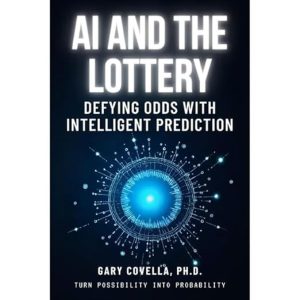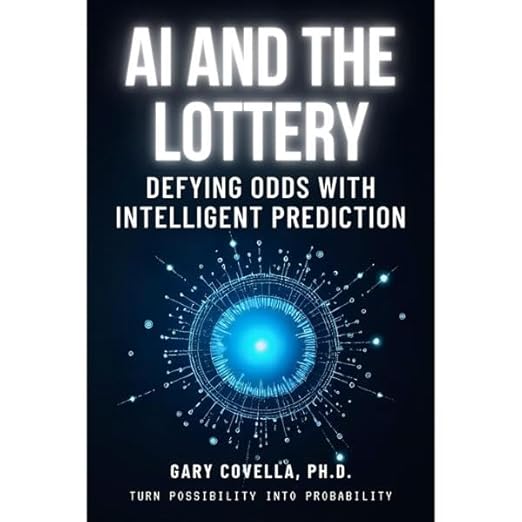
Gary Covella's AI and the Lottery is worth approaching honestly from the outset of this review: the audiobook's marketing language and its actual analytical subject matter exist in productive tension with each other, and engaging with that tension is more useful than ignoring it. The synopsis reads like a sales letter - phrases like unlock the power of AI and secret money-making algorithms alongside a closing note to buy this book now while we're still allowed to sell it signal a promotional register that does not sit easily alongside serious claims about artificial intelligence and probability theory. That gap between the framing and the substance is the central thing to understand before purchasing.
The Virtual Voice narration delivers the text with mechanical consistency throughout all six hours and fifteen minutes. It does not editorialize, which is the one functional advantage of AI-generated narration for this particular book: the breathless promotional language of the synopsis is delivered in the same flat register as whatever analytical content exists, which inadvertently makes the hype easier to distinguish from the substantive material. Listeners expecting the warmth and interpretive intelligence of a skilled human narrator will not find it here, and at over six hours that limitation has real cumulative effect.
The honest version of this review requires taking the available listener reviews seriously rather than treating them as noise. Three reviews split along a fault line that is genuinely informative: one listener described the book as very interesting, one gave it four stars and found practical strategies around number selection while calling the content common sense, and one gave it one star and called it a joke. That spread is not the result of different tastes in the same genre - it is the result of different expectations encountering the same content. The four-star reviewer who found practical number-picking strategies and described the content as common sense is probably the most accurate characterization of what the substantive material delivers at its best.
Here is the tension the book cannot fully escape: state lotteries are designed as genuinely random systems. That randomness is not incidental - it is an engineering requirement built into the drawing mechanisms specifically to prevent the kind of statistical prediction the book's marketing promises. AI systems excel at finding patterns in historical data, but a well-designed lottery produces historical data in which patterns are noise rather than signal. The book's most defensible content is likely in sections where it engages with probability and statistical thinking in general terms rather than in the specific lottery prediction application, which the underlying mathematics of random number generation severely limits.
Algorithmic Thinking Survives Even Genuine Randomness
The intersection of artificial intelligence and gambling strategy is a legitimate intellectual topic with real substance beyond the lottery application specifically. Understanding how pattern recognition algorithms work, what historical data analysis can and cannot reveal about future outcomes, and how to think probabilistically about high-variance systems are genuinely useful cognitive frameworks. If Covella's treatment of these concepts is accessible to general listeners - and the reviewer who described it as common sense suggests it is pitched at an approachable level - then the book has real value as an introduction to algorithmic thinking even where the lottery-specific application runs into the wall of genuine randomness.
The psychological and behavioral dimension of lottery participation is also worth noting. Why people select numbers the way they do, what cognitive biases drive those selections, and how a more systematic approach might help someone think more clearly about a game of chance even without improving their statistical odds are questions with tractable answers. Whether the book engages with these dimensions substantively is not entirely clear from the synopsis and the handful of reviews available to check against, but listeners interested in behavioral economics alongside the AI angle may find relevant material in those sections.
Six Hours of Monotone, Golden-Ticket Marketing
The marketing language throughout should be read with consistent skepticism. Claims about algorithms the lottery bosses wish stayed buried and the characterization of the book as your golden ticket are commercial framing, not factual statements. The actual analytical content, based on the available reviews, appears considerably more modest and practical than the promotional language suggests. This gap is not unusual in the self-help and wealth-strategy genre, but the distance here is wide enough to be worth naming explicitly before a purchase decision.
The Virtual Voice narration means that all of this content - the hype and the substance alike - arrives in the same monotone delivery without the vocal intelligence that might help a listener navigate the register shifts. At six hours and fifteen minutes, that limitation is meaningful. Listeners who find AI-generated narration fatiguing over extended sessions should factor that into their decision.
Lottery Framing as a Vehicle for Broader Ideas
This audiobook may be useful for listeners interested in AI prediction concepts and probabilistic thinking at an accessible, non-technical level, who approach the lottery-specific framing as a vehicle for those broader ideas rather than as a literal path to winning. Listeners expecting a technically rigorous treatment of AI and random number generation, or those who take the promotional claims about cracking lottery codes at face value, are likely to be disappointed from opposite directions. The practical recommendation is to read the available reviews carefully, calibrate expectations against what genuinely random systems mathematically permit, and proceed with realistic goals for what the audiobook can deliver. The topic has real intellectual interest; the marketing promises more than any book on this subject can honestly provide.