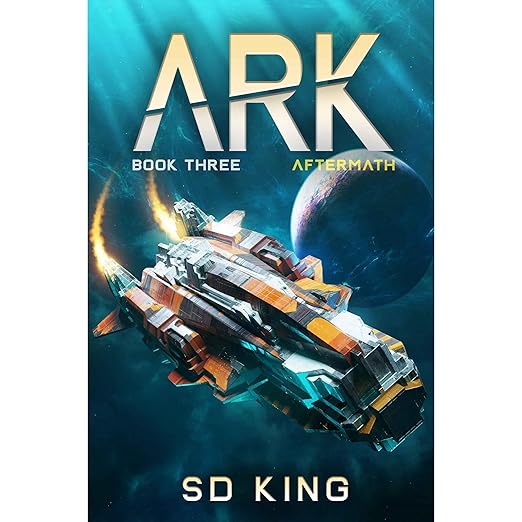
Craig Alanson's Aftermath is the third book in the ARK series, and any assessment of this audiobook has to begin with that positioning. The ARK series follows the Gaea Ark - one of the last remnants of humanity fleeing a dying Earth across the galaxy - and Aftermath picks up directly from where the second volume left its passengers and crew. Alanson writes science fiction that prioritizes character dynamics and internal conflict over hard-science worldbuilding, and the premise stated bluntly in the synopsis captures the series' central tension: aboard the Ark, there are as many secrets as there are survivors. That is the space Aftermath occupies - a sealed world where the people who managed to escape Earth are now the existential problem for each other.
The Review
The Virtual Voice narration is the first thing to address practically for anyone arriving at this audiobook without series history. AI-generated audio has become more common in independent and self-published science fiction, and it functions at the level of intelligibility - the text is read accurately and the pacing is acceptable. But Aftermath is a book about people under sustained psychological pressure in a closed environment, and that subject matter calls for exactly the kind of emotional nuance and dynamic variation that human narrators excel at and current AI narration still struggles to deliver. Listeners who have strong feelings about narration quality should factor this into their decision before purchasing.
The synopsis is brief by design - Alanson clearly does not want to reveal plot details for a third entry in an ongoing series, and that is appropriate. What the available information establishes is that the series structure follows multiple ongoing storylines across the Ark community, with secrets distributed among the survivor population in ways that create sustained dramatic tension. The 4.1 rating and modest review count suggest an audience that is loyal to the series rather than one that has discovered Aftermath as an entry point, which tracks with how third-series installments typically perform - they are for people already invested rather than newcomers.
The Best Parts of Aftermath
Series listeners who have committed to the ARK books through the first two volumes will find Aftermath at four hours and twenty-six minutes a shorter installment than the previous entries, which may either feel appropriately compact or slightly thin depending on expectations. Alanson is a prolific author best known for the Expeditionary Force series, which has built a significant following on the strength of its combination of military science fiction and humor. The ARK series operates in a different register - more tense and claustrophobic than the Expeditionary Force books - and listeners who enjoyed the core competencies Alanson demonstrates elsewhere will recognize the narrative instincts even in a stripped-down form.
The "secrets and survivors" premise is one of the more durable structures in science fiction, and Alanson uses the Ark setting to generate the kind of dramatic irony that sealed-world stories do well: we know things characters do not, characters know things other characters do not, and the gap between what is known and what is disclosed drives the tension. For listeners who have followed the series, Aftermath presumably delivers on the promises made in the earlier volumes without fully resolving the overarching questions - the series continues, and third volumes in ongoing series are typically transitional.
Alanson's broader body of work provides useful context for assessing Aftermath. The Expeditionary Force series, which he began publishing in 2016 and has continued across more than fifteen volumes, established him as a writer who can sustain reader investment through consistent character voice and reliable narrative momentum. The ARK series applies those same instincts to a more confined setting and a more psychologically pressured scenario. Where Expeditionary Force features galactic scale and a comedic AI companion, the ARK books are intimate by comparison: the entire story world is a single vessel and the antagonists are internal rather than external. Aftermath inherits both the strengths of that focus and the potential limitation of a world that does not expand beyond its hull.
The Caveats
New listeners considering Aftermath as an entry point should reconsider. The ARK series follows a continuous narrative across its volumes, and Aftermath's dramatic stakes depend almost entirely on knowing who the characters are, what they have already survived, and what the secrets that have been building since book one actually are. Listening to Aftermath without the prior volumes would be like arriving at the third act of a film - you might understand the surface events, but the emotional weight would be unavailable. Start with the first ARK book to get the full experience.
The compact runtime also means that Aftermath functions more as a chapter in an ongoing story than as a self-contained narrative event. At four hours and twenty-six minutes, it is one of Alanson's shorter installments, and listeners who have come to expect more expansive entries may find the pacing feels rushed in places. The thematic material - survival guilt, the ethics of who gets secrets and who gets truth in a community under existential pressure - is the right material for a story set aboard the last human ship, and Alanson has the narrative intelligence to develop it, but the compressed format limits how much space those themes get.
Who Should Listen to Aftermath
Existing ARK series listeners who have worked through the first two volumes and want to continue the story are the audience for this audiobook. Fans of Alanson's broader catalog who want to explore his non-Expeditionary Force work should begin with the first ARK book rather than this entry. Listeners new to Alanson entirely would be better served starting with Expeditionary Force, which has more reviews, more established narration, and a longer track record of audience response to calibrate against. If you are already three books into the ARK series, Aftermath is the next step - the Virtual Voice narration is a real concession, but the story continues and Alanson's narrative instincts remain intact within it.
Can I listen to Aftermath as my first audiobook in the ARK series?
This is not recommended. Aftermath is the third book in a continuous series narrative, and its dramatic stakes depend on character relationships, established secrets, and plot developments from the first two volumes. Starting here would mean missing the setup that makes the events of this book meaningful.
How does Aftermath compare in length and scope to the earlier ARK audiobooks?
At four hours and twenty-six minutes, Aftermath is a relatively compact installment. Listeners accustomed to more expansive entries in the series may find this one feels like a bridge chapter rather than a complete narrative arc. It continues the ongoing storylines without fully resolving the central questions of the series.
Is Craig Alanson's ARK series similar to his Expeditionary Force audiobooks?
The ARK series operates in a different register. Where Expeditionary Force combines military science fiction with humor, the ARK books are more claustrophobic and psychologically tense, built around a sealed-vessel survivor community rather than interstellar military adventure. Listeners who came to Alanson through Expeditionary Force will recognize his narrative instincts but should expect a different tone.