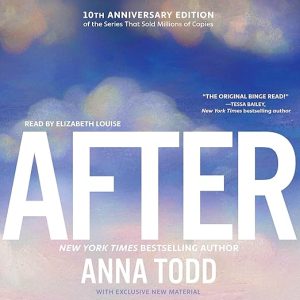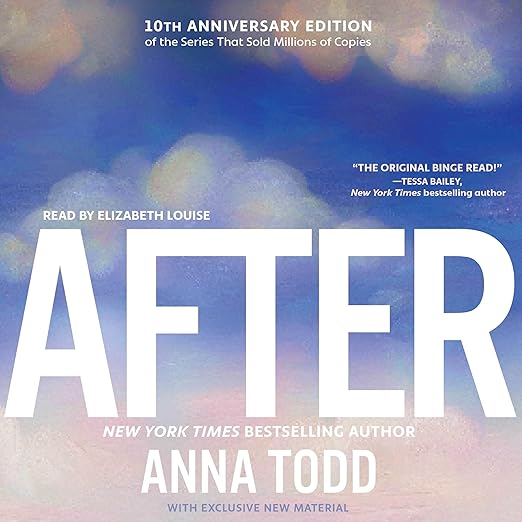
I want to resist the academic reflex when approaching After We Collided, which is to reach immediately for the vocabulary of harmful tropes and problematic dynamics. Those conversations are valid and they have their place. But they can also obscure what is actually happening in a piece of fiction that millions of readers, overwhelmingly young women, have found meaningful, even defining. So let me try to engage with what the book is doing before I assess how well it does it.
Anna Todd began writing this story as fan fiction on Wattpad, and its origins in that medium show in the pacing, scene-by-scene intensity, dialogue-driven rather than interiority-driven, built for the kind of compulsive sequential reading that online serialization rewards. When it was published and eventually adapted into a film franchise, it brought its fan-fiction DNA with it intact, which is both its greatest strength and its most honest limitation. This is not a novel that pretends to be something it is not. It commits completely to the emotional reality of its characters at this moment in their lives, and that commitment is what its readers have always responded to.
Tessa Young arrives at college with a boyfriend, a plan, and a carefully maintained sense of who she is and where she is going. Within days, Hardin Scott has disrupted every one of those certainties. Todd does not pretend that the disruption is healthy. The hot-and-cold dynamic, the cruelty that borders on genuine emotional harm, the way Hardin's hidden depths are offered as justification for behavior that would otherwise be clear-cut, these elements are part of the text, not despite the narrative but within it. Todd's decision to keep Tessa's perspective honest about the cost of the relationship is what gives the book its authenticity. Tessa knows, at various points, that she should leave. The novel does not pretend otherwise.
One reviewer who described herself as relating to the book heavily said the issues the couple faces and the way that the characters interact are very real, and that this is not a sugar-coated story where everything is happy and bright. That reading is, I think, the correct one. The rawness is intentional. Todd is not writing an aspirational romance; she is writing about the specific irrational magnetism of a relationship that is doing you harm but that you cannot leave because the feeling is too large.
Why After We Collided Works as an Audiobook
The novel runs sixteen and a half hours, which is long for a contemporary romance, and the narration by Elizabeth Louise is what makes that length work. She finds a register for Tessa that is neither naive nor unrealistically self-aware, Tessa is a smart young woman who is also, in this period of her life, making choices that her smarter self can see are choices. Louise holds that tension without tipping into either condescension or uncritical endorsement. Her Hardin, rendered through dialogue in a first-person narrative, is voiced with enough charm to make his appeal intelligible without making him seem designed to be admired.
Reviewers who came to the audiobook after watching the film adaptations consistently note that the book contains considerably more depth and emotional complexity than the movies managed. That is worth noting for listeners who may have formed opinions about the story through the screen version. The auditory version has space for the interior life that film necessarily compresses.
Weak Spots in After We Collided
This is Book 1 of the After series, which eventually runs to five volumes. Todd wrote an ending for this first installment that functions as a complete story beat while leaving clear threads for the subsequent books. Listeners who find the relationship dynamic compelling enough to continue should know that the series extends the same emotional intensity across several thousand additional pages, and that the books become progressively more complicated as Hardin's behavior and the narrative's relationship to that behavior evolves.
For readers who approach fiction as a space where difficult relationship dynamics can be examined rather than only endorsed, this audiobook offers something genuine. For readers who find it impossible to separate fictional intensity from implied prescription, it will be frustrating at best.
The Right Listener for After We Collided
Listeners who have already watched the film adaptations and want the fuller emotional context the books provide. Readers who remember being twenty and in a relationship that consumed everything and who are willing to revisit that feeling at a safe distance. Those who require their romantic protagonists to make consistently healthy choices will find this audiobook difficult. It is not for listeners looking for light, comfortable romance; it is for listeners who want something that takes its own emotional turbulence seriously.
Key Details
- Voice: Elizabeth Louise handles the emotional volatility of Tessa's first-person experience with enough authenticity that the relationship's intensity lands rather than tips into parody.
- Big ideas: First love and its toxicity, self-discovery through upheaval, the gap between who we planned to be and who we become
- Atmosphere: Emotionally turbulent, compulsively listenable, genuinely intense
- Worth it?: A polarizing but honest piece of fiction about the kind of relationship that feels like everything at twenty and is very difficult to explain later, narrated with appropriate conviction.
Frequently Asked Questions
Is the audiobook based on the original Wattpad version or the published novel?
The audiobook follows the published Simon and Schuster edition, which Todd revised and expanded significantly from the original Wattpad serial. The published version includes additional scenes and polished prose.
How does Elizabeth Louise handle Hardin's British accent in the narration?
Louise uses a subtly differentiated voice for Hardin's dialogue that conveys his British quality without becoming a full accent performance. It works better than a more exaggerated approach would, keeping the focus on the emotional content of his speech rather than its sound.
The novel started as One Direction fan fiction, is that origin still visible in the published version?
Todd revised the Wattpad original substantially to change character names and remove explicit One Direction references before publication. Readers familiar with the fan fiction will recognize structural similarities, but the published novel stands independently.