
At a Glance
- Narrator: Robbie Daymond reads a first-person seventeen-year-old plus a five-way group chat, and the chat is the part a page handles visually and audio has to solve outright.
- Subjects: Asexual friendship and first love, a family business built on organized crime, a Vegas job that is not quite a heist
- Tone: Fizzy, chatty and quietly tender
- Bottom line: A warm ensemble caper with genuine ace representation, best suited to listeners who enjoy living inside a teenager's head.
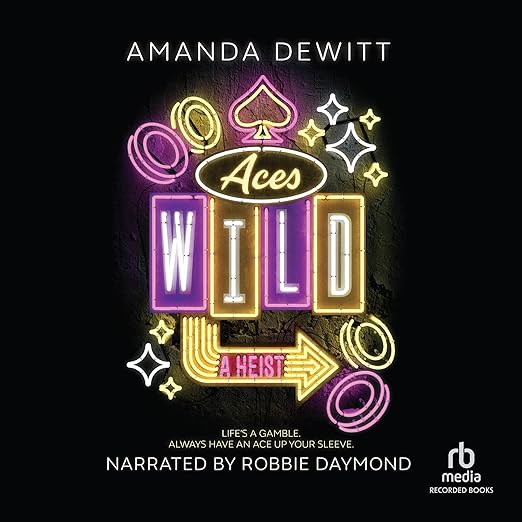
Jack Shannon runs a blackjack ring in his private school's basement, which is what the son of a Las Vegas casino mogul does instead of joining chess club. When his mother is arrested and he becomes convinced she was sold out by a rival casino owner, the people he calls are the asexual support group he met through fandom forums. Robbie Daymond reads the ten-hour-and-twenty-seven-minute audiobook for Recorded Books, and this is one of the rare listings whose genre shelf and tag both describe the book you actually get.
What Amanda Dewitt Delivers
Dewitt's best decision was making the friend group the point. Jack's plan requires people, and the people are five teenagers who know each other from online fandom and have mostly never met in the flesh, which turns a trip to Vegas into a first meeting as much as an operation. The casino plot supplies the deadline. The friendships supply the reason anybody cares whether the plan works.
A five-star filed in April 2025 describes reading it alongside a teenager and reports the effect that matters most for a book pitched here: chapters that end in a way that produced constant requests for one more. That account also singles out how different the friend characters are from each other, which is the harder half of writing an ensemble. Five chaotic teenagers who blurred together would sink this book inside an hour.
Romance runs underneath rather than over the top. Jack is working out what being in love looks like when you are asexual, a question the copy states plainly and the book takes seriously without turning into a lecture about it. Set against organized crime, a jilted rival and a mother in custody, that quiet thread is what gives the shenanigans somewhere to land.
What Amanda Dewitt Gets Right
A five-star from April 2024 makes the most efficient case in the form of a list of what the book contains: chapter titles, texts and group messages, Arthurian myth, casinos and blackjack, five chaotic ace teens, found family, mystery. Two items on that list are formatting choices rather than content, which is the part worth thinking about before choosing a format.
Group chat is the real question. Text threads on a page work visually as much as verbally, laid out so that overlapping voices and interruptions register at a glance, and a recording has to convert all of that into something followable without losing the speed. Five friends talking over each other in a chat window is a different problem from five friends talking in a room, and solving it falls entirely to the reader.
Everything else about the material suits being heard. First-person teenage narration with a running internal commentary is the natural mode for audio, a runtime past ten hours gives an ensemble time to differentiate itself, and a Vegas caper arrives with pace built in. Chapter titles are the one element that behaves differently: in print they are a joke you catch before the chapter begins, and read aloud they turn into an announcement.
Where Amanda Dewitt Loses Some Ground
Expectations about genre want adjusting before you start. A four-star from May 2024 argues that the heist is barely a heist and the mystery barely a mystery, describing what the book actually offers as a search for a fabled gambling location left behind as a legacy. That is a fair account of the shape and a useful corrective to a premise promising a break-in. The listing shelves it under teen fiction with an LGBTQ+ tag, and neither of those is a promise about caper mechanics.
The most honest response on the page is the three-star, and its own headline says so: this rating is my fault. Filed in February 2026, it calls the story cute and completely unbelievable, doubts that an insecure seventeen-year-old could pull any of this off despite his protestations about being a Shannon, and then explains that YA is not a genre it enjoys and that its writer comes from a generation that discussed sexuality far less openly. A grade documenting its own mismatch is worth more than a hostile one and should not be read as a verdict.
Otherwise the numbers behave themselves. Three fives, a four and a three make up the sample on display, landing at 4.4 against the 4.3 posted across eighty-eight ratings, so the sample sits close to representative rather than cherry-picked. Nothing here looks padded, and being able to say that about a rating block is rarer than it ought to be.
One purchase note. At least one of the five graded it as a gift rather than as a read: a July 2023 response from Australia reports that it went down well with a child in the household. That tells you something useful about who the book suits and nothing at all about how it is written, and it sits in the same average as the accounts that engage with the plot.
Who Should Pick Up Aces Wild
Teenagers and adults who want ace representation written from the inside rather than explained from outside are the core audience, and the book delivers it as a fact of its characters' lives rather than as a topic for discussion. The friend group is the selling point: five people with distinct voices, a shared history that predates the plot, and no interest in being anybody's lesson.
It is a poor fit if teenage first-person is not your register. The book commits completely to Jack's voice, jokes and self-justifications included, and ten hours and twenty-seven minutes of a seventeen-year-old's running commentary is a long stretch to spend somewhere you would rather not be. No amount of casino atmosphere compensates for that particular mismatch.
Shared family listening is the other strong use, with one caveat attached. The book handles asexuality, a jilted lover, organized crime and a parent in custody, so it is a teen novel with adult furniture rather than a middle-grade caper. It works best where those subjects are already fair conversation, and the chapter endings will make stopping harder than anybody plans for.
How do the text messages and group chats work in the Aces Wild audiobook?
The listing never says, and it is the one question this format raises that the page leaves open. Group threads are a visual device on paper, so a recording has to turn them into voices, and the speed of five teenagers interrupting each other is exactly where that conversion either works or falls apart.
Is it actually a heist story?
Only loosely. The copy promises the infiltration of a high-stakes gambling club, and the book spends far more time on five online friends meeting in person than on the mechanics of getting inside anything. Come for the ensemble and the casino atmosphere rather than for a caper's clockwork, and the plot holds up fine.
Does the ten-hour-and-twenty-seven-minute audiobook suit short sessions?
It does. Chapters tend to end on hooks rather than at resting points, which makes short sessions easy to begin and difficult to stop. Ten hours and twenty-seven minutes spread across a couple of weeks is realistic, though the stretch in Vegas rewards longer sittings once the group is finally together.
What age is it pitched at, and how frank is it?
Teen readers and up. Asexuality is handled directly and without euphemism, and the story runs on organized crime, a parent under arrest and a rival holding leverage over a family. Expect frankness about identity alongside a crime story with real consequences, rather than a light school comedy with a casino backdrop.







