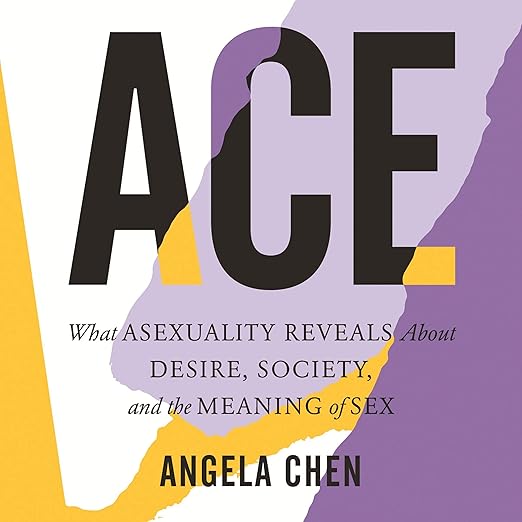
- Narration: Natalie Naudus handles Angela Chen's blend of journalism, memoir, and cultural criticism with a clear, measured delivery that treats the material with the seriousness it warrants without becoming clinical.
- Themes: Asexuality and identity in a hypersexual culture, the intersection of sexuality with race, disability, and gender, rethinking consent and intimacy for everyone
- Mood: Thoughtful and validating, with enough cultural criticism to challenge assumptions without losing the memoir's intimacy
- Verdict: A rigorous and humane audiobook that earns its place alongside the best queer identity writing of the last decade, essential for ace listeners and genuinely illuminating for everyone else.
Angela Chen opens Ace not with a definition but with a question: what exactly is sexual attraction, and what does it mean to move through a world obsessed with it while not experiencing it at all? This audiobook, narrated by Natalie Naudus, runs seven hours and forty-three minutes through one of the most thorough explorations of asexuality available in any format, combining Chen's personal journey with first-person accounts from a diverse community of ace people and a cultural analysis that reaches well beyond the LGBTQIA community it nominally addresses. The result is a book about asexuality that functions as a book about desire, intimacy, and the societal norms that shape all of us, regardless of where we land on any spectrum.
Chen's structural decision to center the misconceptions is as important as the information she provides to counter them. The woman who had blood tests done because she was convinced that not wanting sex was a symptom of illness, the man who did everything right before marriage only to discover his experience of sexuality had never aligned with others' expectations: these are stories that land with particular force in audio because Naudus reads them with appropriate gravity, neither sensationalizing nor deflecting from their human weight. The intersectional framing is thorough and genuine rather than performative. Chen addresses disabled aces, aces of color, gender-nonconforming aces, and aces with and without romantic orientations as distinct subject positions rather than collecting them under a single shared experience. One reviewer noted a narrow perspective if the reader comes from an upper-class, liberal background, and that critique has merit: the book's access to certain kinds of cultural fluency reflects its milieu. But the same reviewer called it a must-read, and that qualification is also accurate; the depth of research and the honesty of the memoir threads are not diminished by the limits of any single cultural vantage point. Naudus navigates the tonal shifts between the analytical passages and the memoir sections with consistent skill, maintaining Chen's authorial voice across both registers without flattening the difference between them. The cultural criticism sections, which examine how gender roles enforce expectations about sexual attraction and how the medical pathologization of low desire has shaped ace people's self-understanding, are the most intellectually demanding parts of the audiobook and reward close, attentive listening rather than background consumption. Another reviewer described the book as meticulously researched, totally honest, and deeply illuminating, and that triple qualification captures the distinct value Chen adds to the existing literature on sexual identity: rigor, candor, and the kind of clarity that comes from having genuinely worked through the subject rather than simply reporting on it from the outside. The memoir portions involving Chen's own path to understanding her asexuality give the analytical sections their grounding, preventing the book from becoming a clinical overview at the expense of lived experience.
Why Listen to Ace
The audiobook format suits this material for reasons that go beyond convenience. Chen's blend of reporting and memoir is built from voices: interviews with diverse ace people whose direct speech carries a dimension that quoted text on a page compresses. Naudus gives each of these accounts enough space and care that the community feels present rather than merely illustrative of a thesis. For listeners who are somewhere on the asexual spectrum and have never encountered their experience named and analyzed in depth, this audiobook can function as genuine recognition rather than information delivery, and hearing that recognition spoken aloud has an affective quality that reading silently cannot replicate. One reviewer who described themselves as a middle-aged straight woman who haltingly identifies as being on the asexual spectrum noted years of wanting exactly this kind of clear information and skillfully related stories, and that response captures the audiobook's capacity to reach people who have not previously had a framework for their own experience and have been quietly searching for one.
What to Watch For in Ace
The section addressing the intersection of asexuality with romantic orientation is crucial for listeners who assume that asexual people do not experience romantic attraction. Chen distinguishes carefully between sexual and romantic desire, and Naudus delivers this material with enough clarity that the distinction, which is genuinely non-obvious to anyone who has not encountered it before, lands properly rather than blurring. The passages on consent deserve particular attention: Chen's argument that the ace perspective clarifies something about consent that hypersexual cultural assumptions obscure is one of the book's most significant contributions to the wider conversation, with implications that extend well beyond ace readers. The chapter addressing how societal norms about normal sexuality have led to misdiagnosis and inappropriate medical intervention is uncomfortable in the best sense; it asks the listener to reconsider what counts as a problem requiring treatment and who gets to make that determination.
Who Should Listen to Ace
Ace readers who have been waiting for a thorough, intersectional, and culturally sophisticated treatment of asexuality will find this audiobook essential. Listeners who are questioning their own orientation and want a rigorous framework rather than a prescriptive label will find Chen's approach supportive and non-coercive. Allies, educators, therapists, and anyone working with LGBTQIA communities who wants to understand the A in the acronym with real depth should add this audiobook to their list. Adult general readers interested in cultural criticism about sexuality, intimacy, and identity will find the analytical chapters rewarding independent of any personal connection to the subject. Skip it only if you are looking for a purely personal memoir rather than the combination of memoir, reporting, and cultural criticism that Chen has deliberately constructed.
A Few Questions About Ace
Is the Ace audiobook primarily a personal memoir, or does it cover asexuality as a broader cultural and social phenomenon?
It is both simultaneously. Chen uses her own path to understanding her asexuality as a throughline, but the bulk of the book is reporting, cultural criticism, and first-person accounts from a diverse group of ace people. The memoir sections anchor the analytical content rather than dominating it.
Does the Ace audiobook address asexuality intersecting with race, disability, and gender, or does it focus on a single ace experience?
Intersectionality is central to Chen's approach. The book explicitly includes disabled aces, aces of color, gender-nonconforming aces, and aces with varying romantic orientations as distinct subject positions, and the cultural analysis accounts for the different pressures these identities face.
Is this audiobook appropriate for listeners who are not asexual but want to better understand the ace spectrum?
Yes, explicitly. Chen's argument is that asexuality illuminates something about desire and identity that applies to everyone, and the book is written with a general curious audience in mind alongside ace readers.