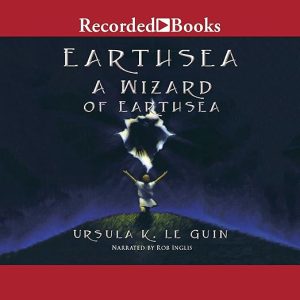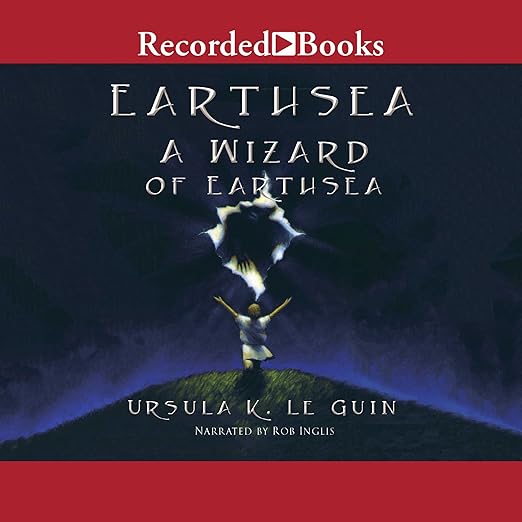
I came back to A Wizard of Earthsea in audio form after having read it on the page years ago, and I was struck by how differently it lands when spoken aloud. Le Guin wrote in a mode closer to oral tradition than to the novel as we usually understand it, and hearing Rob Inglis deliver that prose confirmed something I had suspected: this is a book that was always meant to be heard.
The setup is deceptively simple. Ged, a boy from the island of Gont, shows early talent for magic and earns a place at the school of wizardry on the island of Roke. His intelligence is real but so is his arrogance, and during a moment of reckless competition he tears open the boundary between the living world and the realm of the dead, releasing a shadow creature with no name. The rest of the book is the story of what he does about it.
Magic as Relationship, Not Power, in Earthsea
Le Guin is doing something philosophically specific here that distinguishes Earthsea from almost every other fantasy series written since. Magic in this world is not power that exists to be wielded. It is a relational practice that requires knowing the true name of a thing before you can act on it, and every action carries consequence because the world is balanced. Ged does not break a rule by summoning the shadow. He breaks a relationship. The novel's entire emotional arc is about the difference between using power and understanding it. That is a richer moral frame than most adult fantasy manages, let alone books aimed at younger readers. Neil Gaiman has described the magic of Earthsea as primal, and its lessons as remaining potent, wise, and necessary. That endorsement comes from someone who knows the genre from the inside, and it holds up.
Rob Inglis Reads Le Guin Without Inflating It
Inglis reads Le Guin's prose without inflating it. There is a measured quality to his pacing that respects the book's own restraint. Le Guin famously resisted the conventions of high fantasy spectacle, and her sentences are clean and specific rather than ornate. Inglis does not try to supply a drama that is not on the page. Instead he lets the cumulative weight of the story build as Le Guin designed it. For a book that functions partly as a meditation, that interpretive choice is correct. At seven hours the listen is long enough to feel complete and short enough that the formal restraint of the prose does not become a burden.
Third-Person Distance and the Book's Diverse Cast
The novel is written in the third-person omniscient voice, which reviewers note gives it an unusual quality, more chronicle than close POV. Le Guin is narrating Ged's story as history rather than as immediate experience, which creates a slight remove that some younger readers find distancing and older readers find philosophically interesting. Pay attention to the dragon Orm Embar sequence, which is brief but contains the book's most concentrated statement about the relationship between power and naming. Also notice that the cast skews overwhelmingly toward characters of color, a choice Le Guin made deliberately in 1968 and which she later discussed as a conscious rejection of the default whiteness of the genre. One reviewer celebrated Ged specifically as a brown-skinned wizard and noted the spiritual dimensions of returning to Earthsea as an adult trying to accept and move past old mistakes. The book rewards that kind of personal projection.
Slow, Contemplative Fantasy for Patient Listeners
Listeners who have grown up with plot-driven fantasy series may find Earthsea's pace an adjustment. This is not a book interested in momentum for its own sake. It wants to be contemplated. Readers who encountered it young and are returning in audio form often describe the experience as the book meaning something different and deeper than they remembered. It works for listeners of almost any age, though it rewards maturity. Skip it if you need propulsive pacing or a large cast of characters to track. But if you have any curiosity about where modern fantasy's roots actually run, this is one of the essential texts, and Inglis is a guide worth trusting for the journey.
A Few Questions About A Wizard of Earthsea
Does the third-person omniscient style make A Wizard of Earthsea feel cold or distant in audio form?
It creates a slightly formal distance that some listeners experience as stately and others as remote. Inglis's narration does not try to compensate for it. If you enjoy the feel of a myth being recounted rather than a scene being dramatized, the style will suit you.
Why does the audiobook have a relatively low review count given how famous the book is?
This recording dates to 2009 and predates the major audiobook platform review culture. The book's reputation rests largely on print editions. The audio version is genuinely underreviewed relative to the book's standing in the genre.