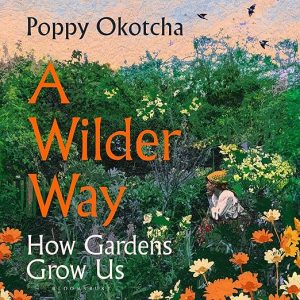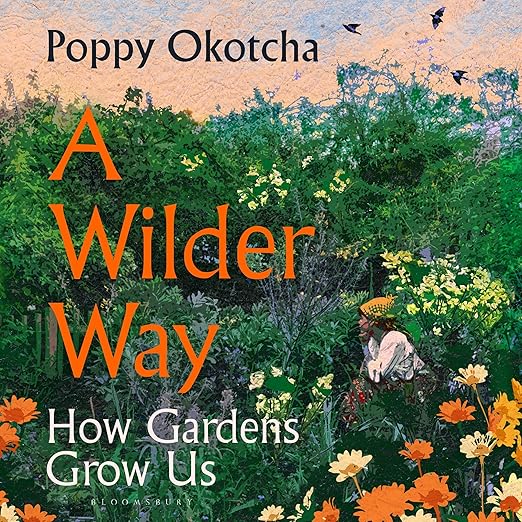
Poppy Okotcha's A Wilder Way audiobook is one of those listening experiences that reorganizes something in you. Not dramatically, not with a manifesto, but through sustained, close attention to a small garden in Devon across the course of a year, Okotcha builds an argument for a different relationship with land that lands more quietly and more permanently than most explicit advocacy ever does. The book won the Jane Grigson Trust Sous Chef Award for New Food and Drink Writers in 2025, and listening to Okotcha narrate her own work, you understand why: she is both a rigorous observer and a genuinely skilled writer whose voice on audio carries an intimacy the page cannot replicate.
Folktales Frame Gardening as Relationship
The audiobook covers a year in Okotcha's wild garden in Devon, weaving together practical growing advice, seasonal recipes, foraging observations, environmental writing, and personal stories drawn from her English and Nigerian heritage. The structure follows the seasons rather than conventional chapter logic, which gives the listening experience a rhythm that matches what it describes: recursive, unhurried, attentive to change. Katherine May, whose own writing on seasons and threshold states has found a wide readership, calls it "a wise, passionate, heartfelt book" and "an invaluable resource for those seeking greater attunement with the year's cycles." That is accurate praise rather than blurb filler.
Okotcha's central proposition is that tending a garden is not merely a domestic activity but a form of relationship, one with soil, with other species, and with the rhythms that industrial culture has trained us to override. She is explicit about the political dimensions of this: food sovereignty, the unequal distribution of green space, the ways that indigenous ecological knowledge has been systematically excluded from mainstream horticultural practice. She carries these arguments through story and observation rather than lecture, which means they arrive with the weight of experience rather than the fatigue of familiar talking points. The folktales woven throughout from her Nigerian heritage are a distinctive element, functioning not as decoration but as a different epistemological frame, one that places human beings in a relationship of mutual dependency with the natural world rather than the extractive manager role that dominates Western horticulture.
Okotcha's Unhurried Voice Models Attention
Self-narration is the correct choice here, and Okotcha executes it with unusual control. Her voice has warmth without sentimentality and precision without dryness, qualities that match the prose exactly. At nine hours, the audiobook never rushes. You are meant to listen the way you tend a garden: with your attention open, not in a hurry to extract information and move on. The listening experience itself models the book's values, which is a rare formal achievement in nonfiction audio.
Hugh Fearnley-Whittingstall's endorsement notes "truly brilliant ideas for getting the most from it," and he is right, though what he is describing is more than technique: it is a different understanding of what "getting the most" even means. Lucy Jones, author of Losing Eden, describes finishing the book "newly awestruck by planet Earth." The practical gardening content, sowing, growing, seasonal recipes, wild ingredient identification, is genuinely useful. But what lingers is something harder to name: a heightened sensitivity to the life happening in and around ordinary patches of ground that most of us walk over without registering.
Genuinely Wild, Occasionally Under-Argued
The seasonal structure can make the audiobook feel non-linear in its progression of ideas. Okotcha returns to themes rather than resolving them, which reflects how ecological relationships actually work but can occasionally leave a listener wanting more sustained development of a particular thread. Those who prefer their nonfiction to build toward discrete conclusions may occasionally feel the narrative drifting rather than building.
The Devon-specific context is rich but does mean some of the foraging and seasonal timing advice applies most directly to temperate Atlantic climates. Readers in very different growing conditions will need to translate rather than apply directly. The political passages are also occasionally more asserted than argued. Okotcha's positions are clear and consistently held, but she is a memoirist and naturalist rather than a policy analyst, and the structural claims sometimes need more unpacking than she provides within the text.
Okotcha's garden in Devon is not a showpiece property or a curated photo-ready space. It is described as genuinely wild, a working patch where things die, decompose, compete, and persist without constant human management. That authenticity matters for the arguments she builds from it. The ecological observations that run through the text are grounded in what an actual practitioner notices over years of close attention rather than in what a garden writer decides would be illuminating to describe. The result is a texture of specificity that distinguishes A Wilder Way from gardening books that use nature as atmosphere while keeping the actual biology vague and decorative.
Kimmerer and Pavord Fans Will Recognize This
This audiobook rewards gardeners who want more than growing guides: people who are interested in what a garden relationship can teach you about being alive in a particular place. Fans of Robin Wall Kimmerer's Braiding Sweetgrass, Anna Pavord's seasonal writing, or Alys Fowler's more personal horticulture will find Okotcha's voice a natural continuation. It is also a strong choice for listeners interested in food writing that takes ecological relationship seriously. Poppy Okotcha's self-narration makes the audio format the optimal way to experience this book. Skip it if you want a conventional growing guide with cultivation tables and pest-management charts, because that is not what A Wilder Way intends to be.
Before You Listen
Does the A Wilder Way audiobook include the practical gardening and recipe content from the print edition?
Yes. Okotcha covers sowing and growing tips, wild ingredient identification, and seasonal recipes throughout the audiobook, alongside the memoir and environmental writing. The practical content is integrated into the seasonal narrative rather than separated into appendices.
How does Poppy Okotcha's self-narration affect the audiobook experience?
Significantly and for the better. Okotcha's voice carries both the lyrical and the practical elements of the text with equal assurance. Reviewers consistently single out the listening experience as something distinct from the page version, and the intimacy of hearing the author is part of what makes the audiobook worth choosing over the print edition.
Does the audiobook address environmental sustainability topics beyond the garden itself?
Yes, throughout. Okotcha addresses topics including biodiversity loss, food sovereignty, and the politics of green space access. She approaches these through personal observation and story rather than data, which makes the environmental content feel embedded in lived experience rather than bolted on as additional messaging.