In Brief
- Read by: Robert Wachter self-narrates this tribute to the Apollo 11 moon landing with a measured reverence that suits the material, allowing Neil Armstrong's famous words and the mission's historic weight to carry without theatrical embellishment.
- At its heart: Apollo 11, human achievement and determination, the spirit of exploration
- Vibe: Solemn and awe-inspiring, beautifully paced for young and adult listeners alike
- Short version: This audiobook tribute to the 40th anniversary of the moon landing is most effective as a gift of atmosphere and historical meaning, particularly strong for children encountering the Apollo story for the first time.
Neil Armstrong's words the moment his boot touched the lunar surface remain among the most quoted sentences in modern history, and the audiobook A Giant Leap, narrated by Robert Wachter, uses them as both the title's inspiration and its emotional center. The production commemorates the 40th anniversary of the Apollo 11 mission with what reviewers describe as a breathtaking tribute, transporting listeners to the moon to experience the landing as Armstrong and Buzz Aldrin experienced it. The combination of historical reverence and a narrative voice calibrated for shared listening makes this audiobook particularly effective as an intergenerational experience.
The writing draws on Neil Armstrong's famous declaration that one small step for man represented a giant leap for mankind, the words that have become shorthand for everything possible when human determination meets impossible goals. The audiobook builds its experience around that moment and the journey preceding it, inviting listeners to inhabit the Apollo 11 mission rather than merely observe it from a factual distance. That experiential approach is what distinguishes this title from a straightforward historical account and makes the audio format a natural home for it.
Wachter's Self-Narration Skews Toward Older Children
Robert Wachter's self-narration brings a personal investment to the material that reads clearly in the recording. The text requires a narrator willing to inhabit the gravity of the occasion without tipping into bombast, and Wachter manages this with appropriate restraint. Reviewers note that the book is geared toward an older child audience, which is accurate: the text portions are described as accurate and historic, and while one reviewer notes they are a little dry compared to more narrative-forward children's content, the quality of the underlying story more than compensates.
The Apollo 11 mission is perhaps the single most documented human event of the 20th century, and the challenge for any production approaching it is to find an angle that justifies the retelling. The anniversary tribute framing gives the audiobook a commemorative purpose rather than simply a documentary one. It is not trying to add new information to the historical record. It is trying to give listeners, particularly younger ones, the emotional experience of what that moment meant and what it represented as a culmination of human effort.
127 Reviews Back a Near-Perfect Rating
Reviewers note that both an eight-year-old boy and a nine-year-old girl engaged with the material, and that the child who listened was able to recite numerous facts about the Apollo 11 mission afterward. Another reviewer describes reading it for a "One Giant Leap" themed day. These are the contexts in which this audiobook functions best: educational moments that benefit from the emotional register of a well-narrated tribute rather than a textbook account.
At a 4.8 rating across 127 reviews, this is a consistently well-regarded production for its target audience. The text is historically accurate, the narration is committed, and the listening experience carries the weight of the material without becoming ponderous. For adults listening alongside children, there is enough craft in the construction to hold genuine interest. For children encountering the Apollo 11 story for the first time, the audiobook provides exactly the kind of atmospheric introduction that makes historical facts memorable because they arrive wrapped in emotional context.
The Apollo 11 mission is also increasingly distant from living memory for younger generations, making productions like this one more important as primary points of entry for children who have no family recollection of watching the moon landing live. The audiobook format, with its capacity for voice and presence, is well-suited to carrying that generational transmission. What Armstrong and Buzz Aldrin represented in 1969, two human beings standing on another world for the first time in history, was never just an American story, and productions that frame it in the universal language of determination and wonder rather than purely national triumph tend to age better. This one frames it that way, and the choice is correct.
Gorgeous Illustrations Never Make It Into Audio
One reviewer's note about the text being "a little dry to enter" is worth considering. This is a tribute production rather than a high-energy adventure story, and the respectful solemnity that makes it appropriate for the subject also means it is less immediately propulsive than narrative-first children's audiobooks. Listeners expecting the pace of an adventure story will find the tempo more contemplative.
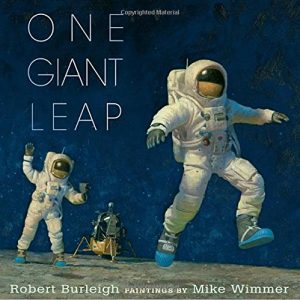
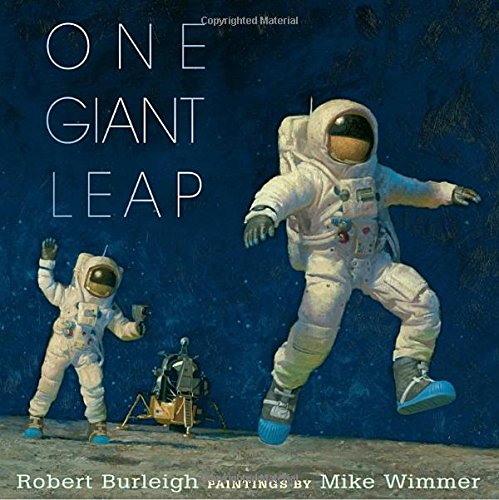
The audio format also means the illustrations described as "breathtakingly beautiful" and "gorgeously illustrated" in reviews are not part of the listening experience. This is a pure audio production of text that was originally written alongside visual art, and while the narration compensates for this to a significant degree, the audio version is a different experience from the print book rather than a direct equivalent. Families who want both experiences would benefit from the print edition alongside the audio.
Children Seven to Twelve at a Measured Pace
This audiobook works best for children aged roughly 7 to 12 who are ready for historically grounded content delivered at a measured pace, and for adults who want an atmospheric retelling of the Apollo 11 mission that emphasizes its emotional and human significance. It is particularly well-suited for educational contexts, family listening during long journeys, and any occasion where the Apollo 11 story is being introduced to a younger audience for the first time. Space enthusiasts of any age who want a tribute production rather than a comprehensive documentary will find the tone and construction satisfying.
Common Questions
Is this audiobook appropriate for young children, or is it aimed at older kids?
Reviewers suggest it works well for children roughly aged 7 to 12, with both boys and girls in that range responding positively to the material. The text is historically accurate and somewhat formal in register, which makes it more engaging for children who can sustain attention through descriptive prose rather than constant action.
Does this audiobook include the original illustrations, or is it audio-only?
Audio-only. The print edition is known for its illustrations by Mike Wimmer, which reviewers describe as stunning, but the audiobook format does not include visual content. The narration is self-contained, but families who want the full illustrated experience alongside the audio should acquire the print edition separately.