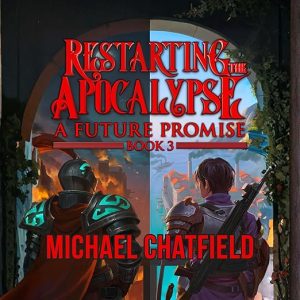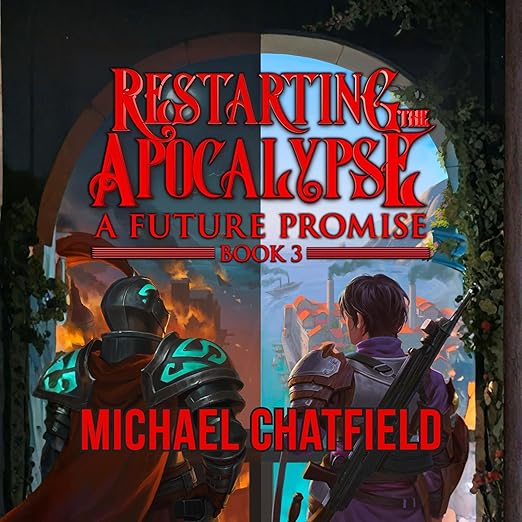
Mana is changing the world faster than people can adapt. That opening line in A Future Promise sets the stakes with the efficiency that LitRPG readers expect, and this audiobook, narrated by Gary Furlong over eighteen hours and seven minutes, delivers on those stakes with a consistency that the Restarting the Apocalypse series has built across three volumes. By this point in the series, Len and Rick are not characters to encounter for the first time. They are people listeners have already followed through collapse and reconstruction, and A Future Promise finds them operating from a different place: not just surviving, but building something that can outlast the next collapse.
What Michael Chatfield Delivers
The central mechanic of the series, that Len and Rick remember a previous timeline in which the apocalypse already happened, gives the books a particular narrative texture that distinguishes them from more conventional apocalyptic fiction. They are not discovering the rules of the mana system. They already know what it can do, and more critically, they know which people survived last time and which did not. The third book leans into that knowledge as its primary engine. Len and Rick are hunting the future legends, tacticians, and builders who helped humanity endure before, trying to reach them before the end begins again. The mission structure gives the audiobook its forward momentum across a substantial runtime.
Reviewers noted that the plot is progressing amazingly and that the worldbuilding keeps getting more fleshed out. One reviewer specifically praised the decision to show the Titans' perspectives before Len and Rick reach them, which allows character development to happen before the protagonists arrive rather than through their arrival. That is a structurally confident choice. It means listeners know who these people are before they become assets in the plan, and that foreknowledge changes the emotional texture of the recruitment sequences considerably.
The mutations accelerating and the countdown to collapse that the synopsis mentions are not just background pressure. They function as a structural clock, reminding listeners throughout that the recruitment mission is happening in diminishing time. Michael Chatfield uses that constraint well, ensuring the urgency stays present even in the sections focused on character and worldbuilding.
Gary Furlong has been with this series long enough to understand its rhythms, and that familiarity shows. He does not treat the LitRPG system elements, the mana mechanics, the mutation acceleration, the countdown frameworks, as dry data to read through. He gives them the same presence as the action and the character work, which is important in a genre where the system details are part of the appeal rather than an obstacle to it. The eighteen-hour runtime is substantial, but the pacing does not sag in the middle the way long series audiobooks sometimes do. Chatfield keeps enough plot in motion that the forward momentum holds.
One reviewer described this as quickly becoming one of their favorite LitRPG series, praising the characters, the worldbuilding, and the combat alongside what they called a zero hesitation to do what needs to be done. That last quality is worth unpacking. LitRPG as a genre attracts readers who want protagonists who make decisions and commit to them. Len and Rick fit that model without becoming mechanical about it. They are strategically decisive but still human in their motivations, which is part of why the series has held its audience across three volumes and through a combined runtime that approaches fifty hours.
Where Michael Chatfield Loses Some Ground
This is firmly book three in a series, and it does not perform the labor of orienting newcomers. The mana system, the mutation mechanics, the relationships between Len, Rick, and the figures they are trying to reach, all of that is presented as established context rather than explained from scratch. Listeners who start here will understand the broad strokes, but the emotional weight of the story depends on carrying the accumulated history of the first two books. The synopsis says they plan to save people before the end begins, and that line has maximum impact only for listeners who understand what the end looked like last time.
The synopsis mentions shattered coasts and rising strongholds, and the worldbuilding in this volume is accordingly broader in scope than earlier entries. Chatfield is expanding the stage while deepening the stakes, which is what a third book needs to do to justify its length. For listeners invested in the series, that expansion feels like reward. For newcomers it would feel like noise, which is why the entry point question matters here more than for most standalone audiobooks.
Who Should Pick Up A Future Promise
Listeners who have already completed the first two Restarting the Apocalypse audiobooks should consider this a necessary continuation. The series has earned consistent enthusiasm from its readers, and A Future Promise delivers what that audience wants: more worldbuilding, advancing plot, and the specific satisfaction of watching competent people execute a difficult plan in a world actively working against them. If you have not started the series, this is not the entry point. Go back to the beginning. For LitRPG readers who enjoy mana-system worlds and time-loop adjacent mechanics, the whole series is worth starting from book one, and A Future Promise is the reward that arrival there has been building toward. Michael Chatfield has built something genuinely ambitious in this series, and by the third book, the accumulated investment in these characters and this world pays off in ways that standalone apocalyptic fiction rarely achieves.
Before You Listen
Can I listen to A Future Promise without having heard the earlier Restarting the Apocalypse audiobooks?
Not recommended. The book assumes familiarity with Len and Rick's history, the mana system mechanics, and the series' timeline-loop premise. Starting here would mean missing the accumulated context that gives the third book its emotional and strategic weight.
At 18 hours, does the A Future Promise audiobook sustain its pacing throughout?
Reviewers consistently praise the plot's forward momentum, and the multiple narrative threads keep enough in motion to prevent mid-book sag. For readers invested in the series, the length feels like reward rather than obligation.