Quick Take
- Narration: Jonathan Mulder brings consistent energy to a chaotic ensemble cast, handling tonal whiplash between comedy and high-stakes combat with real skill.
- Themes: Reluctant heroism, team dynamics and progression, game mechanics bleeding into reality
- Mood: Chaotic and propulsive with genuine laugh-out-loud stretches
- Verdict: A rowdy, entertaining continuation that rewards readers already invested in the Scrap Rats, though new listeners should start at Book 1.
I was about forty minutes into my Tuesday morning commute when Ren did something so absurdly overcomplicated that I burst out laughing on the train and earned some concerned looks. That is the Towerbound experience in miniature: a series that earns genuine emotional investment through sheer comedic audacity, and then quietly sneaks in a world-ending dragon while you are still catching your breath.
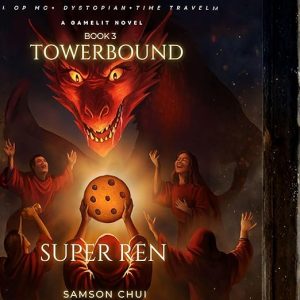
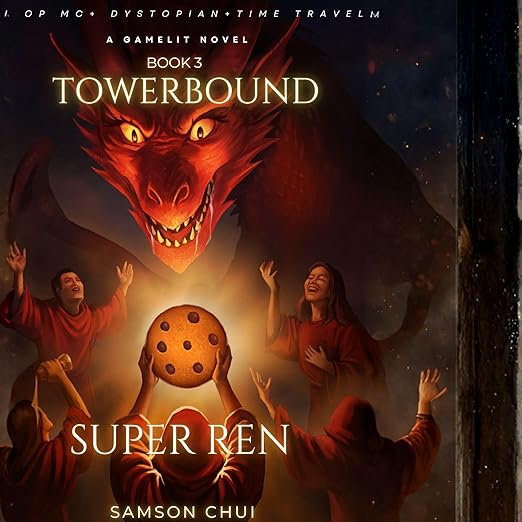
Towerbound, Book 3: Super Ren is the third installment in Samson Chui’s LitRPG series, narrated by Jonathan Mulder, and it does exactly what a third book in an overpowered-protagonist story needs to do: it raises the stakes high enough to make the power fantasy feel earned rather than hollow.
Our Take on Towerbound, Book 3: Super Ren
The core premise here is that Ren, described in the marketing copy as a “cowardly alchemist hiding behind potions and excuses,” is finally forced to step into the role his team has always needed him to fill. What makes this work better than most OPMC LitRPG is that the humor does real narrative work. Reviewer P. A. Kerrigan put it precisely: there are plenty of moments that are not funny at all, and Chui earns his comedy by letting the weight of those moments breathe before releasing the tension. Ren’s transformation into “Super Ren” is played partly for laughs and partly as a genuine character turn, and that balance is what keeps the book from feeling like pure power-fantasy noise.
One dissenting review notes that this installment is “kinda all over the place” with too many POV shifts and not enough time with Ren himself. That critique has merit. Chui is clearly building out his world and ensemble simultaneously, and Book 3 does sprawl in ways that Book 1 did not. For listeners who came for Ren specifically, the diversions into Folo’s terrain traps, Silk’s credit-harvesting, and Mira’s mid-dungeon heists can feel like detours. For listeners who enjoy the Scrap Rats as a collective, those same sections are highlights.
Why Listen to Towerbound, Book 3: Super Ren
Jonathan Mulder’s narration is a genuine asset. LitRPG comedy is notoriously difficult to voice because the humor often lives in delivery timing, and Mulder has a light touch that keeps the jokes landing without overselling them. He also handles the more serious sequences, particularly anything involving the game-bleeding-into-reality thread, with appropriate gravity. Karina De La Cruz described laughing “so hard it hurt” reading the text version; that energy translates into audio in a way that is not always guaranteed with comedic genre fiction.
The worldbuilding thread about the Tower changing and the game becoming real is the most interesting element from a structural standpoint. It gives the series a reason to escalate beyond “Ren gets stronger” and gestures toward consequences that actually matter. A world boss described as possibly being high is the kind of detail that sounds absurd in isolation and makes complete tonal sense in context.
What to Watch For in Towerbound, Book 3: Super Ren
This is book three of an ongoing series. The story does not resolve cleanly, and listeners unfamiliar with the first two installments will be lost almost immediately. The synopsis mentions cookies as a plot element, which is either a joke or evidence that Chui’s imagination has fully uncoupled from conventional fantasy convention; either way, it suggests you should not approach this expecting tidy genre beats. The POV sprawl noted by at least one reviewer is real and does interrupt momentum in the middle third of the runtime.
The rating pool here is small, and the solo critical voice giving it four stars is not a reliable signal either way. This is a series with a passionate core audience and a humor style that is either exactly your frequency or completely mistuned to it.
Who Should Listen to Towerbound, Book 3: Super Ren
Listeners who have already read or listened to Books 1 and 2 and enjoyed the Scrap Rats ensemble will find this a satisfying continuation. Fans of progression fantasy with genuine comedic chops rather than just genre comedy trappings will appreciate what Chui is doing with the tone. This is also a strong choice for anyone who wants LitRPG that does not take itself entirely seriously without sacrificing the mechanical depth that makes the genre satisfying.
Skip this if you need a self-contained story, prefer tight single-protagonist focus, or find humor in serious fantasy settings more irritating than refreshing. New listeners should start at Book 1; there is no catching up mid-series here.
Frequently Asked Questions
Do I need to read Books 1 and 2 before listening to Super Ren?
Yes, without question. Book 3 drops listeners directly into ongoing storylines, character relationships, and game-world mechanics that are established over the previous two installments. Starting here would mean missing most of the context that makes the character moments land.
Is the humor consistent throughout the whole 14-hour runtime?
Not uniformly. Chui balances comedic stretches with more serious combat and plot sequences. Reviewers note that the tonal shifts between funny and genuinely high-stakes are intentional and mostly work, though the middle section with multiple POV shifts can interrupt the comedic momentum.
How does Jonathan Mulder handle the ensemble cast of Scrap Rats characters?
Well, by most accounts. Mulder differentiates the characters clearly enough that following the POV shifts is manageable, and his comedic timing with Ren’s sections specifically earns positive mention from listeners who encountered the text version first.
Is the dragon storyline resolved in Book 3, or does it continue into the next installment?
Based on the synopsis and reviewer comments about eagerly anticipating Book 4, the world boss and broader game-bleeding-into-reality arc continues past this volume. The series appears to be building toward a larger conclusion rather than resolving its major threat within Book 3.