In Brief
- Narrator: Erin Mallon takes both halves of a romance one reviewer describes as dual point of view.
- Subjects: Enemies to lovers, forced proximity, a slow burn with a professional excuse attached.
- Tone: Snarky and warm, with the heat turned up rather than implied.
- Bottom line: A well-built trade of favors, on a listing that calls it stand-alone while its readers call it book two.
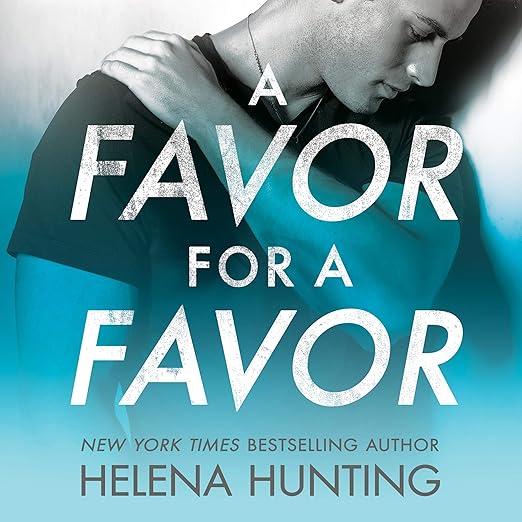
Erin Mallon is the only name in the narrator field, and one of the people who wrote about this book says it is told in dual point of view. That is the most interesting fact on the listing. The description itself hands you just one of those voices, an NHL player newly signed to Seattle's expansion team, talking straight at you for a page and a half. Eight hours and five minutes of audiobook has to cover both halves, and one reader carries them both.
Helena Hunting's premise is efficient to the point of shamelessness, which is the correct approach in this subgenre. A hockey player meets his new neighbor at midnight while she is fighting a broken suitcase and trying to get into the team captain's apartment. He assumes the worst. She turns out to be the captain's younger sister, a sports therapist, and when he takes an injury that puts him out for weeks, she offers rehab in exchange for a professional athlete on her client list.
Stand-alone is the word the description uses. Barbara Murray's entry calls it the second book in a spin-off series from Helena Hunting's Pucked series, and the metadata agrees, filing it as All In number two. Both things can be true at once, and a buyer should know which claim is being sold. Helen's entry describes enjoying the All In books as a set. Murray's says the first was loved and this one is in a class of its own.
Bishop and Stevie are never named in the description. It withholds them both, giving you a narrator who says my new neighbor and my team captain and stops there, and every written response supplies the names within a line. Stevie Bowman gets a full introduction from BookAddict, who explains that she moved to Seattle with a boyfriend, works alongside him, and walked in on him with someone else on the day the story starts. That is the setup the blurb declines to give you.
The Best Parts of A Favor for a Favor
Hockey romance lives on the collision, and this one is engineered for it. BookAddict describes the first meeting as a meet-hate rather than a meet-cute, and says the momentum snowballs from there. Liliana Gama, writing from Mexico, credits the couple's dynamic and calls the whole thing full of sexual tension. Helen, writing from the United Kingdom, calls it slow-burn, fun and sexy without shying away from emotion. Three readers in three countries land on the same two qualities, which is unusually consistent.
Rehab is a better engine than most romance plots manage. She needs a professional athlete who is not her brother on her client list. He needs to get back on the ice before the weeks stretch out. Both of them get something concrete from proximity, which means the plot never has to invent reasons to keep them in a room. The description is candid that the only real obstacle is his ability to keep his hands to himself. A slow burn works when the delay is structural rather than stubborn, and here it is structural.
Erin Mallon has the harder job because of that dual perspective. A romance told from two sides asks one reader to hold two first-person voices that are each meant to sound like the only person in the room, then to switch between them at chapter breaks with no cast change to lean on. When it works, the single reader becomes the reason the audio format exists at all. When it does not, both halves start sounding like one person arguing with themselves. Eight hours is short enough that you will know inside the first which it is.
Before You Commit to A Favor for a Favor
Three of the five written responses stop mid-sentence. BookAddict's breaks off while describing Stevie's worst day, at the words she just wa. Barbara Murray's stops at Stevie in parentheses, mid-clause, exactly as the analysis of the opening chapter begins. Helen's cuts out at soon they can't. Whatever those three concluded, this page does not carry it, and two of them were plainly the longest and most detailed entries here. You get the first halves of arguments and none of the endings. All three are five-star entries, so the missing conclusions were probably favorable, and probably is doing real work in that sentence.
One of the entries has no title at all. The five-star response from the United Kingdom carries an empty headline field, which is a small display fault and a real one if you skim headlines to decide what to read. Another headline reads Goog, a four-star verdict typed too fast. Neither affects the book. Both are reminders that what looks like a curated set of opinions is a scrape of whatever people happened to type.
Register is the final thing worth checking. The description is a single voice and the book is not, which matters because anyone who samples the opening will hear what the blurb sets up, cocky and confessional, and may not realize that half the running time belongs to someone else. The one clear signal is Barbara Murray's phrase, dual pov, delivered as a genre descriptor rather than a warning. Helen's entry confirms the shape from the other direction, describing assumptions Bishop makes and the offer Stevie makes in response.
Should You Listen to A Favor for a Favor?
Sports romance with a long fuse is the pitch, and the audience for it knows exactly who they are. Enemies to lovers, forced proximity with a professional excuse, a brother's best friend inverted into a captain's sister: the tropes are stacked and the description does not pretend otherwise. Anyone already reading the All In books has the strongest case, since two separate entries treat this as the standout so far. Newcomers can start here, because the blurb sells it that way and nothing in the summary depends on book one. Seattle, an expansion franchise and a sports-therapy practice supply enough scaffolding to stand up unaided.
Avoid it if the aftermath matters more to you than the tension, since the four-star entry from amurpher wants more time with the relationship past the realization moment, which is the standard structural complaint about romances that end where the tension does. Explicit content is not optional here either; one entry calls it fun and sexy, another hot and heartfelt, and a third names sexual tension as the whole engine. Bishop and Stevie are the draw, and one voice is carrying both of them.