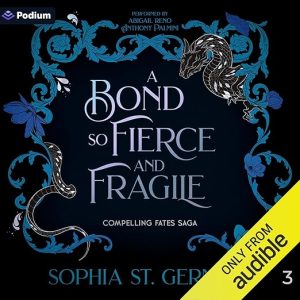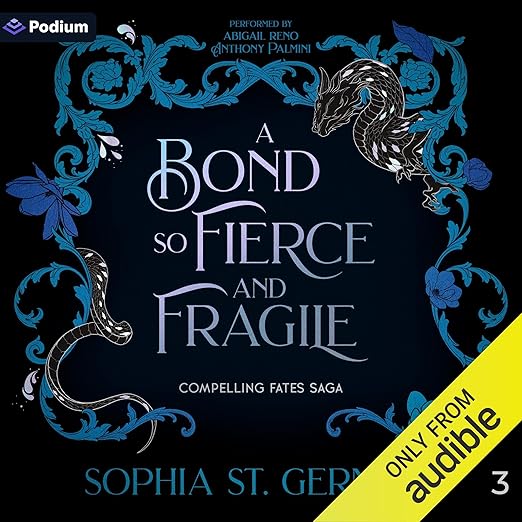
- Performance: Abigail Reno carries a named ensemble alone, from Elessia to Merrick to the Fae king holding her
- What it covers: Captivity and torture, fated mates, found family, gods intervening in mortal politics
- Feel: Brutal at both ends, noticeably slower through the middle
- Our call: Strong at both ends, slack through the middle, and squarely aimed at people who already know this saga.
Podium Audio ends the description of this audiobook by sending you off the page. Contains mature content, the last paragraph says, and then: a complete list of content warnings can be found on the author's website. So the listing tells you a hazard exists and declines to name it, which is a strange way to treat information a reader might need before committing thirteen hours. I understand why publishers do this. I have never liked it, and on a book that opens with the words Torture, Darkness and Loss, I like it less than usual. A referral is not a warning; it is a place where a warning used to be.
A Closer Look at A Bond So Fierce and Fragile
Book three finds Elessia already in the Fae king's hands, which is not where most series put their protagonist at the start of a volume. The copy sets three fights running at once: getting out of the king's claws, saving Havlands from rebels and Fae alike, and returning to the person she loves. Layered over those is a fourth and larger threat, because the gods themselves are involved and her mate has demonstrated a willingness to tear the world apart on her behalf. The escalation is unsubtle and completely intentional, and after two volumes of buildup it would be strange to complain that a third book raised its voice.
Two spellings of the heroine's name appear on this page. The description calls her Elessia. The earliest response calls her Lessia three separate times and heads its own text with the title A Bound So Fierce and Fragile, one letter off from the book it is reviewing. Neither slip is important on its own. Together they suggest a page assembled at speed, and they are a small warning that the surrounding metadata deserves the same skepticism you would bring to any detail you are told and not shown. Series numbering, spellings, even the title itself: check them against the copy before you trust them.
What Makes A Bond So Fierce and Fragile Worth Hearing
Abigail Reno is the single name on the credit, and the reviews make plain how much that one voice has to carry. A single recap names the uncle who is also the king, a father, a sister, a set of imprisoned friends, Merrick leading the hunt, and an ex-lover called Loche who has joined it. Add the gods, the rebels and the Fae court and you have a large cast landing on one voice across a runtime just over thirteen hours. Whether the distinctions hold up across that span is the question a sample answers fastest, and it is the only question about this production the page leaves you equipped to investigate.
Thirteen hours and twenty-three minutes is the going rate for romantasy at this stage of a series, and the length is doing recognizable work. By volume three the political material has thickened, the mythology has acquired its own machinery, and the romance has to keep breathing underneath both. The copy signals all three: rebels and Fae in one clause, gods in the next, and a mate whose devotion has turned into a structural threat. Readers who want the emotional line uninterrupted will feel the other two crowding it, which is not a flaw so much as the shape a saga takes once it commits to a war.
Found family is what the column keeps returning to, more than the romance and much more than the plot. One response calls it fierce and loyal and a little unhinged in the best way, and lands on devotion, sacrifice and the choice to keep choosing each other even when it costs everything. Another lists sacrifice, devotion and rising power as the governing themes and reports a strong emotional payoff in the final stretch. If those are the words you would use for the thing you look for in a series, this volume aims itself straight at you and does not miss.
Things to Know Before Starting A Bond So Fierce and Fragile
The middle is the problem, and I trust the diagnosis because it arrives twice from readers who plainly did not coordinate. One says the beginning and the end were amazing while the middle was full of details I don't believe needed to be there, and suspects those pages exist mostly to add more spice. The other, grading it four out of five, writes that the middle slows down with mythic and political elements before the final stretch recovers. Same shape, different vocabulary, posted a day apart. When two strangers reach for the same structural complaint from opposite directions, I treat it as the most reliable sentence on the page.
Nine votes stand behind the 4.3, and they total thirty-nine of a possible forty-five, six points short of a clean sweep. Four of those six are visible in the column you can read: a three-star response and two four-star ones account for them. Only two missing points sit with the four people who voted and wrote nothing. That is an unusually transparent rating, and it means the reservations on display are the reservations, not a polite subset of something harsher happening out of sight. Nine votes is a small pool, but for once it is a legible one.
Emily Aldridge opens with three words that explain a date: ARC Review. That entry is stamped February 2, 2026, eight days before publication, and thanks Sophia for the chance to read the book early, which is exactly how advance copies are supposed to work. The September 2025 response has no such explanation. It predates release by more than four months, opens with a spoiler warning, and delivers a plot recap thorough enough to function as one. Both of those things are worth knowing before you scroll.
Who Sophia St. Germain Is Writing For
Romantasy listeners already inside the Compelling Fates Saga are the obvious audience, and the column suggests this installment rewards them: one response calls it the favorite of the series so far, another describes feeling emotionally wrecked in the complimentary sense. If captivity plots, protective mates and a found family that keeps choosing each other under pressure are the reason you read this genre, volume three delivers all three at higher intensity than a first book usually can.
Volume three is also the worst possible place to start, and nothing on this page pretends otherwise. The description opens mid-crisis, the recap you would need exists only inside somebody's five-star review, and the content warnings are on another website entirely. Add a middle stretch two readers found slack and you have a listen that assumes goodwill you have not built yet. Newcomers should begin at the start of the saga, because this page will not catch you up and does not try.
Where can listeners find the content warnings this audiobook mentions?
Not on the listing. The description states only that the book contains mature content and directs you to a complete list on the author's website, so the page names a hazard without describing it. A four-star entry marks four chili peppers alongside a four-out-of-five grade, which suggests heat is part of what the referral covers.
Can a listener start this audiobook at book three?
Almost all of it. The book opens with Elessia already held by the Fae king, and the earliest response needs an entire recap paragraph, naming her uncle, her father, her sister, Merrick and an ex-lover called Loche, to establish where matters stand. The description assumes that same knowledge and supplies none of it.
Why do two reviewers single out the middle section?
They reached the same conclusion independently, a single day apart. One says the beginning and the end were amazing but faults the middle for material that seemed aimed at adding more spice; the other reports the book slowing under mythic and political elements before the last stretch recovers. Both graded it above the midpoint anyway.
Is the spice level higher here than in the earlier volumes?
Nothing on the page compares them, so that question stays open. What the page does give you is a reader's four-chili marking and a complaint that certain mid-book scenes exist mainly to add more spice. Read those together and expect explicit material at a level the listing itself refuses to define.