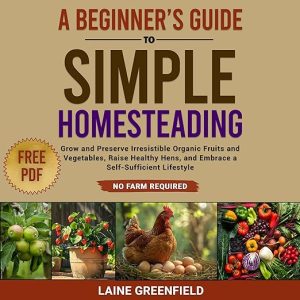
Gardening, hen-keeping, and food preservation all share a particular quality: they sound more complicated from the outside than they turn out to be once you actually start. A Beginner's Guide to Simple Homesteading, this audiobook by Laine Greenfield and narrated by Natalie Canaday, is built around exactly that premise. The central claim, that no farm is required, is not a marketing trick but the structural principle of the entire book. It addresses readers who live in suburban homes, apartments, and everything in between, and who want a more self-sufficient relationship with their food and living environment without needing to relocate to forty acres before they can do anything meaningful.
Backyard Hens, DIY Projects, and a Mindset Shift
Greenfield covers four main areas: growing and preserving organic fruits and vegetables, raising backyard hens, four beginner-friendly DIY projects, and the broader mindset shift involved in moving toward self-sufficiency. That scope is ambitious for four hours of audio, but the book handles it through focused, practical sections rather than exhaustive coverage of any single topic. Listeners looking for a comprehensive hen-keeping manual or a complete guide to food preservation will need to supplement with more specialized resources; what the book provides is enough information to understand each practice and decide which elements fit their specific living situation and available space.
The reviews are consistently encouraging on this point. One reader noted the advice is clear and easy to follow even for complete beginners, while specifically highlighting the hen-raising and food preservation sections as standouts. Another reviewer described it as a roadmap for anyone regardless of space, budget, or experience. That consistency across different reader contexts suggests the book has succeeded in its core aim: not to be the definitive homesteading resource but to be the resource that gets beginners started without overwhelming them before they've grown anything or built anything or raised anything at all.
Natalie Canaday's Calm Delivery, Plus a Companion PDF
Natalie Canaday's narration brings a calm, grounded quality to practical instruction that benefits from not sounding rushed or performatively enthusiastic. At four hours and three minutes, the audiobook has room to settle into each topic without skimming past the instructional detail. A PDF companion is available alongside the audio in the listener's library, which addresses the primary limitation of practical how-to content in audio form: you can't go back to a diagram or step-by-step visual reference mid-task. If you're planning to follow the DIY projects or use the preservation guidance while working in the kitchen or garden, downloading the PDF first is genuinely worth doing rather than relying entirely on what you can retain from the audio alone.
The sustainable living genre has expanded considerably in recent years, driven partly by pandemic-era interest in food security and partly by a broader cultural turn toward reduced consumption and localized production. A Beginner's Guide to Simple Homesteading enters that conversation without ideological intensity. It doesn't moralize or assume the reader needs to overhaul their entire life before they can grow a tomato plant. The tone is practical encouragement: here is what you can do in the space you have with the time you have, starting now. That restraint, the resistance to making homesteading feel like a lifestyle identity you must fully adopt rather than a set of practical skills you can incrementally develop, is a consistent strength throughout the book.
Missing Pictures, and a Reminder to Check Zoning
One reviewer wished for more pictures and illustrations to show what things should look like at various stages, which is the primary limitation of any audio format for practical, technique-dependent content. The PDF companion mitigates this to an extent, but listeners who learn best from visual demonstration of technique will want the ebook or print edition as their primary format, using the audio as a supplement rather than the main event. The book also covers hen-raising, which may be restricted or regulated depending on your municipality. Checking local ordinances before investing in backyard chickens is practical advice that applies differently depending on where you live, and it's worth doing before committing to that section of the book's guidance.
The four-hour runtime keeps the book accessible, but it does mean certain topics receive coverage that is broad rather than deep. Greenfield's choice to give beginners enough to start rather than to exhaust every possible contingency is right for this audience and this length. Someone already several years into a homesteading practice will find the material elementary; this is entry-level by explicit design and proud of it. The book is not trying to serve an expert readership. It's trying to remove the barriers that prevent curious, interested beginners from starting at all.
Even a Windowsill Is Enough to Start
This audiobook is designed for people who are genuinely curious about homesteading but have been held back by the belief that meaningful self-sufficiency requires land, experience, or resources they don't currently have. It's particularly relevant for suburban or urban listeners with a balcony, a yard, or even just a windowsill to work with. Those already experienced in gardening, food preservation, or animal husbandry will find the content basic, but for its intended audience, the guide consistently delivers what the reviews promise: clear, actionable instruction that makes starting feel possible rather than daunting. Download the PDF companion alongside the audio for the best experience with the project and preservation sections, and approach the hen-raising material with local zoning research already done.
The Short Version
- Voice: Natalie Canaday delivers Laine Greenfield's encouraging, practical prose with warmth that suits the lifestyle material well without turning it into something overly aspirational.
- Big ideas: Sustainable living, urban and suburban homesteading, food preservation and self-sufficiency
- Atmosphere: Encouraging and practical, without being preachy
- Worth it?: A solid entry-level guide for anyone curious about homesteading who doesn't own farmland, narrated with enough care to make the practical instruction feel genuinely inviting rather than overwhelming.