In Brief
- Performance: Peter Ganim brings Ripert's reflective interiority to life with warmth and precision, making the French kitchen scenes as vivid as the emotional ones from childhood.
- What it covers: Culinary mastery, childhood adversity, finding purpose through craft
- Feel: Reflective and sensory-rich
- Our call: Eric Ripert's memoir of becoming a chef is less about recipes than about the discipline and pain that precede mastery, and Ganim's narration gives the material a novelistic texture that elevates the genre.
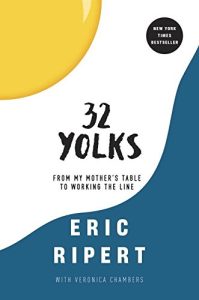
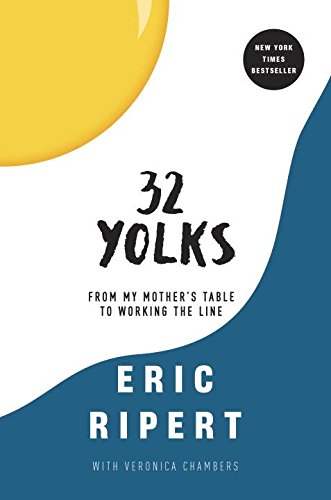
Eric Ripert's restaurant Le Bernardin has held three Michelin stars for longer than most chefs have held their knives, and his reputation as one of the finest seafood cooks working anywhere is not contested by anyone who pays attention to these things. 32 Yolks, his memoir narrated by Peter Ganim across seven hours and twenty-six minutes, is therefore a surprising audiobook in the best sense: it has almost nothing to do with cooking as instruction and everything to do with cooking as vocation, as discipline, and as the thing that gave coherence to a childhood that was frequently precarious and sometimes frightening. Ripert writes about his early life in the south of France and later in Andorra with the precision of someone who has spent decades processing what happened there, and Ganim's narration gives that processing the tonal weight it deserves.
Our Take on 32 Yolks
The title comes from a specific early lesson in Ripert's training: the number of egg yolks he had to beat before his chef would allow him to attempt hollandaise sauce. That image of repetition as the price of admission runs through the audiobook as both literal memory and organizing metaphor. Ripert's childhood was marked by instability, a difficult stepfather, a boarding school that operated more like an institution than a place of learning, and the particular loneliness of a boy who had not yet found the thing that would give his life shape. The kitchen gave him that shape, not through easy discovery but through the kind of grueling hierarchical training that characterized French haute cuisine apprenticeship in the 1980s.
The memoir covers his years in France, including time working under Joel Robuchon, one of the most technically demanding chefs of that era, and traces the full arc from struggling apprentice to the threshold of international recognition, stopping deliberately before Le Bernardin opens. The book is a coming-of-age story that happens to take place in some of the most demanding professional kitchens in France, and Ripert is interested in what that world made of him rather than in the success story that followed. The French brigade system, with its explicit hierarchy and its tolerance for physical and psychological pressure, is described with historical specificity, and listeners who have followed the shift in professional kitchen culture since that era will find the contrast with contemporary norms genuinely illuminating about how profoundly the industry has changed.
Why Listen to 32 Yolks
Ganim is an excellent match for this material. Ripert's story requires a narrator who can handle both the lyrical passages describing food with sensory precision and the more difficult emotional terrain of a childhood that was not always safe. Ganim modulates between these registers with real control, giving the kitchen scenes the technical authority they need and the childhood passages the restraint they deserve. His performance never tips into melodrama, which is precisely the right choice for a memoir whose author is characteristically understated about his own suffering.
The audiobook's 4.6 rating across more than 1,000 reviews reflects a readership that found the memoir surprising in the best sense: richer and more emotionally demanding than the celebrity-chef genre typically delivers. Listeners who have grown accustomed to the self-promotional register of most culinary memoirs will find Ripert's willingness to present himself as vulnerable, lost, and frequently struggling something genuinely different. Ganim's narration preserves that quality rather than smoothing it into professional confidence retroactively imposed on difficult material. This is a memoir about a person who found a way to survive, and the audio format amplifies the intimacy of that survival story in ways the page does not fully replicate.
What to Watch For in 32 Yolks
Listeners expecting cooking instruction or restaurant gossip in the conventional sense will find neither here. The memoir ends before Le Bernardin opens, deliberately stopping at the threshold of his greatest success. That structural choice will frustrate some readers who want the full career arc and reward others who find the process of becoming more interesting than the fact of having arrived. The French kitchen apprenticeship material is the strongest section of the audiobook: Ripert's recall is most vivid there, and the world it describes has largely changed, making the account feel genuinely historical as well as personal. The childhood sections require more patience but provide the context without which the kitchen chapters would feel like craft without stakes. The relationship between Ripert's early experiences of instability and his eventual embrace of the kitchen's extreme discipline is the book's central psychological argument, and Ganim sustains the thread of that argument across the full seven-hour runtime.
Who Should Listen to 32 Yolks
Food culture enthusiasts who want something more substantial than a promotional memoir will find this audiobook rewarding. The writing is literary enough to satisfy readers who came to it via culinary biography rather than celebrity culture, and Ganim's narration elevates it further. Listeners who enjoyed Anthony Bourdain's Kitchen Confidential will find a different register here, less anarchic and more reflective, but the same insistence on cooking as a discipline with genuine moral and psychological weight. The seven-hour runtime is well suited to the scope: long enough to develop Ripert's emotional arc properly without overstaying what the material can support, and rich enough in sensory and psychological detail to reward sustained attention. Anyone with a professional or personal relationship to kitchen work will find the apprenticeship sections particularly vivid; Ripert captures the specific texture of learning under pressure in a way that general cooking readers will find illuminating and those with direct experience will recognize instantly.
Common Questions
Does this audiobook contain cooking instruction or is it purely memoir?
It is purely memoir. 32 Yolks covers Eric Ripert's childhood and his apprenticeship years in French kitchens, ending before Le Bernardin opens. There are no recipes or culinary instruction; the audiobook is about the formation of a chef, not the mechanics of cooking.
How does Peter Ganim handle the French culinary world in his narration of this audiobook?
Very well. Ganim gives the kitchen scenes a physical intensity that suits the material, and his handling of the childhood passages is notably restrained in a way that serves a memoir whose author is characteristically understated about his own vulnerability.
Is this audiobook accessible to listeners with no particular interest in fine dining?
Yes. The memoir is fundamentally about childhood adversity, mentorship, and the discipline of mastery. The culinary world provides the setting, but the emotional core is about belonging, purpose, and what it means to commit completely to a craft you found by accident.
Why does the audiobook stop before Ripert opens Le Bernardin and achieves his greatest recognition?
It's a deliberate authorial choice. Ripert wanted to write about becoming rather than having become, about the formative years of training rather than the public story of success. That decision makes the memoir more intimate and less conventional than a standard career retrospective.